-
E-mail
249516825@qq.com
-
Phone
15666886209
-
Address
209, Building 1, Weifang High tech Zone Optoelectronic Industry Accelerator (Phase I), 155 Guangdian Circuit, Weifang High tech Zone, Shandong Province
Product Categories
Shandong Jingdao Optoelectronics Technology Co., Ltd

Construction Plan for Campus Science Popularization Meteorological Station
NegotiableUpdate on 01/04
- Model
- Nature of the Manufacturer
- Producers
- Product Category
- Place of Origin
Overview
Construction Plan for Campus Science Popularization Meteorological Station: Choose an open and ventilated area on campus, away from the interference of tall buildings and trees. Divide the observation area and install anemometers, wind indicators, etc; Set up electronic screens in the data display area; Arrange display boards and models in the science popularization exhibition area. Regularly organize meteorological observation practices to allow students to record and analyze data. Organize meteorological science popularization lectures and exhibitions, and invite experts to explain. Organize meteorological knowledge competitions, stimulate learning enthusiasm, and create a strong atmosphere of science popularization.
Product Details
Construction Plan for Campus Science Popularization Meteorological StationChoose a spacious and well ventilated area on campus, away from the interference of tall buildings and trees. Divide the observation area and install anemometers, wind indicators, etc; Set up electronic screens in the data display area; Arrange display boards and models in the science popularization exhibition area. Regularly organize meteorological observation practices to allow students to record and analyze data. Organize meteorological science popularization lectures and exhibitions, and invite experts to explain. Organize meteorological knowledge competitions, stimulate learning enthusiasm, and create a strong atmosphere of science popularization.
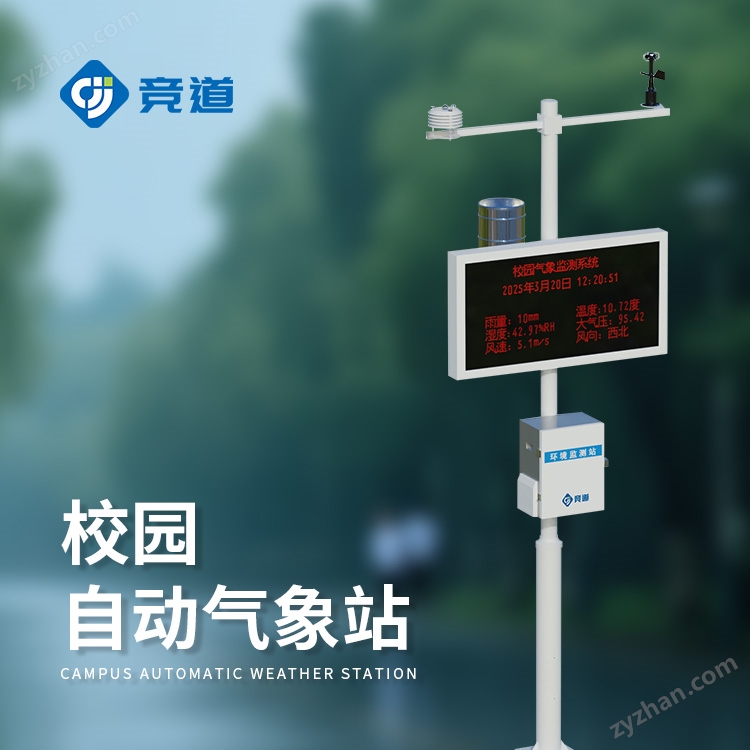
1Construction Plan for Campus Science Popularization Meteorological StationProduct Introduction
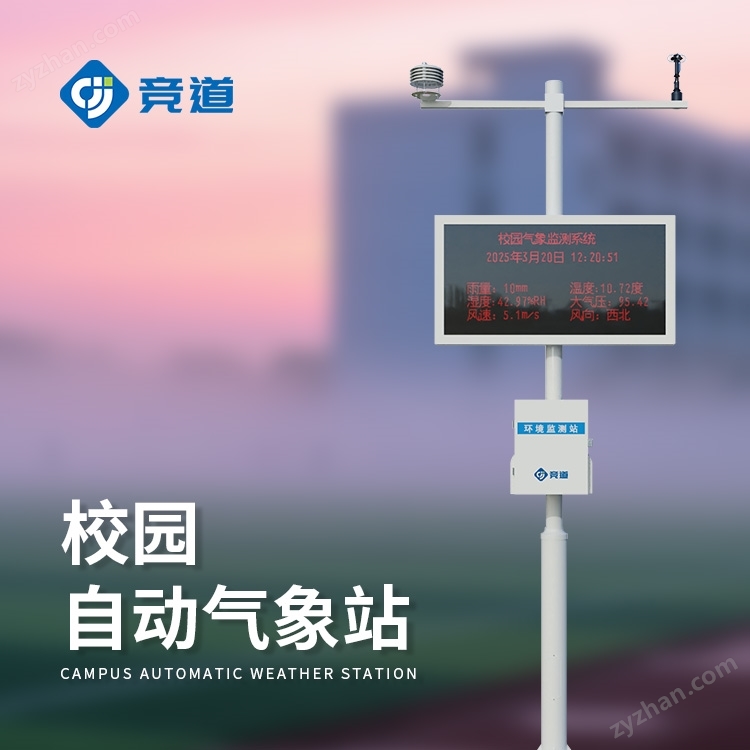
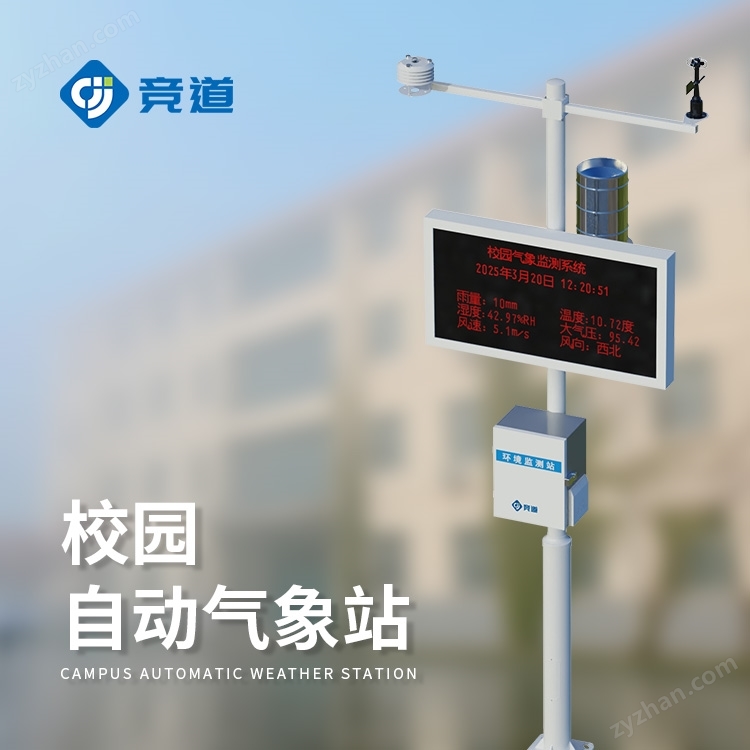
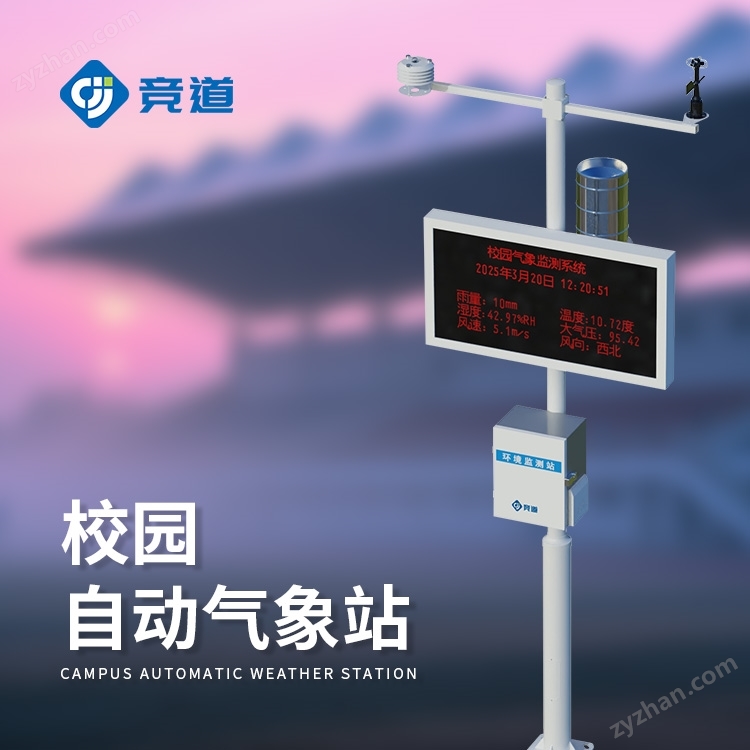
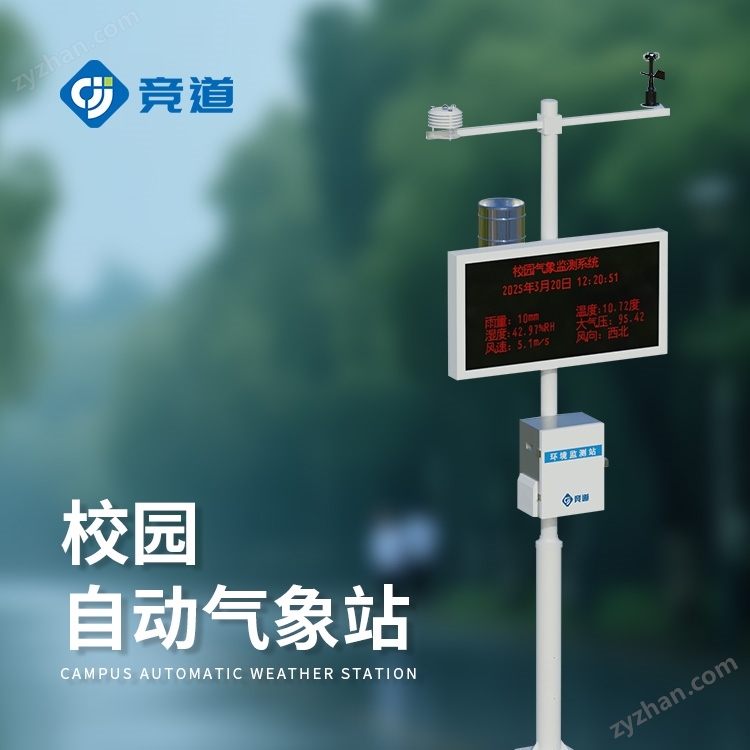
The XQ3 campus weather station is a highly integrated, low-power, quick to install, and easy to use scientific research grade weather station for teaching purposes.
2、 Product Features
1. Transmission method: GPRS, optional wired transmission;
2. Power supply mode: mains power;
3. Display mode: 1 meter * 0.5 meter LED screen;
4. Hardware components: sensors, pole supports, equipment boxes, LED screens, collectors, cloud platforms, fiberglass louver boxes (including dry and wet bulb thermometers), sunshine meters, fences
3、 Technical parameters
1. Sensor parameters
| name | measurement range | resolution | Accuracy |
| ambient temperature | -40~+80℃ | 0.01℃ | ±0.3℃(25℃) |
| relative humidity | 0~100%RH | 0.01%RH | ±3%RH(20%~80%) |
| illuminance | 0-157286LUX | 1Lux | <±3% |
| atmospheric pressure | 300-1100hpa | 0.1hPa | ±0.25% |
| dew point temperature | 0~+70℃ | 0.1℃ | ±1℃ |
| soil temperature | -30~+70℃ | 0.01℃ | ±0.3(-10~70℃) |
| soil moisture | 0~100% | 0.1% | ±3% |
| soil salinity | 0~20000us/cm | 1us/cm | ± 3 (0~10000us/cm) ± 5% (full range) |
| Soil pH | 0-14PH | 0.01 | ±0.1PH |
| Wind direction | 0-360 degrees | 0.1 degrees | ± 1 degree |
| Wind speed | 0-60m/s | 0.01m/s | ±0.2m/s |
| Average wind speed ☆ | 0-60m/s | 0.01m/s | ±0.2m/s |
| Rainfall | ≦4mm/min | 0.2mm | ≤±2% |
| Ultraviolet radiation | 0~500W/ ㎡ | 0.01W/ ㎡ | ≤±3% |
| sunshine duration | 0~6500h | 0.1 h | <0.2 h |
| Total photoelectric radiation | 0-2000W/m2 | 1W/m2 | <±3% |
| Photosynthetically active radiation | 0-2000W/m2 | 1W/m2 | ≤±5% |
| PM2.5 | 0-1000ug/m³ | 1ug/m³ | ± 10% (<500 micrograms) |
| PM10 | 0-1000ug/m³ | 1ug/m³ | ± 10% (<500 micrograms) |
| carbon monoxide | 0-1000ppm | 1PPM | ±2PPM |
| sulfur dioxide | 0-20PPM | 0.1PPM | ±1PPM |
| nitrogen dioxide | 0-20PPM | 0.1PPM | ±1PPM |
| ozone | 0-20PPM | 0.1PPM | ±1PPM |
| negative oxygen ion | 0-100000 pieces/cm3 | 1 piece/cm3 | Reading ± 10%; Ionic mobility ≤± 20% |
| oxygen content | 0~25%Vol | 0.1% | ±3%FS |
| carbon dioxide | 400-5000ppm | 1PPM | ± (50ppm+5% reading value) |
| evaporation | 0-190mm | 0.01mm | ±1% |
Similar Product Recommend

