-
E-mail
30637718@qq.com
-
Phone
15301675976
-
Address
118 Xiuyan Road, Pudong New Area, Shanghai
Product Categories
- Dual channel pH/DO digital acquisition module
- Industrial online dissolved oxygen transmitter
- Industrial online pH/ORP high temperature transmitter
- Online ethylene glycol conductivity meter
- Online residual chlorine analyzer
- Orthophosphate online monitoring instrument
- Total Silver Online Monitoring Instrument
- Hexavalent chromium online monitoring instrument
- Wall mounted multi parameter water quality analyzer
- turbidimeter
Shanghai Botuo Instrument Co., Ltd
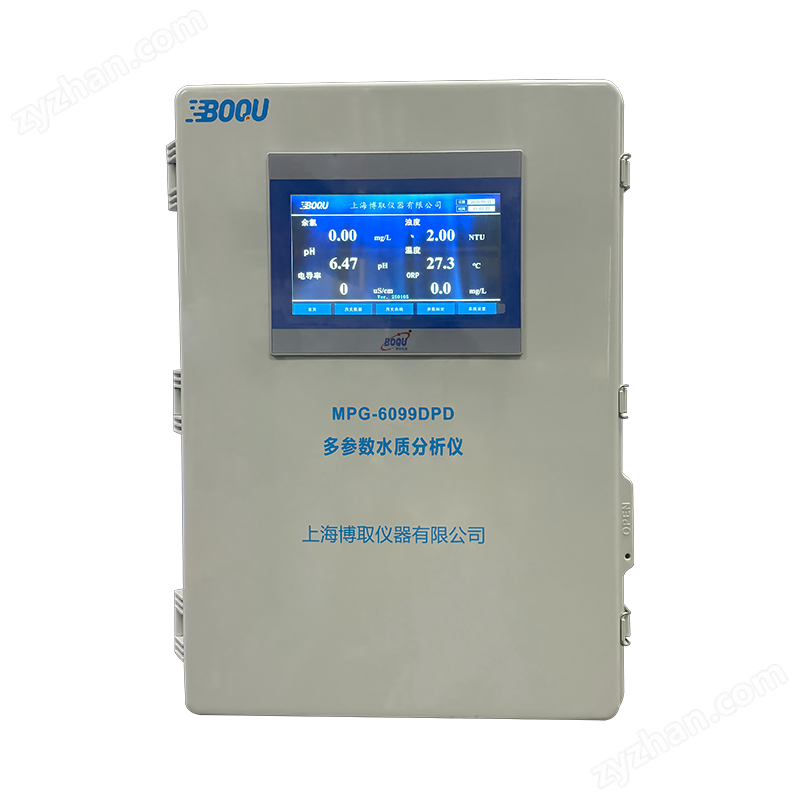
Multi parameter water quality DPD online residual chlorine analyzer
NegotiableUpdate on 02/16
- Model
- Nature of the Manufacturer
- Producers
- Product Category
- Place of Origin
Overview
The MPG-6099 multi parameter water quality DPD online residual chlorine analyzer is designed by Shanghai Botuo Instrument Co., Ltd. specifically for monitoring the water quality of drinking water and swimming pool water. This device is capable of continuously monitoring six water quality parameters, including residual chlorine, turbidity, pH value, ORP (optional), conductivity, and temperature, with high accuracy and strong anti-interference ability. In practical applications, such as drinking water treatment plants or swimming pool management, ensuring water quality safety is crucial.
Product Details
MPG-6099Multi parameter water quality DPD online residual chlorine analyzerIt is a high-performance water quality monitoring device launched by Shanghai Botuo Instrument Co., Ltd. This instrument can continuously monitor six water quality parameters, including residual chlorine, turbidity, pH, ORP (optional), conductivity, and temperature. It is widely used in fields such as drinking water treatment, pool water management, and industrial circulating water monitoring. Communicate with PLC and other devices through RS485 (Modbus RTU protocol) to ensure accuracy and real-time data transmission.
technical advantage
High precision measurement: residual chlorine measurement is carried out using N, N-diethyl-phenylenediamine (DPD) colorimetric method, with an accuracy of up to ± 5% or ± 0.03mg/L; Turbidity measurement is based on infrared absorption scattering method, with an accuracy of ± 2% or ± 0.015NTU.
Strong anti-interference ability: low cross reaction with ozone and chlorine dioxide, minimal impact of pH changes, ensuring stable and reliable measurement results even under complex water quality conditions.
Wide range coverage: residual chlorine measurement range from 0-10mg/L, turbidity from 0-2NTU, pH from 0-14, conductivity from 0-2000uS/cm, suitable for various application scenarios.
Integrated design: integrates residual chlorine, turbidity pH、ORP、 The measurement function of the six major parameters of conductivity and temperature is simple to transport and easy to install.
Data recording and export: Built in data storage function, can save historical data for more than three years, and supports USB export, making it easy for users to analyze data and generate reports.
Easy maintenance: Non professionals can also easily perform daily maintenance, reducing operating costs.
user value
Improving water quality safety: By real-time monitoring of multiple key water quality parameters, ensuring that water quality meets safety standards and safeguarding public health.
Improving operational efficiency: Automated monitoring and data recording functions reduce manual operations, improve work efficiency, and reduce operating costs.
Enhance decision-making ability: Detailed data recording and historical curve analysis help users better understand water quality trends and provide scientific basis for decision-making.
Reduce environmental impact: By precisely controlling water quality parameters, reducing the use of chemical agents, and minimizing the impact on the environment.
Application Industry
Drinking water treatment: Ensure the water quality safety of the water supply system and meet national and local water quality standards.
Pool water management: Real time monitoring of residual chlorine, pH and other parameters in pool water to ensure the health and comfort of swimmers.
Industrial circulating water: Monitor various indicators of industrial circulating water to prevent corrosion and scaling, and extend equipment service life.
Reverse osmosis front-end: Ensure that the water quality entering the reverse osmosis system meets the requirements, improve the service life and water quality of the reverse osmosis membrane.
Safety precautions
Electric shock and burn prevention: Before maintenance or repair, it is necessary to disconnect the power supply and strictly follow the power connection rules of the region or country for installation and commissioning.
Chemical hazard prevention: Reagents are corrosive, and safety clothing, eye masks, and gloves should be worn during operation. After replacing reagents, hands should be washed thoroughly.
Proper handling: When the instrument is ultimately discontinued, local environmental regulations should be followed and handled properly.
Unpacking and installation
Unpacking inspection: Carefully inspect the shipping container and analyzer to ensure that the equipment is not damaged or the components are loose.
Wall mounted installation: Choose a location that is easy to operate and maintain, use the provided bolts and screws to secure, and ensure that the display screen is visually level.
Pipeline connection: The inlet, outlet, and waste liquid discharge outlet are located at the bottom of the instrument and are connected using quick interfaces. It is recommended to use opaque pipes to prevent moss growth.
Electrical connection: Electrical connections must be made by trained professional technicians to ensure that all cables are correctly wired.
instrument operation
Screen introduction: Equipped with a 10 inch color LCD touch screen, the main page displays the measured values and historical data of various parameters, parameter calibration, system settings and other functional buttons.
Calibration: Enter the password to enter the calibration page and check for residual chlorine pH、 Calibrate conductivity and turbidity to ensure measurement accuracy.
Measurement settings: Set the measurement mode (manual or automatic), measurement interval time, and other parameters to ensure that the instrument runs as needed.
System settings: Modify device dates, restore factory settings, and other functions to ensure the normal operation of the system.
Output settings: Configure RS485 communication parameters, including baud rate, data bits, parity bits, and stop bits, to ensure the reliability of data transmission.
Diagnosis: Test the functions of peristaltic pumps, solenoid valves, mixers, etc. to ensure that all components are working properly.
Historical records: Record and export historical data for users to analyze and generate reports.
Fault repair
Residual chlorine module malfunction: Common problems include zero residual chlorine reading, malfunctioning peristaltic pump, abnormal photoelectric function, etc. Provide detailed solutions.
Electrochemical module failure: Common problems include measurement parameters displaying as 0, large differences in measurement data, and abnormally large turbidity data. Provide detailed solutions.
routine maintenance
Regular inspection: Regularly inspect and replace reagents, clean the colorimetric tank, and ensure measurement effectiveness.
Discharge valve: Open the discharge valve once a month to ensure that there is no accumulation of impurities that may affect the measurement.
Electrode maintenance: pH/ORP/conductivity electrodes are recommended to be cleaned once a month and calibrated every three months to ensure measurement accuracy.
communication protocol
Modbus RTU: Supports 4800, 9600, 19200 baud rates, 8N1 serial data format, function code 03/06, device address 5.
Register Address: Detailed list of register addresses for each parameter to facilitate user data reading and writing.
Through the above detailed introduction, you can see that MPG-6099Multi parameter water quality DPD online residual chlorine analyzerThe technical performance and wide application value. Whether in drinking water treatment, pool water management, or industrial circulating water monitoring, it can provide you with accurate and reliable data support to help you achieve efficient and safe water quality management. If you have any questions or need further information, please feel free to contact us at any time.

Similar Product Recommend