-
Phone
15958142680
-
Address
1105, Building A, No. 77 Qiutao North Road, Jianggan District, Hangzhou City
Product Categories
Hangzhou Zhuochi Instrument Co., Ltd
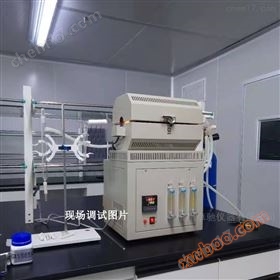
Water quality fluorine chlorine bromine (AOX) halogen analyzer
NegotiableUpdate on 03/13
- Model
- Nature of the Manufacturer
- Producers
- Product Category
- Place of Origin
Overview
Water quality fluorine chlorine bromine (AOX) halogen analyzer: Activated carbon is packed in an adsorption column and pressurized with nitrogen gas to adsorb organic halogen compounds in water. The activated carbon that adsorbs organic halogen compounds is then placed in high temperature for combustion, decomposition, and conversion into hydrogen halides (hydrides of fluorine, chlorine, and bromine). After absorption in alkaline aqueous solution, the AOX combustion furnace for organic halogen separation and determination is determined by ion chromatography, which complies with the "Environmental Protection Industry Standard of the People's Republic of China (HJ/T83-2001) for the determination of water quality adsorbable organic halogens (AOX)". The operation method of this instrument
Product Details
Water quality fluorine chlorine bromine (AOX) halogen analyzerIntroduction:
The instrument complies with the "Environmental Protection Industry Standard of the People's Republic of China (HJ/T83-2001) for the Determination of Adsorbable Organic Halogens (AOX) in Water Quality". The operation method of the instrument is basically the same as "ISO 9562:1989 and GB/T 15959-1995" Micro Coulombic Method for the Determination of Adsorbable Organic Halogens (AOX) in Water Quality ", but the detection method is different. The detection of inorganic halide ions generated by the conversion of organic halogens using ion chromatography can not only determine the total amount of adsorbable organic halogens (AOX) in water (calculated as chlorine). It is also possible to simultaneously measure the levels of adsorbable organic chlorine (AOCI), organic fluorine (AOF), and organic bromine (AOBr) in water.
Compliant with standards:
H/JT 83-2001 Chinese Environmental Protection Industry Standard "Determination of Adsorbable Organic Halogens (AOX) in Water Quality by Ion Chromatography Method"
ISO 9562:1989-09-01; GB/T 15959-1995 "Determination of Adsorbable Organic Halogens (AOX) in Water Quality by Microculon Method";
GB Comprehensive Wastewater Determination Standard;
GB3544-2008 Industrial Wastewater Determination Standard.
Water quality fluorine chlorine bromine (AOX) halogen analyzerPrinciple:
Activated carbon is packed in an adsorption column and pressurized with nitrogen gas to adsorb organic halogen compounds in water. Then, the activated carbon that adsorbs organic halogen compounds is burned and decomposed at high temperatures to convert them into hydrogen halides (hydrides of fluorine, chlorine, and bromine), which are absorbed by alkaline aqueous solutions and separated and determined by ion chromatography.
Application areas:
Drinking water, surface water, groundwater, sewage, effluent, wastewater, tap water, saltwater, treated water, pulp effluent, soil, sediment, sludge, and waste oil.
Similar Product Recommend