-
E-mail
info@labcan.cn
-
Phone
18016316889
-
Address
No. 988 Jingtang Road, Jiading District, Shanghai
Kerun Experimental Equipment (Shanghai) Co., Ltd
Exploration of the regulatory mechanism specificity of autonomous vasomotor response in different tissues of the mouth and face
Date: 2025-12-26Read: 6
Ratna RamadhaniWaiting for researchers to《Journal of Comparative Physiology B》An original research has been published. This study used rats anesthetized with Uratan as experimental subjects to investigate the differences in blood flow and vascular conductivity between the masseter muscle (mainly cholinergic mediated) and the lower lip (mainly non cholinergic mediated) under the mediation of the nervous and humoral systems. The aim is to clarify whether there is specificity in the regulatory mechanism of autonomous vasomotor response in different tissues of the oral and facial regions.
summary
Mediated by the autonomic nervous and humoral systemsobviousChanges in blood flow may have significant implications for facial hemodynamics and function. However, it is still unclear whether there are differences in autonomous vasomotor responses mediated by the nervous and humoral systems in the oral and facial regions. This study used Uratan anesthetized rats as a model to investigate the differences in blood flow and vascular conductivity between the masseter muscle and the lower lip mediated by the autonomic nervous and humoral systems. Electrical stimulation of the central cutting end of the lingual nerve can cause increased blood flow in the masseter muscle (mainly cholinergic mediated) and lower lip (mainly non cholinergic mediated), accompanied by elevated arterial blood pressure; Stimulating the cervical sympathetic trunk continuously reduces blood flow in both areas. Tongue nerve stimulation can cause a biphasic change in the vascular conductivity of the masseter muscle, which first decreases and then increases. This decrease in vascular conductivity is positively correlated with changes in arterial blood pressure and can be weakened by guanidine. Cervical vagus nerve stimulation can also cause an increase in blood flow in two areas, but the increase in masseter muscle is greater than that in the lower lip. Adrenal nerve stimulation and administration of isoproterenol can cause an increase in masseter muscle blood flow, while there is no such reaction in the lower lip. These results indicate that the cholinergic parasympathetic nerve mediated hemodynamics induced by trigeminal somatosensory input are closely related to changes in arterial blood pressure. The sympathetic nervous system, including the sympathetic adrenal system and visceral input, may be more involved in the hemodynamic regulation of oral and facial muscle tissue rather than epithelial tissue.
experimentMaterials and Instruments
(1) Experimental materials
1. Experimental animals:42Only adult malesWistarRats.
2. Anesthesia and related drugs: Isoflurane, Uratan, Pancuronium Bromide, Sterile Physiological Saline, Hexamethylammonium Bromide, Guanethidine, Isoproterenol Hydrochloridewait.
(2) Experimental instruments
1. OmegawaveFLO-C1Laser Doppler flowmeterUsed to monitor blood flow changes in the masseter muscle and lower lip.
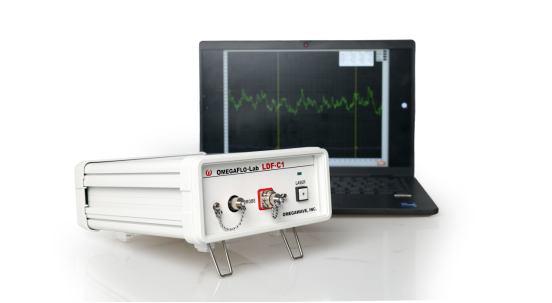
OmegawaveFLO-C1Laser Doppler flowmeter
2. pressure sensor、ventilator、Infrared analyzer、Electrical stimulator、syringe pump.
Experimental Procedure
(1) Animal preparation
(2) Measurement of blood flow and cardiovascular parameters
1. After making incisions on the cheek skin and lower lip of ratsOmegawaveFLO-C1Laser Doppler flowmeterThe probe is placed on the surface of the masseter muscle and lower lip tissue (without pressure) to monitor the relative blood flow changes of superficial blood vessels (in arbitrary units)a.u.Indicating).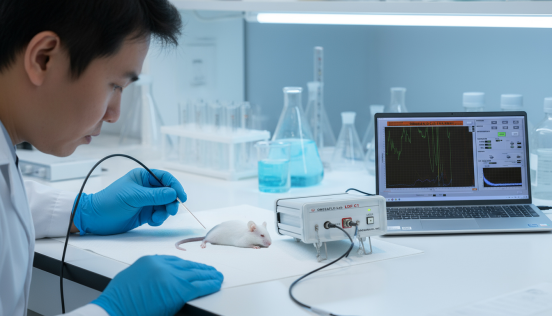
OmegawaveFLO-C1Laser Doppler flowmeter
2. According to the formulaVC(A.u. / mmHg)=BF(a.u.)/ABP(MmHg)Calculate vascular conductivity(VC).
3. Record heart rate(HR)Systolic blood pressure, diastolic blood pressure, and mean arterial blood pressure(Mean ABP)Collect experimental data through a data collection system, using baseline values as a reference, and measure the difference between the maximum values of each parameter and the baseline(Δ).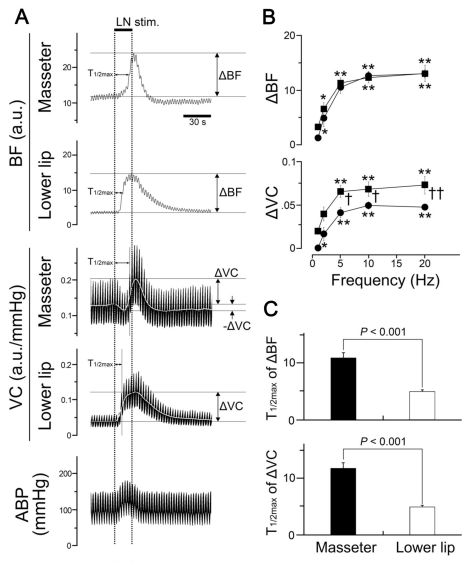
Hemodynamic characteristics during somatosensory input of the masseter muscle and lower lip trigeminal nerve in rats
Aadopt2 Millisecond pulse20 Hertz100 Micro safety parameters are used to cut off the left lingual nerve center20 Second electrical stimulation (lingual nerve stimulation), blood flow to the left masseter muscle and lower lip(BF, any unita.u.)Vascular conductivity(VC, any unit/Millimeter Hg and arterial blood pressure(ABPTypical examples of changes in millimeters of mercury.
B 100Microampere, different frequencies(1-20Hertz's tongue nerve stimulation induces left masseter muscle (●) and lower lip (■) ΔBFAnd ΔVCMean ± standard error (per group)n=6).
C 20In seconds100 Wei'an20 Hertz lingual nerve stimulation induces masseter muscle (black bar) and lower lip (white bar) ΔBFAnd ΔVCofT1/2maxMean ± standard error.
(3) Peripheral nerve electrical stimulation
(4) Drug treatment
1. Before and after administration of hexamethonium bromide and atropine, respectively10minThe60minRepeat tongue nerve stimulation and observe the effects of medication on blood flow and vascular conductivity.
2. Before the experiment begins24hSubcutaneous injection of guanidine into rats followed by tongue nerve stimulation was performed to observe its effect on the hemodynamics of the masseter muscle.
3. At different doses(10-1000ng/kg)Intravenous injection of isoproterenol and observation of its dose-dependent effects on masseter muscle and lower lip blood flow and vascular conductivity.
empirical conclusion
1. The hemodynamics mediated by cholinergic parasympathetic nerves induced by trigeminal somatosensory input are closely related to changes in arterial blood pressure. The biphasic changes in masseter muscle vascular conductivity (first decreasing and then increasing) caused by tongue nerve stimulation are correlated with changes in arterial blood pressure, while the vascular conductivity changes in the lower lip are independent of arterial blood pressure.
2. The sympathetic nervous system (including the sympathetic adrenal system and visceral inputs) is more involved in the hemodynamic regulation of oral and facial muscle tissue (such as the masseter muscle), while having less impact on epithelial tissue (such as the lower lip): the increase in blood flow caused by cervical vagus nerve stimulation is more pronounced in the masseter muscleobviousThe decrease in blood flow caused by stimulation of the cervical sympathetic trunk is greater in the masseter muscle; Adrenal nerve stimulation and administration of isoproterenol only caused an increase in masseter muscle blood flow, with no significant reaction in the lower lip.