-
E-mail
info@labcan.cn
-
Phone
18016316889
-
Address
No. 988 Jingtang Road, Jiading District, Shanghai
Kerun Experimental Equipment (Shanghai) Co., Ltd
How to measure gingiva with Omegawave FLO-N1 laser Doppler blood flow meter in diabetes rat periodontitis model
Date: 2025-12-22Read: 6
Toru NishikawaTeam published in《Journal of the International College of DentistryHow to translateresearch onThrough streptozotocin(STZ)To induce the establishment of diabetes rat model, experimental periodontitis was induced in this model, and nitric oxide(NO)The pathway iskey pointTo explore the mechanism of periodontal disease deterioration in diabetes, focusing on the analysis of gingival blood flow and inflammation related genes (tumor necrosis factor-α/TNF-αInducible nitric oxide synthase
/iNOS
)Changes in expression and nitroso stress markers (nitrotyrosine).summaryIn order to clarify the mechanism of periodontal disease deterioration in diabetes, this study adopted streptozotocin(STZ)The experimental periodontitis was induced in diabetes rats, and nitric oxide(NO)The pathway is
key point 5 Expand the discussion.Materials and MethodsZhou Ling's masculinitySDRats, injected intraperitoneallySTZ(60mg/kg)Induce diabetes.2 STZinjectionAfter the week, the second molar on the right side of the upper jaw(M2)Nylon thread for cervical ligation of teeth(2 3-0 Surgilon
)To induce experimental periodontitis, this side is used as the experimental side; The other side is not treated and serves as the control side. Experimental periodontitis inductionAfter the week, the blood flow of gingival tissue was measured first, and then the rats were euthanized for gene expression analysis and histological examination of gingival tissue.Results The gingival blood flow in the control side of diabetes rats was significantly lower than that in the control side of normal rats; The blood flow of gingival tissue in both normal and diabetes rats after periodontitis induction was significantly increased compared with the control side. Gene expression analysis showed that in normal rats, after periodontitis inductionTNF-αAlthough there is an increasing trend in gene expression, there is no statistical differenceiNOSSignificant increase in gene expression; In diabetes rats, after periodontitis inductionTNF-αand
iNOS
Gene expression significantly increased. Histological examination showed that only mild inflammatory cell infiltration was seen in the periodontitis induction site of normal rats, while significant inflammatory cell infiltration was seen in this site of diabetes rats. Further analysis of the expression of nitrotyrosine in gingival tissue showed that nitrotyrosine positive cells could be seen in the periodontitis induction site of normal rats, but the number of nitrotyrosine positive cells increased significantly in diabetes rats after periodontitis induction.This study confirmed that the number of nitrotyrosine positive cells in the experimental gingival tissue of diabetes rats increased significantly, suggesting that nitroso stress played an important role in the process of diabetes complicated with periodontal disease; At the same time, inhibition of nitroso stress may become one of the treatment strategies for diabetes related periodontitis.
experiment
1. Materials and Instruments5 (1) Experimental materialsExperimental animals:Zhou Ling's masculinity
2. SDratDiabetes inducer: streptozotocin(STZ);Periodontal disease induction material: Nylon suture thread(3-0 Surgilon);Anesthetic:(
pentobarbital
1. ) (2) Experimental instrumentsOmegawaveFLO-N1
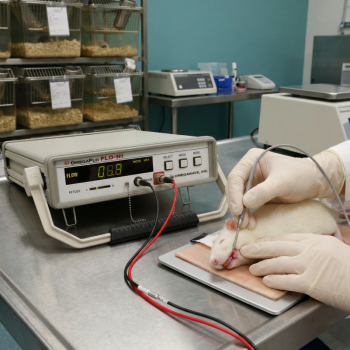
Laser Doppler flowmeter , used to measure gingival tissue blood flowOmegawave

FLO-N1
2. Laser Doppler flowmeterBlood flow values in gingival tissueReal time fluorescence quantification
3. PCR
4. Instrument: Quantitative analysis of gene expressionOptical microscope: used for observation and cell counting after tissue section stainingLow temperature storage equipment: liquid nitrogen tank (used for rapid freezing of tissues)
5. -80℃Refrigerator (for long-term storage of tissues)
Heating pad: used to maintain the rectal temperature of rats when measuring gingival blood flow
37℃
1. Experimental Procedure(1) Animal feeding and establishment of diabetes modelallSDRats are kept at a constant temperature(23±1.0℃)Constant humidity(12 45±10%
2. )The animal room, usingThe hourly light dark alternation cycle is provided with tap water through an automatic water supply device.Inject intraperitoneally into ratsSTZ(60mg/kg)To induce diabetes;1 STZinjectionTest the blood glucose levels of rats after the week and measure the blood glucose levels
≥200mg/dL
% of the rats were identified as diabetes model rats and included in the follow-up experiment.(2) Experimental periodontitis induction2 STZinjectionAfter the week, for all rats (normal rats)+Diabetes rats)(0.5mg/kgUnder intraperitoneal injection anesthesia, on the right maxillary second molar(M2)Wrap nylon suture around the neck of the teeth(
3-0 Surgilon
1. )Try to avoid damaging the gums and tie a knot and fix it near the heart opening cover (this side is the experimental side); The left second molar of the upper jaw is not treated (as the control side).(3) Gingival tissue blood flow measurementAfter periodontitis induction, intraperitoneal injection is administered(0.5mg/kg)Anesthetize rats and use a laser Doppler flowmeter(FLO-N1)The probe is fixed on the experimental side and the control side
2. M2Directly above the cheek gum.During the measurement process, place the rat in25℃Heating pad to maintain rectal temperature37℃Record blood flow values (unit:
ml/min/100g tissue
1. ). 2 (4) Organize collection and processingExperimental periodontitis inductionAfter the week, via intraperitoneal injection(
2. 1.5mg/kg)Execute the rats.Collect experimental and control sidesM2Cheek gingival tissue: Part immediately placed in liquid nitrogen for rapid freezing, then transferred to- 80℃Refrigerator storage (for gene expression analysis); The other part, along with bilateral maxillary tissues, is removed and placed24 10%
Fixed with formalin solution
1. Hour (for histological analysis).(5) Gene expression analysisuseTRIzol ReagentExtract total from frozen gingival tissueRNAFurthermore, overallRNAAs a template, useSuperscriptⅢ RNase H-Reverse Transcriptasesynthesis
2. cDNA.adoptTaqMan Universal PCR Master MixandTaqManProbe, inABI Prism 7000On the instrumentPCRReaction, reaction conditions are95℃ 1Minutes52℃ 1Minutes40 72℃ 30
3. Seconds, totalA cycle.withGAPDHFor internal reference genes, useΔΔCtMethod calculationTNF-αand
iNOS
The relative expression level of genes.