-
E-mail
info@labcan.cn
-
Phone
18016316889
-
Address
No. 988 Jingtang Road, Jiading District, Shanghai
Kerun Experimental Equipment (Shanghai) Co., Ltd
Ionic liquid mediated nano vesicles assist in efficient transdermal insulin delivery
Date: 2025-12-25Read: 5
2024year12Month, Kyushu UniversityFahmida Habib NabilaWaiting for the team to arrive《ACS Biomaterials Science & Engineering》Publish research. This study aimed to address the technical bottleneck of insulin transdermal delivery and developed a biocompatible lipid based ionic liquid[EDMPC][Lin]Liposomes(ET)And trans liposomes(TET1)Nano vesicle preparation, pre mixed-The coating process was optimized to achieve efficient percutaneous penetration of insulin, providing a non-invasive and long-term drug delivery scheme for diabetes.
summary
Transdermal delivery of insulin is a potential solution for diabetes management, which can achieve controllable slow release and prolong the efficacy. But the molecular weight of insulin is relatively large (about5800 Da)It is difficult to passively penetrate the stratum corneum of the skin and requires high-dose administration, which limits its commercial application. This study developed a bio compatible lipid based ionic liquid[EDMPC][Lin]Liposomes(ET)And trans liposomes(TET)Nano vesicle preparation. Dynamic light scatteringζPotential, transmission electron microscopy, and confocal laser scanning microscopy studies have shown that the size of nanocapsules is stable and stable4℃Stable storage is possible3More than a month. Labeling insulin with fluorescein isothiocyanate(FITC-Ins)Control solution and othersTETCompared to formulations, containingIPMofETandTET1The formulation enhances the stratum corneum by altering its molecular structureFITC-InsTransdermal penetration in mouse and pig skin(p<0.0001). Three dimensional artificial skin model in vitro and diabetes mouse model in vivo show that these nano vesicles are biocompatible and non irritating (cell survival rate>80%). with30 IU/kgAfter transdermal administration of the dose to diabetes mice,ETandTET1The preparation reduced the initial high blood sugar level(>150 mg/dL)Reduce blood sugar levels separately62%and34%And maintain a low blood sugar state beyond15Hours, while the injection group only maintained2Hour. thatETandTET1The formulation has potential for application in commercial transdermal insulin patches.
experimentMaterials and Instruments Used
(1) Experimental materials
1. Chemical reagent: isopropyl myristate(IPM)Twain-80(T80), Si Pan-20(S20)The1,2-Dimeric myristoyl-sn-glycerol-3-Phosphatidylcholine(DMPC)Ethyl trifluoromethanesulfonate3-(4,5-Dimethyl-2-Thiazolyl)-2,5-Diphenyl group-2H-Tetrazolium bromide(MTT)Recombinant human insulin, fluorescein isothiocyanate isomer1(FITC-I)The99.5%Ethanol, linoleic acidPD-10DextranG-25 MColumn, Du's phosphate buffer solution(D-PBS)Trypsin/Ethylene diamine tetraacetic acid(EDTA)Isopropanol(IPA)Acetonitrile(ACN).
2. Model and sample: 3D reconstruction of human epidermis modelHR-1Mouse skin slices, female Yucatan miniature pigs(YMP)Frozen skin samples5Zhou Ling male diabetes mice.
3. Kit: Human Insulin Enzyme Linked Immunosorbent Assay(ELISAtest kit
(2) Experimental instruments
1.Characterization instruments: dynamic light scattering analyzer, chromatograph, transmission electron microscope, confocal laser scanning microscope.
2.Penetration and analysis instruments:Improved typeFranzDiffusion poolMulti functional enzyme-linked immunosorbent assay (ELISA) reader and spectrometer(PerkinElmer)TheASCHVaposcanTransdermal moisture loss measuring instrument.
Experimental Procedure
1.Preparation of nano vesiclesandCharacterization of formulations.
2.In vitro skin penetration experiment: usingImproved typeFranzDiffusion poolApply the preparation to the stratum corneum of pig skin,32.5℃incubation24Hour by hour, measure the content in the receiving solution using an enzyme-linked immunosorbent assay (ELISA) readerFITC-InsContent; After frozen sectioning, observe the depth of skin penetration using confocal microscopy.

Improved typeFranzDiffusion pool
3.Analysis of stratum corneum structure: After treatment with the formulation, the stratum corneum of the skin is separated, and the characteristic peak shifts of lipids and keratin are detected by a spectrometer to analyze the changes in molecular structure.
4.In vitro and in vivo irritant experiments: A three-dimensional artificial skin model was used in vitro, and throughMTTMeasure cell survival rate using the method; In vivo, the drug was administered on the skin of diabetes mice throughASCHVaposcanTransdermal moisture loss measuring instrumentdetection24Hours and48The skin barrier function of the hour.
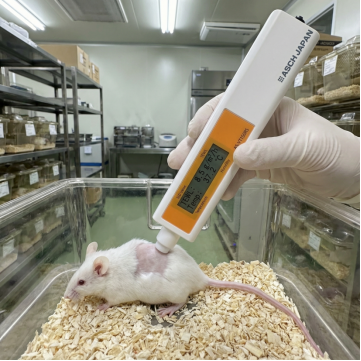
ASCH VAPOSCANTransdermal moisture loss measuring instrument
5.In vivo efficacy and pharmacokinetics: willETandTET1Preparation(30 IU/kg)Transdermal application in diabetes mice, monitoring24Hourly blood glucose changes; Collect blood samples at different time points, throughELISATest kit for measuring plasma insulin concentration and analyzing pharmacokinetic parameters.
empirical conclusion
1.successfully preparedETandTET1Nano vesicle preparation,ETParticle size approximately160 nm(PDI<0.3),TET1Particle size approximately400 nm(PDI<0.15)All of them have good physical stability,4℃store3No aggregation, phase separation or drug precipitation for months.
2.Excellent biocompatibility of the formulation and in vitro cell survival rate>90%There is no significant change in transdermal water loss in the body, and the skin barrier function can be improved48Recovered within hours, non irritating.
3.In vitro skin penetration experiments have confirmed that,ETandTET1The formulation can significantly improve insulin permeability by altering the lipid fluidity and keratin structure of the stratum corneum; In the in vivo experiment,ETPreparation reduces blood sugar in diabetes mice62%,TET1Formulation reduction34%Both can maintain a low blood sugar state15Hour, it's the injection group(2The hour)7Twice.
4.This formulation does not require invasive procedures, avoiding the pain, infection risk, and high insulin peak caused by injection, providing a new strategy for transdermal delivery of insulin and other peptide drugs, and has important commercial application potential.