-
E-mail
info@labcan.cn
-
Phone
18016316889
-
Address
No. 988 Jingtang Road, Jiading District, Shanghai
Kerun Experimental Equipment (Shanghai) Co., Ltd
Intervention study of external use of Lactobacillus paracasei culture on atopic dermatitis mouse model
Date: 2025-12-25Read: 5
2025year10Yue, waiting at the Veterinary Pharmacology Laboratory of Azabu University《Biomedicines》A study was published in a journal. This study focuses on Lactobacillus paracasei(Lactobacillus paracasei)Mixed microbial culture of Pichia pastoris and Saccharomyces cerevisiae(LS)Explored the external application of new probioticsLSFor atopic dermatitis(AD)The therapeutic and preventive effects of mouse models were studied, and their immune regulatory mechanisms were investigated through in vitro experiments.
summary
background/purpose
This study focuses on mixed microbial cultures of Lactobacillus paracasei, Pichia pastoris, and Saccharomyces cerevisiae(LS)This new type of probiotic aims to explore external useLSFor atopic dermatitis(AD)The therapeutic and preventive effects of mouse models.
method
By detecting interleukins(IL)-10And tumor necrosis factor(TNF)alphaLevel, in mouse dendritic cell lines(DC2.4)Research in ChinaLSThe immunomodulatory effect; By followingIL-8Regulating chemokines with thymus activation(TARC)The generation of epidermal keratinocytes in stimulated individuals(Hachand)Mid evaluationLSAnti-inflammatory effect; Finally, established through local sensitization dust mite ointmentADIn mouse models, investigate10% LSThe therapeutic and preventive effects of external use. Monitor clinical symptoms, back skin thickness, and transepidermal water loss weekly(TEWL)Analyze the immune response of the lymph nodes behind the ear after autopsy.
result
LSProcessing enhancementDC2.4cell secretionIL-10andTNFα; andLSAfter co cultivation, stimulatedHachandProduced by cellsIL-8andTARCreduce InADIn the treatment setting of mouse models, although clinical symptoms, skin thickness, andTEWLnoneobviousChange, butLSLocal lymph nodes in the treatment groupIgEpositiveBNumber of cells andIL-4Decreased level; andADCompared with the control group mice,LSPreventive treatment has reducedADsymptom.
Conclusion
The research results indicate that,LSThe immunomodulatory and anti-inflammatory effects can preventADThe occurrence and development.
experimentMaterials andinstrument
1. experimental materials
Mixed microbial culture(LS)
Cell lines: Mouse dendritic cell line, human epidermal keratinocyte cell line
Experimental animals:NC/Ngamouse
Reagent:10%Fetal bovine serum, penicillin-Streptomycin, recombinant humanTNFαInterferon(IFN)γEnzyme linked immunosorbent assay(ELISA)Reagent kit, monoclonal antibody(PE/Cyanine7Coupling anti mouseCD3ThePECoupling anti mouseCD4Wait, mouseTactivatorCD3/CD28Magnetic beadsBiostir AD(Dust mite extract)4%Sodium dodecyl sulfate solution
2. Experimental apparatus
CellDrop™Cell Counting System
BD FACSAria™IIIcell sorter
ASCH VAPOSCANTransdermal moisture loss measuring instrument
Experimental Procedure
1. in vitro experiment
•DC2.4Cell experiment: will70%The degree of convergenceDC2.4Cell(1×10⁴A cell/100μL)Vaccination to96In the well culture plate, exposed to different concentrations ofLS, throughELISAQuantitative detection of supernatantIL-10andTNFαThe concentration.
•HachandCell experiment: will70%The degree of convergenceHachandCell(1×10⁴Inoculate cells containing100μLThe cultivation medium96In the well culture plate, recombinant human is usedTNFαandIFN γstimulate1After an hour, join in100μLdifferent concentrations ofLS, incubation24Hour by hour, throughELISAQuantitative detection of supernatantIL-8andTARCThe concentration.
2. in vivo experiments
•ADEstablishment of mouse model: through local sensitizationBiostir AD(Dust mite extract) and local application4%Sodium dodecyl sulfate solution, inNC/NgaEstablished in miceADmodel
•Medication regimen: Treatment group fromADAfter onset of illness19Day (average)ADRated as2.07)To the end33Tian, apply locally daily0.1mL/only10% LSSolution(n=8)Or distilled water solvent(n=7); Prevention team from the0From day to day18Oh my god(ADPerform local administration before induction.
•Indicator monitoring: Monitor once a week during the experimental periodTEWLBack skin thickness and clinical score(0-4Score, corresponding to asymptomatic, mild, moderate, severe, and extremely severe, respectively.
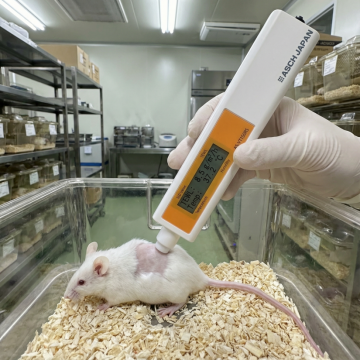
ASCH VAPOSCANTransdermal moisture loss measuring instrument
•Sample collection and analysis: after sensitization1Tian, collect lymph nodes behind the ears of mice(LN)Prepare single-cell suspension and count; passBD FACSAria™IIICell sorter analyzes cell phenotype; Single cell suspension of lymph nodes(5×10⁵A cell/Kong and miceTactivatorCD3/CD28Magnetic bead incubation24Hour,ELISADetect in the supernatantIFN γTheIL-4TheIL-13andIL-17Level; Blind semi quantitative histopathological evaluation of skin samples using0-3Division system(0To be normal,1Mild,2For moderate,3For severe cases.
empirical conclusion
In vitro experiments,LSProcessing enhancementDC2.4cell secretionIL-10andTNFαAnd it can reduce stimulationHachandCell productionIL-8andTARCIt exhibits a dose-dependent effect.
InADIn the treatment setting of mouse models,LSAlthough notobviousChange clinical symptoms, skin thickness, andTEWLHowever, it improved histological manifestations such as stratum corneum hyperplasia and epidermal scab formation, while reducing the number of local lymph nodesIgEpositiveBNumber of cells andIL-4Level.
Prevention and treatment are more effectiveobvious,LSCan reduceADClinical symptoms and histological changes in mice, reducing the effect in lymph nodesTNumber of cells andIL-13Level.
Overall, mixed microbial cultures of Lactobacillus paracasei, Pichia pastoris, and Saccharomyces cerevisiae(LS)Has immunomodulatory and anti-inflammatory activityADThe preventive effect is superior to the therapeutic effectADEarly local microbiome regulation interventions provide potential strategies.