-
E-mail
fengjunjie@noozle.com.cn
-
Phone
13918684639
-
Address
Building 4, 3255 Shengang Road, Songjiang District, Shanghai
Nuoze Fluid Technology (Shanghai) Co., Ltd
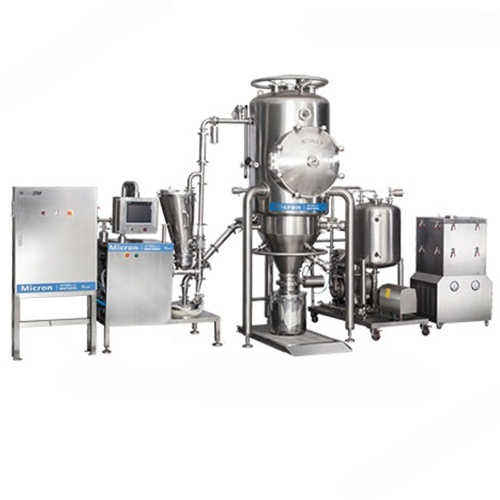
Working principle and application fields of medical airflow pulverizer
Date: 2025-11-25Read: 5
Medical airflow crusher is a device that uses high-speed airflow to crush materials, widely used in the pharmaceutical industry, chemical industry, food industry and other fields, especially suitable for processing materials with high hardness, heat sensitivity and easy moisture absorption. Through the high-energy action of airflow, materials are accelerated and forced to collide and rub against each other in the crushing chamber, thereby achieving the crushing effect. It can effectively avoid the problems of thermal damage, pollution, and uneven particle size caused by traditional crushing methods during the crushing process, and therefore has important application value in high demand pharmaceutical production.
1、 Working principle
Medical airflow pulverizerThe basic working principle of is to use compressed air to accelerate the material to a high-speed airflow state, and through the power of the airflow, the material collides, rubs, and shears to achieve the purpose of crushing. The specific process is as follows:
Feeding and acceleration: The material is fed into the crushing chamber through the feeding device. Compressed air is sprayed into the nozzle or spout, forming a high-speed airflow that accelerates the material to very high speeds.
Material collision and crushing: Under the action of airflow, materials collide and rub with other materials in the crushing chamber, or collide with specially designed crushing structures, thereby crushing large particle materials into smaller particles.
Airflow classification: The crushed material particles are classified according to their particle size in the airflow. Finer particles rise with the airflow and are collected by a grading device; Larger particles are sent back to the crushing chamber for re crushing.
Collection and exclusion: The crushed material is sent into the classification system through an airflow and separated by a filter or collector. Ultimately, powders that meet the particle size requirements are collected, while particles that do not meet the standards are re crushed.
2、 Application Fields
Medical airflow pulverizers are widely used in the pharmaceutical industry due to their ability to effectively avoid thermal damage and accurately control particle size, particularly in the following areas:
1. Raw material crushing
In the pharmaceutical industry, the particle size of drugs directly affects their solubility, absorption rate, and bioavailability. Especially for some poorly soluble or thermosensitive drugs, using traditional crushing equipment can easily generate excessive temperatures, causing changes in the properties of the drug and affecting its efficacy. It adopts the principle of airflow cooling to avoid this problem, and can also crush particles to the micrometer or even nanometer level, significantly improving the solubility and bioavailability of drugs.
2. Chinese herbal medicine pulverization
The active ingredients of many Chinese medicinal herbs exist in their small particles, and crushing is a crucial step in the extraction process of Chinese medicine. The traditional method of crushing traditional Chinese medicine often leads to excessive temperature, which can damage the efficacy of the medicine. And it can be crushed at low temperatures to ensure that the effective ingredients of the medicinal herbs will not evaporate or degrade due to high temperatures. In addition, traditional Chinese medicine can be crushed into fine particles to improve extraction efficiency and achieve ideal medicinal effects.
3. Crushing of biological products and vaccines
Biological products such as vaccines, antibodies, etc. are usually sensitive to heat, and high temperatures can cause them to become inactive. It can also crush these materials at lower temperatures to maintain their activity and stability. Therefore, it is widely used in the biopharmaceutical industry, especially in the process of vaccine crushing and preparation, which can effectively avoid thermal damage and ensure product quality.
Medical airflow pulverizer is one of the important equipment in modern pharmaceutical technology. It can not only improve the crushing efficiency, but also ensure that impurities are not introduced during the crushing process, avoiding damage to drugs or other materials caused by high temperatures. With the development of pharmaceutical technology and the increasing demand for drug quality, it will play an increasingly important role in the pharmaceutical industry.