-
E-mail
li.fu@perkinelmer.com
- Phone
-
Address
1670 Zhangheng Road, Pudong New Area
PerkinElmer Enterprise Management (Shanghai) Co., Ltd
Lithium Leads the World | Determination of 9 Carbonates in Lithium ion Battery Electrolytes by GC/MS Method
Date: 2025-11-08Read: 7
The electrolyte solution commonly used for commercial lithium batteries contains lithium salts, organic solvents, and some additives. Organic solvents are mainly cyclic carbonates, such as ethylene carbonate and propylene carbonate, or chain carbonates, such as diethyl carbonate and methyl ethyl carbonate. The composition and proportion of these carbonates have a significant impact on the energy density, cycle life, and safety of lithium-ion batteries. Therefore, studying the composition and content of carbonates in electrolyte solutions plays an important role in the development and quality control of lithium-ion batteries.
This article establishes a method for usingPerkinElmer GCMS 2400 gas chromatography-mass spectrometryDetermination of 9 types of carbonates in electrolyte solution using EI source定性、定量方法This methodSimple, sensitive, and efficient.
experiment
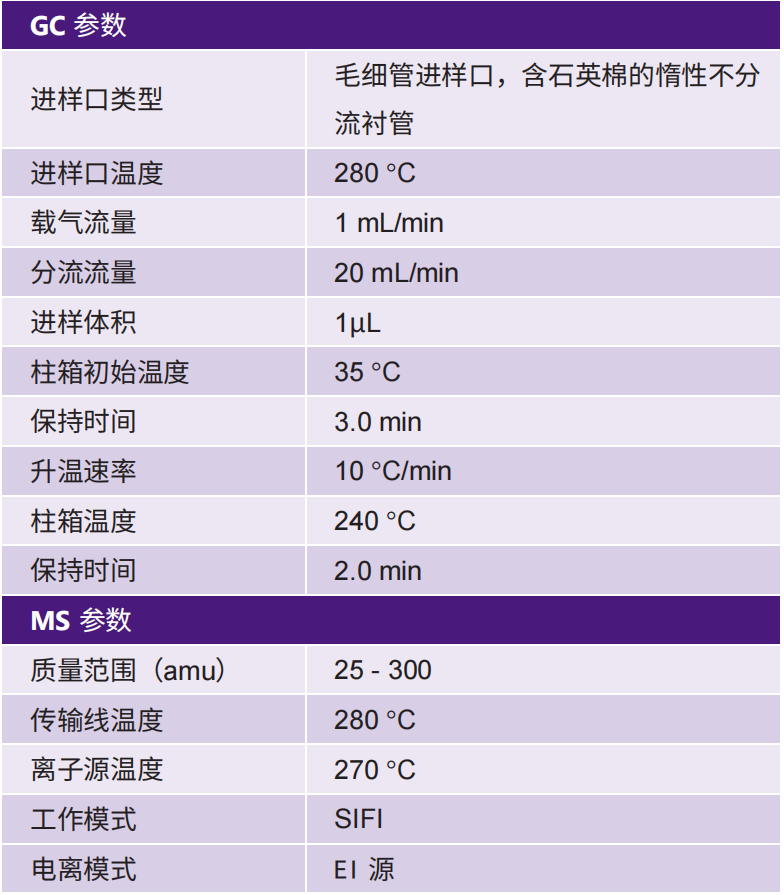
This article conducted experiments using a PerkinElmer GCMS 2400 gas chromatography-mass spectrometry system with an EI source. The experimental conditions are shown in Table 1. This article uses a PerkinElmer Elite 35 MS column (30 m x 0.25 mm x 0.25 nm) to achieve compound separation.
Table 1. Analysis Parameters
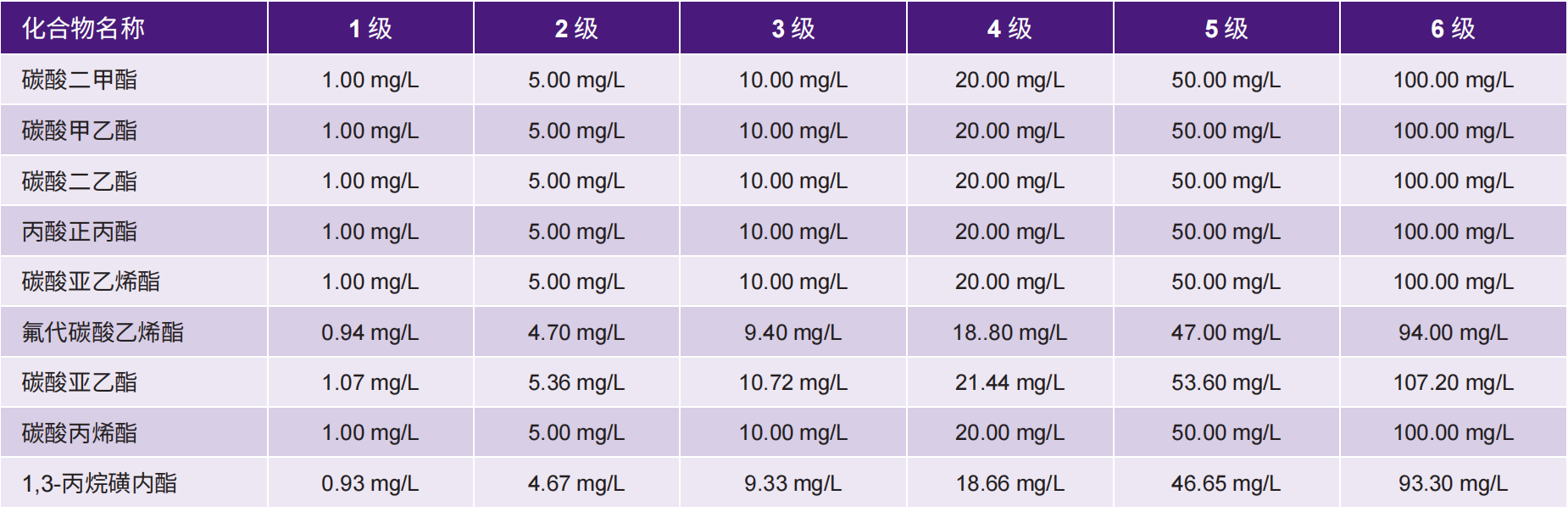
Nine carbonate standards (as shown in Table 2) were purchased from Shanghai Anpu Company and diluted with ethyl acetate (HPLC grade, Honeywell) to produce calibration solutions within the desired range. The electrolyte sample was diluted with ethyl acetate at a ratio of 1:10000 (v/v).
Table 2. Concentration of standard samples
(Click to view large image)
•Calculate the precision of the method using six consecutive injections of medium concentration standard samples.
•Calculate the detection limit of the method using the lowest concentration standard sample for 7 consecutive injections.
•Calculate the recovery rate using a medium concentration standard.
Results and Discussion
Select the ion flow chromatogram as shown in Figure 1. By using the selective ion scanning mode, all target compounds are completely separated. The linear correlation coefficients (r2) of all compounds are greater than 0.999, indicating the reliability of quantitative analysis in the range of 1-100 mg/L.
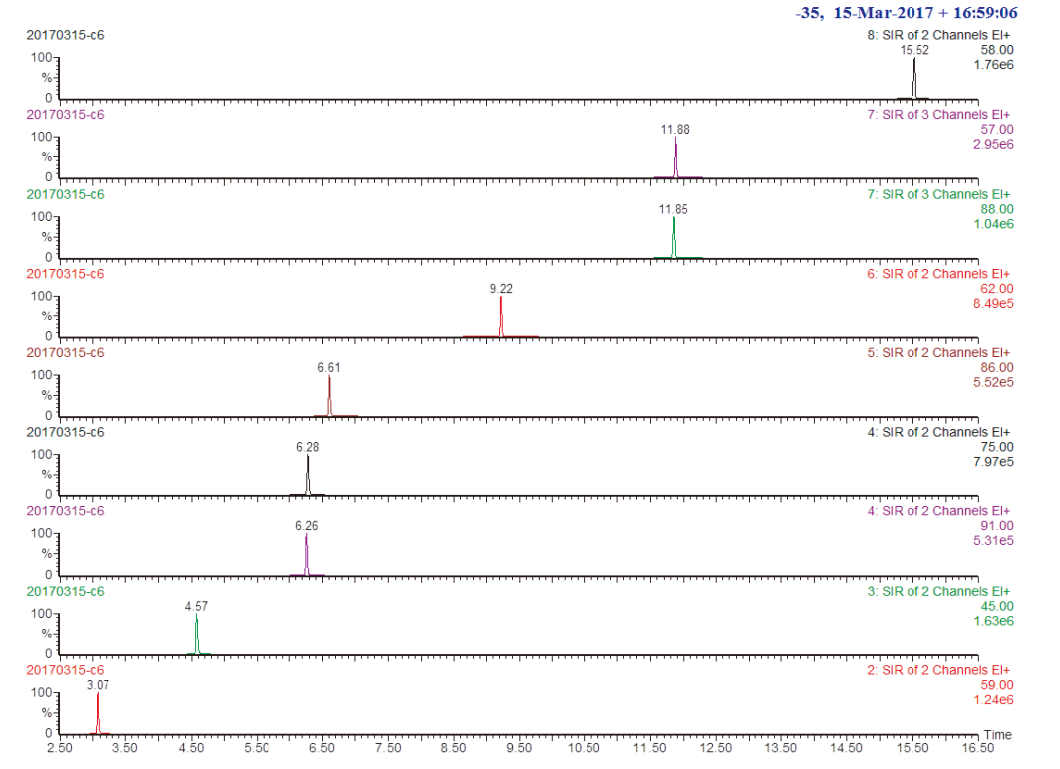
Figure 1. Select ion chromatogram (click to view larger image)
Tables 3 and 4 summarizeretainResults of time, quantitative and qualitative ions, linearity, precision, recovery rate, method detection limit (MDL), and quantification limit (MQL)The detection limit of the method is 0.080-0.176 mg/L; The actual sample recovery rate is 92.40-104.45%; The precision of standard sample labeling is (RSD%) 1.02-2.16%, while the precision of actual sample labeling is 1.61-2.05%.
Table 3. Retention time, quantitative and qualitative ions, and linear results
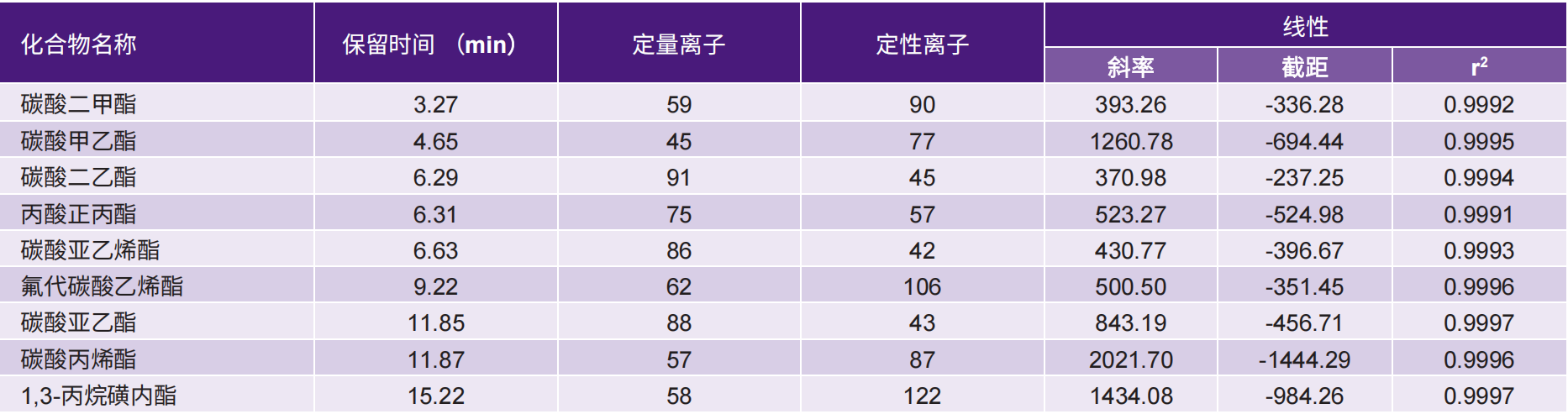
(Click to view large image)
Table 4. Results of Accuracy, Recovery, Method Detection Limit, and Quantification Limit
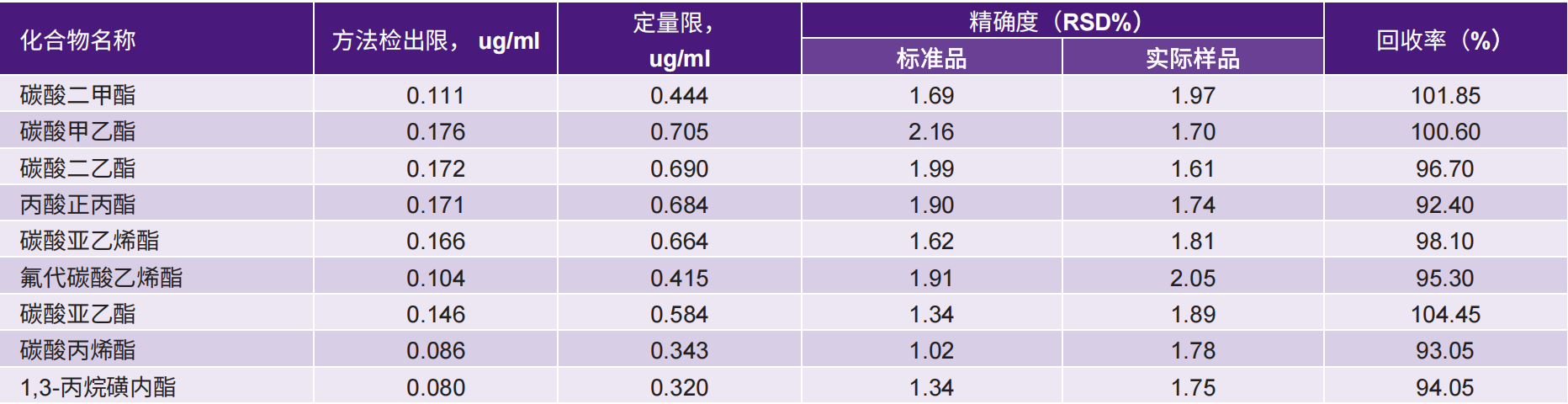
(Click to view large image)
summary
This article usesPerkinElmer GCMS 2400 gas chromatography-mass spectrometryNine types of carbonates in the electrolyte of lithium-ion batteries were determined using an EI source. The experimental results show that this method hasgoodAccuracy, recovery rate, linearity, and detection limitCan meet the needs of the lithium-ion battery industry.
References
Sun Shanshan, 2009, "Research on a New Ionic Liquid Electrolyte for Lithium ion Batteries". Master's thesis in engineering. Harbin Institute of Technology
Next Article: Material Vision | ATR Imaging Analysis of Drug Tablets