-
E-mail
li.fu@perkinelmer.com
- Phone
-
Address
1670 Zhangheng Road, Pudong New Area
PerkinElmer Enterprise Management (Shanghai) Co., Ltd
Thermogravimetric analyzer can detect small changes in mass
Date: 2025-11-16Read: 10
Thermogravimetric analyzer is an instrument used to measure the mass change of materials over time or temperature within a specific temperature range. By monitoring the quality changes of the sample in real-time, TGA can provide important information about the sample's thermal stability, composition distribution, and volatile substance content. Thermogravimetric analysis is widely used in fields such as chemistry, materials, environment, and pharmacy, helping researchers understand the thermal behavior and pyrolysis properties of materials.
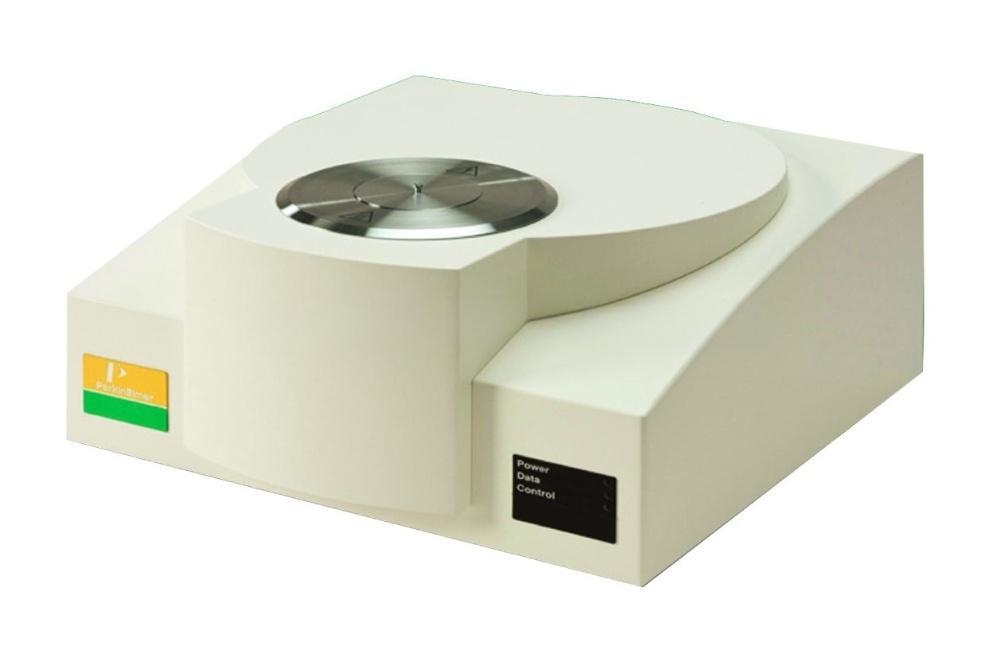
The principle of thermogravimetric analysis:
1. Sample heating: Place the sample to be analyzed on a balance and control it to be heated in a certain atmosphere (such as nitrogen, air, or other inert gases). During the heating process, the temperature usually rises at a constant rate.
2. Quality change monitoring: During the heating process, the quality change of the sample is monitored in real time through a high-precision electronic balance. Any quality change will be reflected in the output signal of the instrument, usually manifested as a curve of quality changing with temperature.
3. Data analysis: The results of thermogravimetric analysis are usually presented as the relationship curve between mass and temperature. By analyzing the mass changes at different temperatures, information such as the weight loss stage, decomposition temperature, and reaction mechanism of the sample can be obtained.
Thermogravimetric AnalyzerThe main components of:
1. Sample tray: used to place samples to be analyzed, usually made of high-temperature resistant materials such as platinum or aluminum, to ensure that the quality of the samples is not affected at high temperatures.
2. High precision electronic balance: The electronic balance is one of the core components, responsible for real-time measurement of sample quality changes. The sensitivity of the balance is high, and it can capture small changes in mass, usually in the microgram range.
3. Heating furnace: The heating furnace is used to provide an environment where the temperature rises. Generally, the heating rate can be controlled and the target temperature can be precisely set. Heating furnaces are often designed with good heat distribution and temperature control systems to ensure that samples are uniformly heated.
4. Atmosphere control system: The sample needs to be tested under different atmospheres, and the atmosphere control system is responsible for providing and adjusting the gas environment inside the instrument, such as nitrogen, argon, air, or other specific atmospheres. The reaction characteristics of the sample may vary under different atmospheric conditions.
5. Data acquisition system: including data acquisition software and hardware, used to record the curve of sample quality changing with temperature, and to process and analyze the data in real time.
Advantages of Thermogravimetric Analyzer:
1. High precision: Thermogravimetric analysis has the ability to measure quality changes with high precision, and can detect small changes in quality.
2. Small sample size: In general, TGA testing requires a small sample size, especially for valuable or difficult to obtain materials.
3. Reliable data: The quality temperature curve provided by thermogravimetric analysis can effectively reflect the thermal behavior and material transformation characteristics of the sample, and the data reliability is high.
4. Wide application: TGA is suitable for various sample types and has applications in multiple industries such as materials, chemistry, environment, and pharmaceuticals.