-
E-mail
shenbiaobiao@zryq.cn
-
Phone
19589992149
-
Address
No. 11 Yuehe Road, Chengyang District, Qingdao City, Shandong Province
Qingdao Zhongrui Intelligent Instrument Co., Ltd
Deep interpretation! HJ732-2025 Revision of Sampling Standards for VOCs Bags from Fixed Pollution Sources
Date: 2025-09-23Read: 20

Issued by the Ministry of Ecology and EnvironmentSampling Bag Method for Volatile Organic Compounds in Fixed Pollution Source Exhaust Gas (HJ 732-2025)It will be officially implemented on April 1, 2026, fully replacing the 2014 version of the standard. Based on the original standard text and compilation instructions, conduct a comparison between the old and new, providing clear guidance for monitoring agencies to understand the new regulations and connect them with implementation.
01 Scope of application: Breaking through temperature and pollutant type restrictions
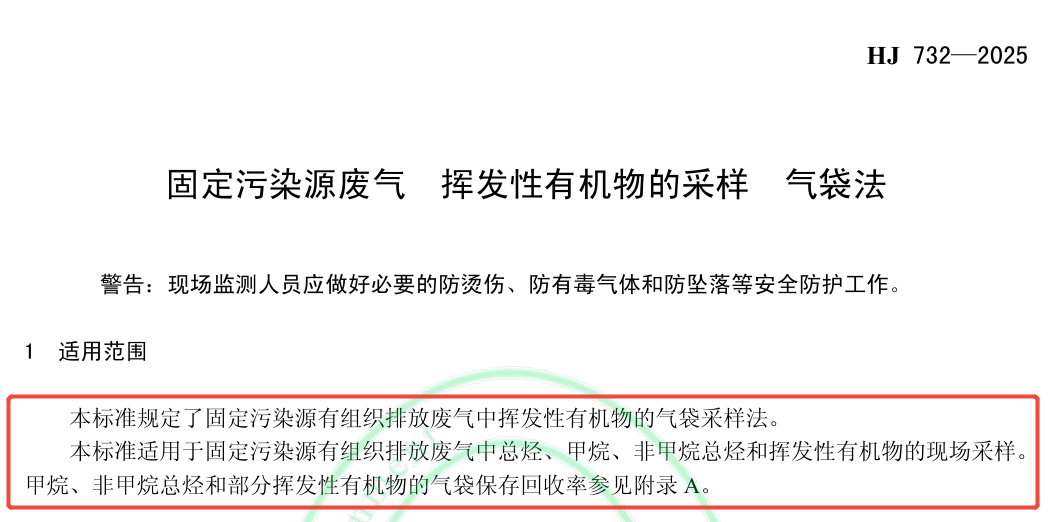
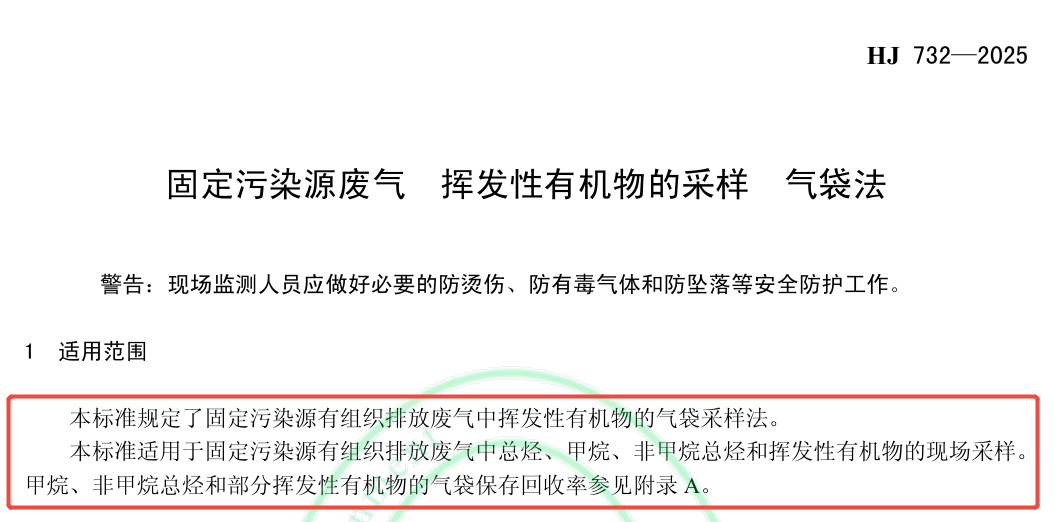
1. Remove temperature restrictions and cover high-temperature exhaust gases above 150 ℃ through condensation/dilution pretreatment.(The old standard clearly limits the exhaust gas temperature to be below 150 ℃)
Meaning: To solve the problem of sampling high-temperature exhaust gases below 300 ℃ emitted from processes such as RTO furnaces and catalytic combustion, and to adapt to current mainstream VOCs treatment technologies.
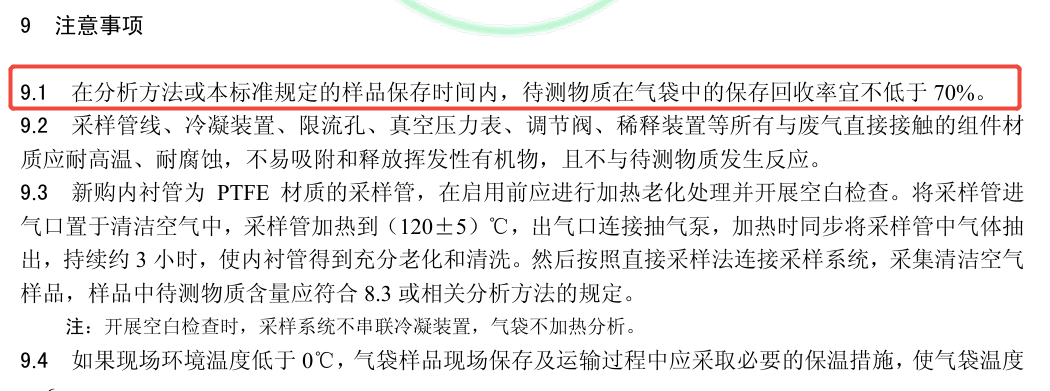
2Focus on 57 VOCs, toRequire the storage and recovery rate of VOCs gas bags to be tested to be ≥ 70%.(The old standard did not specify the specific types of VOCs, including chlorobenzene and polycyclic aromatic hydrocarbons with boiling points>170 ℃)
3Added dilution sampling method, suitable forUltra high concentration scenarios such as distribution oil depots (25g/m ³).(There is no high concentration exhaust gas sampling scheme in the old standard)
Meaning: To avoid contamination of the instrument by high concentration samples and reduce laboratory dilution errors (preparation instructions verification: relative deviation of diluted samples<10%)
0Principle of Method 2: Expanding from Single Direct Sampling to Three Methods

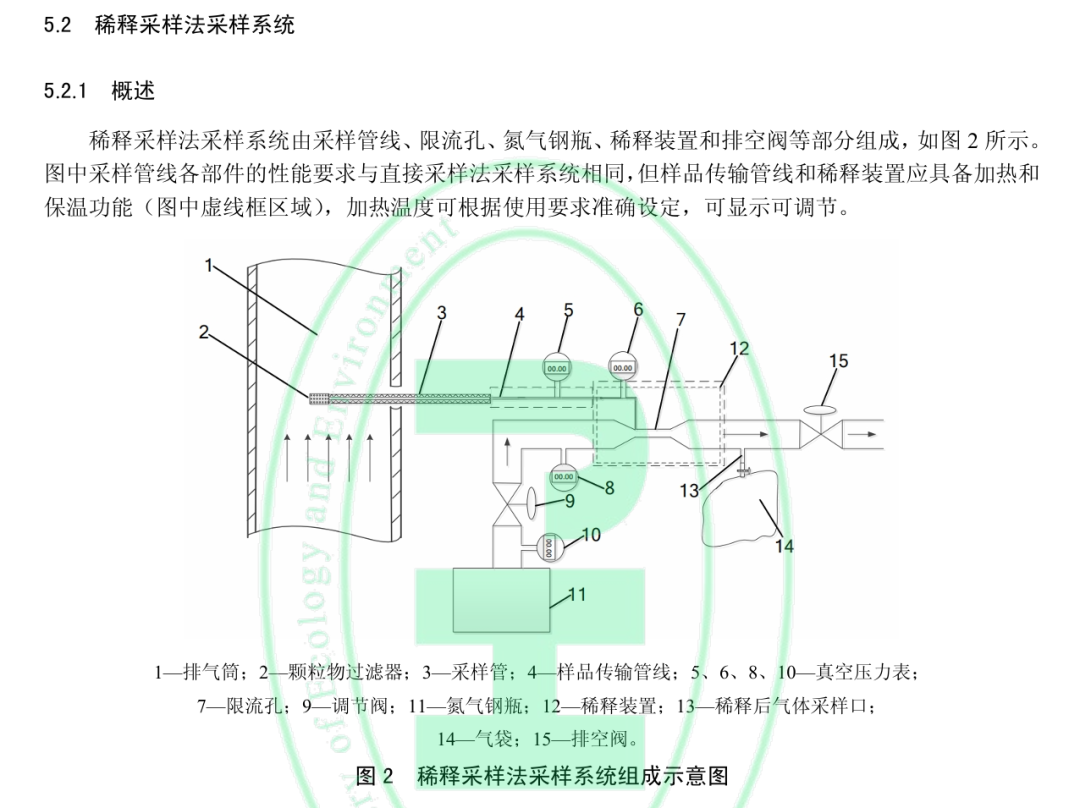
The exhaust gas emitted from the exhaust pipeDirect collection, or condensation (dehumidification)、Proportional dilutionCollect and store in the airbag after preprocessing.(The old standard only used direct sampling method)

1. Direct sampling method for series condensing devices:After the sampling tube is connected in series with a condensing device, dehumidification and cooling (0 ℃~4 ℃) are carried out to solve the problem of high humidity (moisture ≥ 15%) waste gas droplets. But it is clearly not applicable to water-soluble VOCs such as acetone. (Experimental verification: The loss rate of water-soluble VOCs reaches 15%~20%)
2. Dilution sampling method:based onJet principleDilute with 99.999% nitrogen in a proportional manner, and the dilution ratio can be verified. Adapt to high concentration exhaust gas and reduce sample temperature (preparation instructions: high temperature exhaust gas diluted at 160 ℃ can be lowered to room temperature)
The dilution sampling method is a new method that differs from the traditional airbag sampling method. Based on the jet principle, this method dilutes the exhaust gas in the exhaust pipe with high-purity nitrogen gas at a certain pressure in a proportional manner. At a determined pressure, a constant flow is generated through the sample gas passing through the limiting hole to obtain and maintain a stable dilution ratio. The dilution ratio can be changed by replacing the limiting hole or adjusting the dilution pressure. The dilution sampling method can reduce the concentration of pollutants in the exhaust gas and effectively lower the exhaust gas temperature. The diluted gas can be collected into a gas bag or connected to a portable instrument for on-site testing.
03 Clarify the specification requirements for airbags/auxiliary gases/airbag storage containers
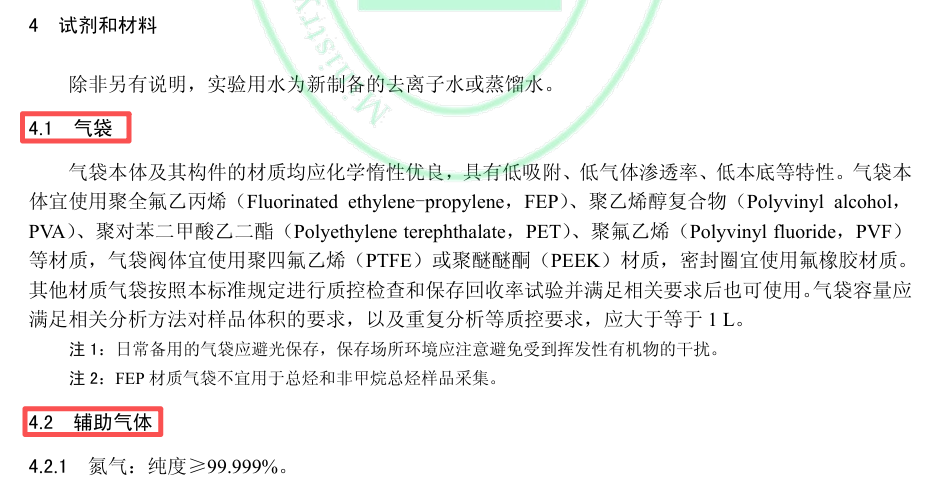
Airbag:
Body: FEP, PVA, PET, PVF (recommended);
Valve body: PTFE/PEEK;
Sealing ring: Fluororubber;
Capacity ≥ 1L.
Auxiliary gas:
Nitrogen: purity ≥ 99.999%;
Dehydrated air: Total hydrocarbons ≤ 0.40mg/m ³ (calculated as methane)
Airbag storage container:
It needs to have mechanical strength, avoid light, and be easy to transport.
Meaning: Reduce the risk of photolysis and damage during sample transportation (experimental verification: storing in the dark can increase VOCs recovery rate by 5% to 8%)
04 Instrument and equipment: require and operate more standardized

Sampling tube:Heating (120 ± 5 ℃)/insulation required, made of PTFE/stainless steel material;
New condensing device:The refrigeration temperature is between 0 ℃ and 4 ℃, and the outlet temperature can be displayed;
Vacuum pump:Flow rate of 0.1~1.0L/min, negative pressure ≥ 15kPa;
Dilution device:Jet principle, adjustable nitrogen pressure;
Flow restriction hole:Ensure a stable dilution ratio;
Sample heating device:It can be uniformly heated to 80-100 ℃, with visible holes and a temperature accuracy of ± 5 ℃.
05 Sampling process: Add pre survey/blank preparation

1. Pre investigation:Analysis of exhaust gas temperature, moisture content, and VOCs concentration is required.Before conducting on-site sampling, monitoring personnel should conduct a preliminary investigation of the monitoring object according to the monitoring plan and refer to Appendix B.1, to preliminarily determine the type and concentration level of the substance to be tested in the organized exhaust gas emitted from the exhaust pipe, as well as the emission characteristics such as exhaust gas temperature and moisture content. They should also refer to Appendix B.2 to select the appropriate airbag sampling method.

2. Blank preparation:Prepare nitrogen/hydrocarbon removal air blank in the laboratory as a transport blank.
06 Sample Preservation and Analysis: Extension and Standardization

1. Extend the sample analysis time to 48 hoursAdd the option to store airbag samples in other types of containers such as vacuum bottles or stainless steel cans that have been pre cleaned and evacuated to negative pressure. When liquid droplets condense in the airbag sample, the heating analysis operation steps of the airbag have been refined and improved, and the temperature control requirements for airbag heating have been clarified.
2. Temperature: 80 ℃~100 ℃, time: 5-10 minutes; Can only be heated once.
Avoid interference caused by high temperature in airbag release (such as FEP airbag releasing non methane total hydrocarbons up to 2.0mg/m ³ at 120 ℃)
3. Transportation requirements: Insulation is required for temperatures below 0 ℃, and room temperature should be restored before analysis.
07 Quality Control: Building a Full Process System

Airbag quality control:
1. Blank sampling: ≥ 2% per batch (1 sample for<50), VOCs ≤ method detection limit;
2. Heating release: Non methane total hydrocarbons ≤ 1mg/m ³ after heating at 100 ℃;
3. Recovery rate test: The material needs to be tested for the first time, with a minimum of 70% after 48 hours
Sampling system quality control:
1. Cleaning: Clean the sampling tube and dilution device with nitrogen every time;
2. Dilution ratio verification: once every six months, calibrated with standard gas, with an error of ± 20%
Blank control:
Each batch of samples must be accompanied by transport blank, and the concentration must comply with the analytical method regulations.