-
E-mail
psf@china-jianan.com
-
Phone
15057360160
-
Address
No. 1188 Jiangnan Avenue, Oubei Street, Yongjia County, Wenzhou City, Zhejiang Province (Canaan Technology)
Zhejiang Canaan Technology Co., Ltd
The process core and working principle of solvent-free granulation by dry granulation machine
Date: 2025-09-20Read: 0
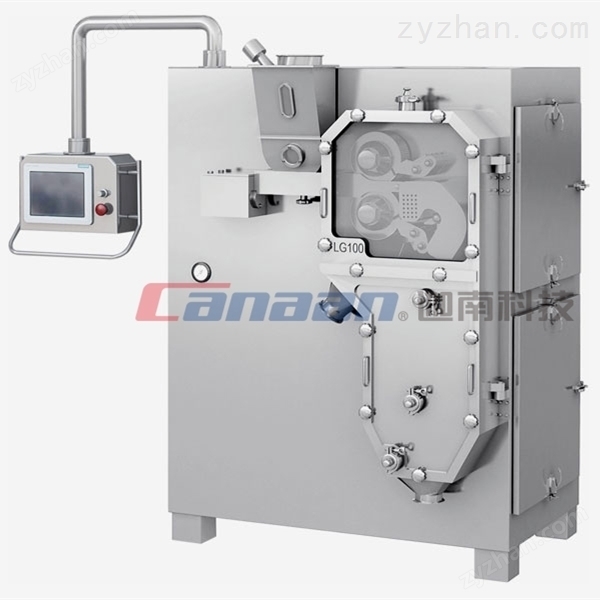
Dry granulation machine is a key equipment in modern pharmaceutical, food, chemical and other industries that directly produces uniform particles from powdered raw materials. Its core advantage lies in the fact that the entire process does not require the addition of any liquid adhesive or subsequent drying steps, making it highly efficient and energy-saving, and particularly suitable for processing moisture or heat sensitive materials. Understanding its working principle is the foundation for mastering this technology and optimizing process parameters.
1、 Core process objectives and advantages
The dry granulation process aims to solve many problems with powder materials, such as inaccurate packaging caused by poor flowability, dust flying, component segregation (separation), and low bulk density during compression. By dry granulation, the flowability of the material can be significantly improved, its appearance can be enhanced, the bulk density can be increased, and the uniformity of the mixture can be ensured. Its solvent-free characteristic avoids the subsequent complex drying and solvent recovery processes, simplifies the process, and reduces costs and safety risks.
2、 Working principle: Three step molding method
Dry granulation is a continuous physical process that is mainly divided into three core stages:
1. Pre pressing (rolling) stage - densification
This is the first step of the process. Completed through a precision designed twin roll system. The surfaces of two rolling rolls usually have specific patterns or remain smooth.
The pre mixed powdered material is forcibly and uniformly fed into the nip zone (roll gap) between two counter rotating rollers through a spiral feeding device.
Under tremendous linear pressure, powder particles are instantly compressed, and the air in between is expelled. The particles undergo plastic deformation and tight fitting, forming continuous, dense thin sheet-like ribbons or blocks. This process mainly relies on intermolecular forces and mechanical interlocking to achieve preliminary molding.
2. Crushing stage - granulation
The dense thin film formed in the first step has high strength, but it is not the final desired particle shape. The flakes are then introduced into a crushing and granulation system.
This system typically consists of one or two sets of rotating screens or crushing knives with different aperture sizes. By mechanical shearing and squeezing, large sheets are broken into blocks of varying sizes and primary particles.
3. Whole grain stage - particle size classification
The particle size distribution after crushing is relatively wide, and further screening is required to obtain a uniform finished product. The crushed material enters the oscillation screening system.
Here, oversized particles are returned to the crushing unit for further crushing, while ultra-fine powders are separated and typically returned to the feeding system for further processing. Finally, uniform particles that meet the predetermined particle size range are output as finished products.
3、 Key control parameters
The success of this process depends on precise control of several key parameters:
1. Roll pressure: It directly affects the density and hardness of the sheet and is the most important factor determining the final particle strength.
2. Roll speed/feeding speed: determines the compression time of the material under the roll and affects the compression effect.
3. Roller gap size: works together with pressure to control the thickness of the thin sheet.
4. Mesh size of the granulator screen: directly determines the final particle size.
summary
The dry granulation machine cleverly converts physical pressure into production kinetic energy through a coherent mechanism of "pre compaction densification → mechanical crushing → screening and sizing", achieving anhydrous dry forming of powder materials. This working principle not only ensures the environmental protection and safety of the process, but also becomes the primary choice technology for granulation of wet and heat sensitive materials due to its high efficiency and energy saving characteristics. It plays an irreplaceable role in the fields of advanced pharmaceuticals and fine chemicals.