In the realm of electrical engineering, material science, and product safety
testing, assessing fire hazard risks is paramount. Electrical components,
connectors, and insulating materials are frequently subjected to overcurrents,
short circuits, or component failures that generate immense localized heat. If a
material cannot resist ignition or self-extinguish, a minor malfunction can
escalate into a catastrophic structural fire.
To mitigate these risks, international standard bodies have established
rigorous fire hazard testing protocols. Among the most precise and widely
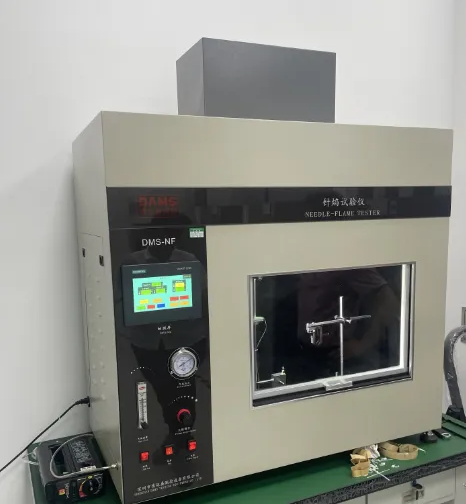
utilized instruments for this purpose is the Needle Flame Tester. This
specialized apparatus simulates the thermal stresses caused by small, localized
ignition sources, providing a standardized environment to evaluate the
flammability and fire-retardant properties of materials.
Core Concept and Operating Principle
The Needle Flame Tester is designed to mimic the exact thermal effects of a
small flame that might arise from a malfunctioning electronic component, such as
a failing resistor or a faulty connection.
The core philosophy behind this test is simple: localization and precision.
Unlike larger scale flammability tests (such as the UL 94 vertical or horizontal
burning tests), the needle flame test focuses on a highly concentrated area. It
utilizes a precision-engineered burner tube—essentially a hypodermic needle—to
direct a miniature propane flame onto a specific location of the test
specimen.
During the test, the flame is applied to the specimen for a predetermined
duration (the flame application time, or $t_a$). Once the flame is withdrawn,
the technician observes and logs the duration of any continued burning (the
afterflame time, or $t_t$), the spread of the flame across the specimen, and
whether any burning or glowing particles fall from the specimen, potentially
igniting a tissue paper layer placed beneath the apparatus.
Technical Components and Apparatus Architecture
A high-quality Needle Flame Tester consists of several integrated sub-systems
engineered to ensure reproducibility and strict compliance with international
testing protocols:
1.The Burner Assembly: The defining feature of the tester is its burner,
which consists of a tube at least 35 mm long with a precise bore diameter
(typically 0.5mm±0.1mm). This micro-burner ensures that the gas flow produces a
stable, miniature flame.
2.Gas Flow and Pressure Control: The system utilizes high-purity butane or
propane gas. It features sensitive mass flow meters and pressure regulators to
keep the gas supply absolutely constant. Any minor fluctuation in gas delivery
will alter the flame's temperature and geometry, invalidating the test
results.
3.Flame Verification System (The Copper Block): Before a test begins, the
flame must be calibrated. This is achieved using a high-purity copper block
equipped with a fine-wire thermocouple. The flame is applied to the copper
block, and the system measures the time it takes for the block's temperature to
rise from 100℃∼700℃. For standard compliance, this temperature rise must occur
within a very tight window (typically 23.5s±1.0s), ensuring the flame's thermal
output is perfectly calibrated.
4.Mechanical Positioning and Angling: The burner mechanism is mounted on an
adjustable track, allowing it to be angled—usually at $45^\circ$ relative to the
vertical axis—while the specimen can be held vertically or horizontally. This
flexibility allows technicians to test complex geometric shapes, sharp edges, or
thin crevices where heat accumulation is most critical.
5.Enclosure and Ventilation: The entire apparatus is housed within a
draft-free, matte-black chamber. The dark interior ensures excellent visibility
of the tiny flame and any subsequent embers. After the test is complete, a
built-in extraction system safely removes toxic combustion fumes from the
laboratory environment.
Key Regulatory Standards
The design and operational procedures of Needle Flame Testers are heavily
governed by international compliance frameworks. The most universally recognized
standard is IEC 60695-11-5 (Fire hazard testing - Part 11-5: Test flames -
Needle-flame test method).
This standard details everything from the physical dimensions of the burner
to the precise preparation of the test specimens. Compliance with IEC 60695-11-5
is mandatory for manufacturers seeking CE marking, UL certification, or CCC
approval for a wide array of electrical products, including household
appliances, information technology equipment, switchgears, and industrial
control panels.
Other related standards leverage the needle flame method to assess specific
components, evaluating items like insulating sleeving, printed circuit boards,
and small terminal blocks.
Critical Evaluation Metrics
When a material undergoes a needle flame test, it does not receive a simple
"pass" or "fail" grade. Instead, its performance is quantified based on several
distinct metrics:
1.Duration of Afterflame ($t_t$): The length of time the specimen continues
to burn after the test flame is removed. High-performance fire-retardant
materials will self-extinguish almost immediately ( tt< 5s or 10s ).
2.Duration of Afterglow: The duration of flameless, glowing combustion after
visible flames have disappeared. Afterglow can still pose a significant risk of
reignition if oxygen levels shift.
3.Extent of Physical Damage: The physical area or length of the specimen
consumed or charred by the flame. This helps determine whether the material
propagates fire or localizes it.
4.Ignition of the Underlayer: A standard indicator layer of wrapping tissue
paper is placed on a pine board directly underneath the specimen. If the
specimen drips burning material and ignites the tissue paper, it fails the test,
as this indicates a high risk of spreading fire to adjacent components in a
real-world scenario.
Conclusion
The Needle Flame Tester is an indispensable diagnostic instrument in the
modern electronics and manufacturing industries. By providing a highly
controlled, reproducible, and precise simulation of localized component
overheating, it empowers engineers to select the safest polymers, composites,
and insulating materials. Ultimately, the meticulous data gathered by this
apparatus plays a vital role in preventing consumer product failures and
ensuring global fire safety standards are reliably met.