-
E-mail
203373190@qq.com
-
Phone
13912479193
-
Address
Wuxi New Area, Jiangsu
Product Categories
Wuxi Guanya Intelligent Equipment Co., Ltd


Customized laboratory chiller | Accurate temperature control to meet diverse needs
NegotiableUpdate on 01/05
- Model
- Nature of the Manufacturer
- Producers
- Product Category
- Place of Origin
Overview
The refrigeration temperature range of the Wuxi Guanya low-temperature freezer is from -80 degrees to 30 degrees, and the temperature control accuracy of the Wuxi Guanya freezer is high. The product uses a mixture of ethylene glycol and water for circulating refrigeration; Adopting supercooling technology to ensure temperature stability at low temperatures; Adopting a fully enclosed design to ensure the purity of the cold and heat transfer medium, prevent ice crystals, and improve the service life of the heat transfer fluid; Customized laboratory chiller | Accurate temperature control to meet diverse needs
Product Details




Customized laboratory chiller | Accurate temperature control to meet diverse needs
Customized laboratory chiller | Accurate temperature control to meet diverse needs
The laboratory chiller uses circulating cooling water to remove the heat generated by the equipment and control temperature fluctuations within a certain range±1°CBelow is a comprehensive analysis of the application scenarios and precautions for laboratory chillers:
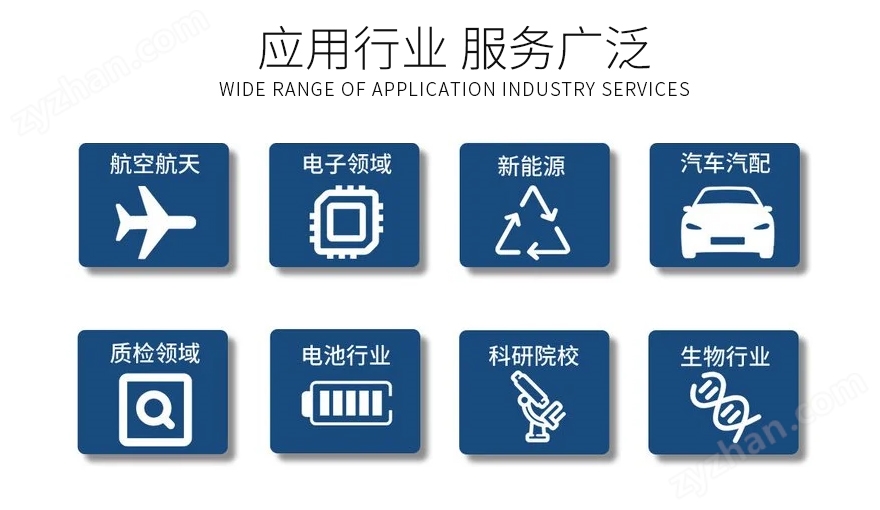
1、 Core application scenarios of laboratory chillers
1Chemistry and Biology Experiment
Rotary evaporator: used to provide a low-temperature environment for solvent recovery, prevent volatilization loss, and improve efficiency.
Biological fermentation tank: controls temperature fluctuations during the fermentation process to ensure microbial activity and product stability.
Chemical reactor: Accurate temperature control in synthesis or exothermic reactions to avoid uncontrolled reactions or product decomposition.
2Materials Science and Analytical Instruments
Spectrometer: Cooling the detector and light source components to maintain instrument accuracy and data reliability.
Vacuum coating equipment: reduces thermal stress during the coating process and improves film uniformity through low-temperature cooling.
3Physics and Laser Technology
Laser: Stabilize the temperature of the laser cavity to prevent thermal deformation from affecting beam quality and equipment lifespan.
Superconducting and low-temperature probes: providing a stable cooling environment for low-temperature experiments.
4Electronics and Semiconductors
Electron microscope: cools electrons and detectors, reduces thermal noise interference, and improves imaging resolution.
Semiconductor etching equipment: Control process temperature to prevent thermal damage to wafer structure.
2、 Key considerations for laboratory chillers
1Installation and environmental requirements
Location selection: It should be placed in a well ventilated, dust-free, and dry environment, avoiding direct sunlight or close to heat sources to ensure heat dissipation efficiency.
Anti vibration measures: Install anti vibration pads to reduce operational vibrations and prevent interference with the instrument.
2Water quality management
Water source requirements: Use deionized water or softened water to avoid impurities blocking pipelines or corroding equipment.
Regular maintenance: Regularly replace the cooling water and filter element, and clean the water tank to prevent scale and microbial growth.
3Operating standards
Startup sequence: Start the cooling water pump first, then start the compressor;Reverse the order when shutting down to avoid abnormal system pressure.
Temperature setting: Avoid setting too low a temperature(If it is lower than the equipment requirements)To avoid triggering low-temperature protection shutdown or increasing energy consumption.
4Maintenance and Inspection
Regular inspection: Check the scaling of the condenser, aging of electrical components, and pipeline leaks, record maintenance logs for tracking equipment status.
Long term shutdown treatment: Drain the water tank and add antifreeze(cold region)To prevent internal pipelines from freezing and cracking.
5Safety protection
Electrical safety: Ensure good grounding, regularly check power lines and wiring terminals to prevent leakage or short circuits.
Emergency measures: Equipped with an emergency stop button, immediately cut off power in case of water leakage, overheating and other abnormalities, and contact professional personnel from Guanya Temperature Control for maintenance.
Through scientific demand assessment, technical matching, and detailed brand and after-sales considerations, laboratory chillers enable users to better balance the relationship between equipment performance, cost investment, and experimental needs, avoiding potential risks caused by selection errors.

Similar Product Recommend
