- Phone
-
Address
Room 202, Science and Technology Complex Building, No. 12 Zhongguancun South Street, Haidian District, Beijing
Product Categories
Beijing Meijiatu Technology Co., Ltd
Desktop Electron paramagnetic Spectrometer MS5000
NegotiableUpdate on 03/24
- Model
- Nature of the Manufacturer
- Producers
- Product Category
- Place of Origin
Overview
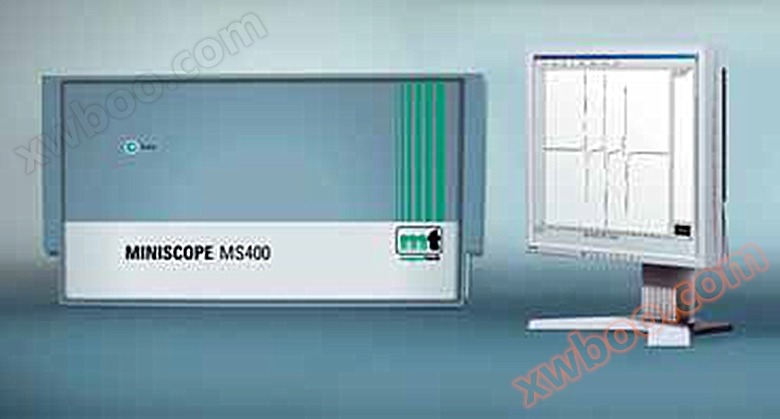
Desktop Electron paramagnetic Spectrometer MS5000
Product Details
Electron paramagnetic resonance (EPR) spectrometer, also known as electron spin resonance (ESR) spectrometer, uses the spin of electrons when exposed to an external magnetic field to detect various states and types of atoms in compounds within cells. EPR is the only direct method for detecting paramagnetic substances (a chemical substance with at least one unpaired electron). Chemists, physicists, biologists, anthropologists, and many other scientists use EPR to study substances such as free radicals (NO, NO2), transition metal atoms (Cu (II), Fe (II), NO, Mn (II)), and active oxidants (H2O2, HOCl). EPR spectroscopy is a feasible method for studying the generation of free radicals or chemical reactions themselves. EPR is also used to study the physical structure of atomic clusters and their electronic orbitals.
Now, EPR/ESR research has become more cost-effective. The MiniScope MS300 provides strict scientists with the precision of large-scale spectrometers at a much lower cost. And its compact desktop structure makes it convenient to fit into every laboratory. Moreover, the highly sensitive MiniScope MS300 can be used to detect free radicals in solutions, with concentrations greater than 1 μ M or less than 100nM TEMPOL. It also offers a user-defined X-band range (between 9.3 and 9.55GHz, 50mW)
The MiniScope MS300 is suitable for both conventional and research grade applications, with a maximum sample diameter of 6mm. The H102 sample chamber has two channels at the top and bottom, used for integrating liquid samples (flowing through quartz or PTFE tubes) in a continuous flow system for testing. This small chamber can accommodate a 7.5mm sample channel and can be equipped with an irradiation window if needed.