-
E-mail
925633677@qq.com
-
Phone
15051989720
-
Address
Sanhekou Industrial Park, Zhenglu Town, Changzhou
Product Categories
Changzhou Xianzhu Drying Equipment Co., Ltd


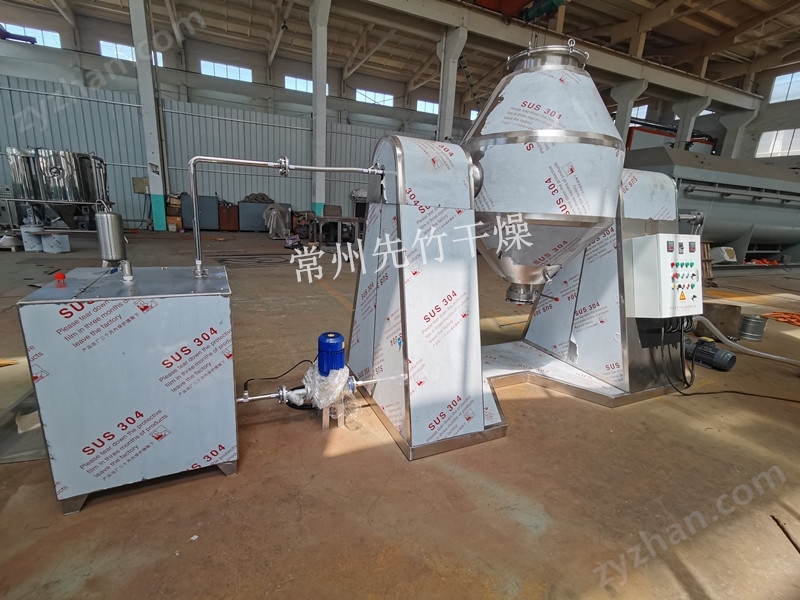
Double cone rotary vacuum dryer manufacturer
NegotiableUpdate on 02/24
- Model
- Nature of the Manufacturer
- Producers
- Product Category
- Place of Origin
Overview
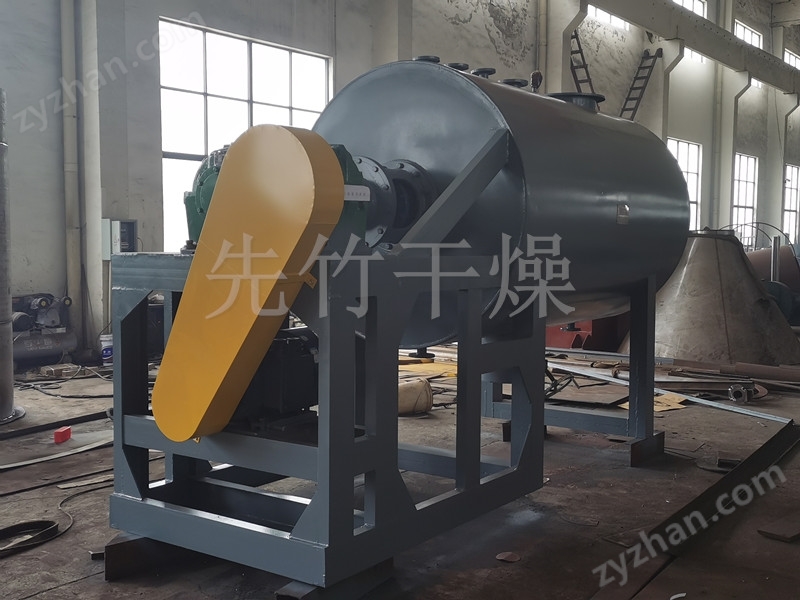
The double cone rotary vacuum dryer manufacturer's double cone rotary vacuum dryer is an efficient drying equipment widely used in many industries such as pharmaceuticals, chemicals, and food. It integrates mixing and drying functions, providing reliable solutions for drying various materials through unique design and working principles.
Product Details
1、 Product Overview
The double cone rotary vacuum dryer is an efficient drying equipment widely used in many industries such as pharmaceuticals, chemicals, and food. It integrates mixing and drying functions, providing reliable solutions for drying various materials through unique design and working principles.
2、 Working principle
The dryer adopts a double cone rotating tank structure, and the tank rotates under power drive. During the drying process, the wet material to be processed is first loaded into the tank, and then the vacuum pump system is activated to create a negative pressure environment inside the tank. Due to the rotation of the tank, the material continuously flips and mixes up and down, while heat is transferred to the material through the tank wall, causing the moisture in the material to evaporate rapidly. The water vapor generated by evaporation is promptly extracted by a vacuum pump, thereby accelerating the drying speed and ensuring that the material can achieve uniform and rapid drying effect.
3、 Structural characteristics
Tank design: The main body is a closed container with a double cone shape, which not only facilitates the thorough mixing of materials, but also has a larger heating area compared to other structures with the same volume, thereby improving heat transfer efficiency and enabling materials to absorb heat more efficiently, accelerating the drying process.
Rotary system: composed of a motor, a reducer, and a transmission device, which work together to drive the tank to rotate at a stable and suitable speed. This stable rotation speed is crucial for the uniform heating of the material, ensuring that the material will not be affected by local overheating or over drying during the drying process, and also helping to maintain the long-term stable operation of the equipment.
Heating methods: There are two common types: steam heating and electric heating. Steam heating is suitable for large-scale production scenarios, with relatively low costs and the ability to provide a stable heat supply; Electric heating is more flexible and convenient, especially suitable for small-scale production or occasions with high temperature control requirements, and can meet the needs of different users.
Sealing performance: Advanced mechanical or magnetic sealing technology is adopted to ensure high vacuum inside the tank, effectively preventing the infiltration of external air, avoiding oxidation reactions that may occur when the material comes into contact with oxygen, ensuring the quality of the material is not contaminated, and also improving the safety of the equipment, reducing potential safety hazards.
Control system: Equipped with an intelligent operation panel, operators can accurately control various key parameters such as temperature, vacuum degree, and speed through simple settings. The system also has fault alarm and self-protection functions. Once an abnormal situation occurs, it will immediately issue an alarm and take corresponding protective measures, ensuring the continuity and stability of the production process, reducing operational difficulty, and improving production efficiency.
4、 Advantages and highlights
Efficient and energy-saving: With the help of the lower boiling point characteristics in a vacuum environment, materials can be quickly dried at lower temperatures, which not only saves a lot of energy consumption, but also shortens the drying time, significantly improves production efficiency, and reduces production costs for enterprises.
Excellent quality: Throughout the entire drying process, the material is always in an oxygen deficient environment, which is particularly important for easily oxidizable materials. It can preserve the original chemical properties and active ingredients of the material, resulting in higher purity and better quality of the product, meeting the strict requirements of high-quality production.
Widely applicable: Whether it is powdered, granular or paste like materials, as long as they are not resistant to high temperatures or easily decompose, this dryer can be used for processing. For example, it can be used in the drying process of antibiotic raw materials and can also meet the drying needs of some precious medicinal extracts in the health product industry, demonstrating adaptability.
Easy to clean and maintain: Considering the risk of cross contamination between different batches of materials, this equipment pays special attention to cleaning convenience. After simply disassembling a few components, it is easy to flush the inside of the tank, remove residues easily, and prepare for the next batch of production, saving time and effort, effectively reducing downtime, and improving the overall utilization rate of the equipment.
Environmental protection and safety: The fully enclosed working mode, combined with an efficient exhaust gas treatment system, effectively prevents harmful gases from being emitted to the outside world, meeting the increasingly strict environmental regulations of the country. At the same time, a comprehensive safety protection mechanism, such as overload protection, leakage protection, etc., ensures the personal safety of operators and allows enterprises to carry out production activities with confidence.
5、 Typical technical parameters (SZG series double cone rotary vacuum dryer)
| Name/Specification | 100 | 350 | 500 | 750 | 1000 |
| Tank capacity | 100 | 350 | 500 | 750 | 1000 |
| Loading capacity (L) | ≤50 | ≤175 | ≤250 | ≤375 | ≤500 |
| Heating area (m2) | 1.16 | 2 | 2.63 | 3.5 | 4.61 |
| Rotational speed (rpm) | 4 - 6 | ||||
| Motor power (kw) | 0.75 | 1.1 | 1.5 | 2 | 3 |
| Floor Area Length x Width (mm) | 2160×800 | 2260×800 | 2350×800 | 2560×1000 | 2860×1300 |
| Rotation height (mm) | 1750 | 2100 | 2250 | 2490 | 2800 |
| Design pressure inside the tank (Mpa) | -0.1-0.15 | ||||
| Design pressure of jacket (Mpa) | ≤0.3 | ||||
| Working temperature (oC) | Can interior ≤ 85, jacket ≤ 140 | ||||
| When using a condenser, a vacuum pump, | 2X-15A | 2X-15A | 2X-30A | 2X-30A | 2X-70A |
| Model, power | 2KW | 2KW | 3KW | 3KW | 505KW |
| When not using a condenser, a vacuum pump, | SK-0.4 | SK-0.8 | SK-0.8 | SK-2.7B | SK-2.7B |
| Model, power | 1.5KW | 2.2KW | 2.2KW | 4KW | 4KW |
| Weight (kg) | 800 | 1100 | 1200 | 1500 | 2800 |
| Name/Specification | 1500 | 2000 | 3500 | 4500 | 5000 |
| Tank capacity | 1500 | 2000 | 3500 | 4500 | 5000 |
| Loading capacity (L) | ≤750 | ≤1000 | ≤1750 | ≤2250 | ≤2500 |
| Heating area (m2) | 5.58 | 7.5 | 11.2 | 13.1 | 14.1 |
| Rotational speed (rpm) | 4 - 6 | ||||
| Motor power (kw) | 3 | 4 | 5.5 | 7.5 | 11 |
| Floor Area Length x Width (mm) | 3060×1300 | 3260×1400 | 3760×1800 | 3960×2000 | 4400×2500 |
| Rotation height (mm) | 2940 | 2990 | 3490 | 4100 | 4200 |
| Design pressure inside the tank (Mpa) | -0.1-0.15 | ||||
| Design pressure of jacket (Mpa) | ≤0.3 | ||||
| Working temperature (oC) | -0.1-0.15 | ||||
| When using a condenser, a vacuum pump, | JZJX300-8 | JZJX300-4 | JZJX600-8 | JZJX600-4 | JZJX300-4 |
| Model, power | 7KW | 9.5KW | 11KW | 20.5KW | 22KW |
| When not using a condenser, a vacuum pump, | SK-3 | SK-6 | SK-6 | SK-9 | SK-10 |
| Model, power | 5.5KW | 11KW | 11KW | 15KW | 18.5KW |
| Weight (kg) | 3300 | 3600 | 6400 | 7500 | 8600 |
Note: For materials with significant volume changes before and after drying, the loading coefficient can be appropriately increased or decreased.