-
E-mail
mike@sgnprocess.com
-
Phone
13681679740
-
Address
No. 900 Zhudai Road, Zhuqiao Town, Jiading District, Shanghai
Product Categories
Shanghai Sijun Machinery Equipment Co., Ltd


Nano ceramic powder colloid mill
NegotiableUpdate on 01/05
- Model
- Nature of the Manufacturer
- Producers
- Product Category
- Place of Origin
Overview
Nano ceramic powder colloid mill is a new product developed by SGN (Shanghai) company after research. This machine is particularly suitable for materials that require grinding, dispersing, emulsifying, and homogenizing in one step.
Product Details
Nano ceramic powder colloid millHigh speed composite material colloid mill, high-speed material colloid mill, laboratory colloid mill, chemical colloid mill
Difficulties in dispersing high-speed materials
Compared with traditional micron sized powders, high-speed ceramic powders have a higher specific surface area. In order to reduce the interfacial energy of the entire system, the huge specific surface area creates a strong agglomeration driving force between particles. Soft agglomeration is caused by van der Waals forces, while hard agglomeration is caused by strong bonding between powders. Agglomeration not only affects the formability of the green body, but also has a significant impact on sintering temperature, densification behavior, microstructure, and ceramic properties.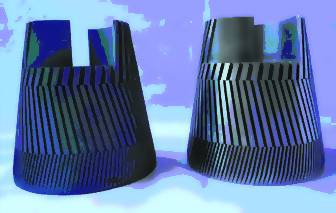
The formation of agglomeration (especially hard agglomeration) will reduce the bulk density of ceramics and make the packing density of the bulk uneven. Experiments and theories have shown that in agglomerated powders, it is the size of the agglomerates rather than the grain size that determines the densification behavior. The larger the size of the aggregates, the larger the pores between them. The large-sized pores increase the distance of mass transfer and diffusion, thereby reducing the densification rate: therefore, the sintering temperature between particles inside the agglomerates is lower than that between agglomerates. In order to densify the entire ceramic, the sintering temperature must be increased, but the increase in sintering temperature will damage the high-speed structure of the ceramic. In addition, the presence of agglomerated particles inevitably accelerates the growth of grains, which is extremely detrimental to the control of high-speed ceramic structures. Therefore, effective control of agglomeration of high-speed ceramic powder is the prerequisite and foundation for preparing high-speed ceramics.
Nano ceramic powder colloid millDue to the small particle size, large surface atomic ratio, high surface energy, and unstable energy state of high-speed ceramic powders, agglomeration is prone to occur. Therefore, it is necessary to effectively control the formation of agglomeration during powder synthesis, drying, and sintering processes.
Mechanical dispersionOften considered aszA simple physical dispersion method that utilizes external shear or impact forces to makehigh-speedA method of dispersing particles in a medium. Under mechanical stirringhigh-speedThe special surface structure of particles is prone to chemical reactions, forming organic compound chains or protective layers, which can causehigh-speedParticles are more easily dispersed.The speed of ordinary domestic colloid mills is only 6000 revolutions per minute, and the shear force is relatively weak. The dispersed particle size cannot meet the production standards, which is also a headache for many customers. The SGN high shear colloid mill has unique advantages in this regard, with a shear rate of over 20000 rpm and a rotor speed of up to 43m/s. Within this speed range, the turbulence caused by shear forces combined with specially developed motors can reduce the particle size range to high-speed levels. The shear force is stronger, and the particle size distribution of lotion is narrower. Due to energy density*,No other auxiliary dispersing equipment is required
The high shear grinding and dispersing machine is a new product newly developed by SGN (Shanghai) company after research. This machine is particularly suitable for materials that require grinding, dispersing, emulsifying, and homogenizing in one step. We will modify the three-stage high shear homogenizer emulsifier by replacing the three-stage with the first stage, and then adding a colloid grinding head on top of the emulsifier head, so that the material can be first finely ground by colloid before being dispersed, emulsified and homogenized by the emulsifier. The colloid mill under the grinding head can be replaced according to material requirements (we provide five types of emulsifying heads for customers to choose from, including 2P, 2G, 4M, 6F, 8SF, etc.).
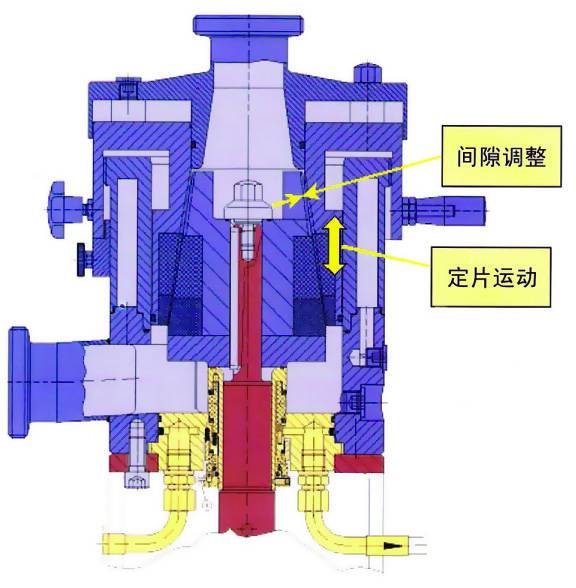
Working principle of grinding and dispersing machine: The grinding and dispersing machine is driven by an electric motor through a belt drive to rotate the rotating teeth (or rotor) and the matching fixed teeth (or stator) at high speed. The processed material is pressurized by its own weight or external pressure (which can be generated by a pump) to generate a downward spiral impact force. When passing through the gap between the fixed and rotating teeth of the colloid mill (adjustable gap), it is subjected to strong physical effects such as shear force, friction force, high-frequency vibration, etc., which effectively emulsify, disperse and crush the material, achieving the effect of ultrafine crushing and emulsification of the material.
The refining effect of a grinding and dispersing machine is generally stronger than that of a homogenizer, but it has a stronger adaptability to materials such as high viscosity and large particles. Therefore, in many cases, it is used in the front of a homogenizer or in high viscosity situations.
The grinding disperser is made up of a cone mill,A high-tech product composed of dispersing machines.
Similar Product Recommend