-
E-mail
58703264@qq.com
-
Phone
18615208189
-
Address
1-301, Huixiang Garden, No. 288 Wuyingshan Middle Road, Huaiyin District, Jinan City, Shandong Province
Product Categories
Jinan Zhuyan Instrument Equipment Co., Ltd


Polarized internal stress meter for controlled bottles
NegotiableUpdate on 01/05
- Model
- Nature of the Manufacturer
- Producers
- Product Category
- Place of Origin
Overview
Polarized internal stress meter for controlled bottles. It can be called the "health guardian" of the glass world, and is a precision instrument specifically used to detect the internal stress of glass products. It plays a crucial role in the production and quality inspection of glass products.
Product Details
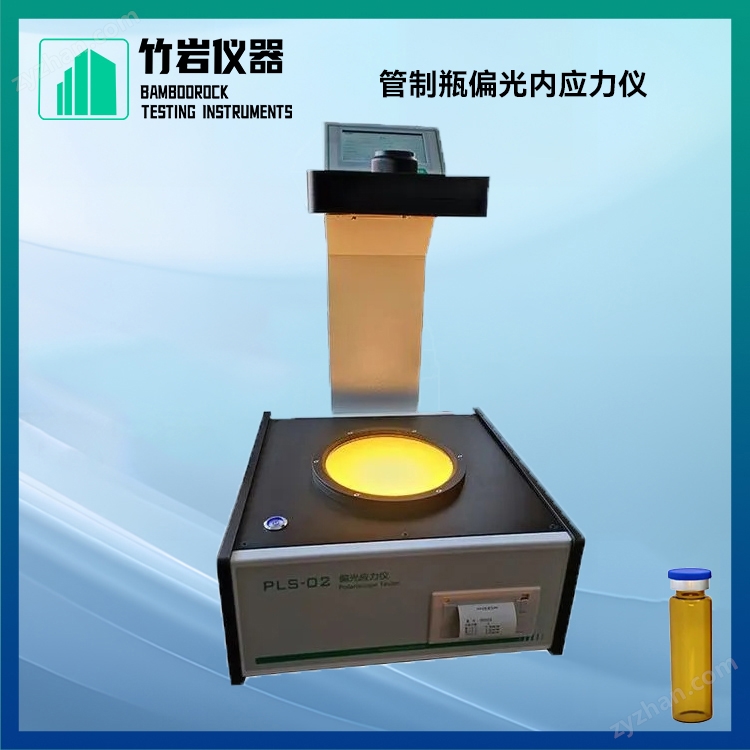
Polarized internal stress meter for controlled bottles


Polarized internal stress meter for controlled bottles


The working principle of the controlled bottle polarizing internal stress meter is based on the polarization characteristics of light and birefringence phenomenon. Under normal circumstances, glass is isotropic, which means that the propagation speed and refractive properties of light in all directions are the same. But when there is stress inside the glass, this isotropy will be broken, resulting in birefringence. Simply put, a beam of light entering a stressed glass will be decomposed into two beams of light with vibration directions perpendicular to each other. These two beams of light have different propagation speeds in the glass, resulting in an optical path difference. The controlled bottle polarizing internal stress meter utilizes this principle to determine the magnitude and distribution of internal stress in glass by detecting the optical path difference.
Imagine when polarized light passes through a controlled bottle with internal stress, it's like shuttling through a channel filled with "invisible obstacles". These "obstacles" are the uneven internal structure of glass caused by internal stress, which can alter the propagation path of polarized light and produce interference fringes. The controlled bottle polarizing internal stress meter is like a keen observer, able to capture the changes in these interference fringes and convert them into data that we can understand, thereby making the internal stress hidden inside the glass nowhere to hide.


