-
E-mail
1702662999@qq.com
-
Phone
18915186518
-
Address
No. 99 Tongtai Avenue, Industrial Concentration Zone, Jinhu County, Jiangsu Province
Product Categories
Jiangsu Huayun Instrument Co., Ltd
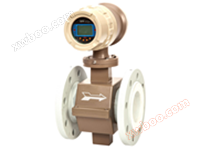
Selection of electromagnetic flowmeter manufacturers
NegotiableUpdate on 03/21
- Model
- Nature of the Manufacturer
- Producers
- Product Category
- Place of Origin
Overview
Working principle of electromagnetic flowmeter
Product Details
Working principle of electromagnetic flowmeter
In a closed pipeline, a magnetic field with a vertical flow direction is set, and the flow rate is calculated by measuring the induced electromotive force formed by the movement of conductive liquid in the magnetic field.

Selection of Electromagnetic Flowmeters
2.1 Accuracy level and function
Electromagnetic flow meters have different levels of accuracy. It is divided into seven levels: 0.2, 0.25, 0.3, 0.5, 1.0, 1.5, and 2.5. The maximum allowable error for high precision is ± 0.2% FS, and the maximum allowable error for low precision is ± 2.50% FS. The installation and parameter requirements are relatively strict, such as various factors such as environmental temperature. Therefore, when selecting a model, a comprehensive analysis should be conducted based on the product sample and on-site conditions.
Different electromagnetic flow meters also have significant differences in their measurement functions. Simply measure unidirectional flow and transmit corresponding signals to the display or control system. Multi functional features include detecting bidirectional flow, switching ranges, upper and lower limit flow alarms, displaying flow, calculating total volume, and more.
2.2 Flow rate, full-scale flow rate, and caliber
When the electromagnetic flowmeter has a full flow rate, the flow velocity of the liquid can be selected between (1-10) m/s, which has a wide range. In principle, although the upper limit flow rate is not limited, it should generally be less than 5m/s, unless the lining material can withstand the erosion of the liquid flow; Some models of electromagnetic flow meters have a flow rate of 0.5m/s. For some fluids with sedimentary and adhesive properties, their flow velocity should be greater than 2m/s, and the optimal flow velocity should be between (3-4) m/s or above, which can effectively avoid the occurrence of sedimentation, adhesion and other phenomena. For some highly abrasive fluids, their flow velocity is generally (2-3) m/s to reduce corresponding damage. For low conductivity liquids close to the threshold, the optimal flow rate is 0.5-m/s, as an increase in flow rate can lead to an increase in noise, resulting in shaking phenomenon.
2.3 Liquid Conductivity
The application premise of electromagnetic flowmeter is that the liquid to be measured should have conductivity and cannot be lower than the lower limit of the threshold. If the conductivity is less than the threshold, it will continue to form errors until it cannot be used. If it exceeds the threshold, even if there is a change, it can continue to be measured, and the error change is small. The typical value of an electromagnetic flowmeter is between 10-4- (5 × 10⁻⁶) S/cm, depending on the actual situation. During use, the signal length corresponding to the conductivity should also be specified according to the corresponding signal line length and capacitance.
The conductivity of water used in industry should be greater than 10-4S/cm. The conductivity of acid solutions, alkaline solutions, and salt solutions should be between 10-4-10-1S/cm, and there is no problem with their measurement. Generally, distilled water also has a conductivity of 10-5S/cm, and there is no problem with it. Products made from petroleum and organic chemicals have low electrical conductivity and cannot be used normally. The conductivity of a typical liquid should be one order of magnitude greater than the threshold stated in the instruction manual.
2.4 Liquid contains mixed substances
Small bubbles mixed with bubbly flow can still work, but the detected volumetric flow rate includes the volume of the bubbles; If the gas content continues to rise until a slug flow is generated, due to the gas covering the electrode, the circuit will be instantly disconnected, causing shaking or even inability to function properly.
When detecting solid particles, attention should be paid to the degree of damage to the sensor lining, as the inner diameter of the measuring tube can cause additional errors. In this situation, ceramics or polyurethane rubber with strong wear resistance should be selected to make the lining, and a transmission device should be installed inside the vertical pipeline
Sensors promote uniform wear of pipelines and eliminate local wear in a horizontal installation state. A nozzle shaped protective cover can also be added at the inlet of the sensor to extend its service life.
2.5 Adhesion and precipitation
When measuring fluids with strong adhesion and sedimentation properties, if the conductivity of the attached substance is higher than that of the fluid, the signal circuit will short-circuit and fail to function properly. If it is a non-conductive layer, attention should be paid to electrode contamination, such as replacing the electrode.
Our country used to install ultrasonic transducers on electrodes to remove dirt on the surface of the electrodes, but currently it is basically non-existent; It is also possible to disconnect the circuit for a short period of time, causing the corresponding current to instantaneously pass through the electrode and remove any surface attachments. For areas that are prone to adhesion, the flow rate should be increased to achieve cleaning purposes, and cleaning pipelines can be connected without the need to remove sensors. If the electrode it has is non-contact, it can continue to work by adhering to the corresponding film layer, but if it is a highly conductive layer, it cannot function properly.
2.6 Selection of lining materials
The lining materials used in electromagnetic flowmeters mainly include ceramics, chloroprene rubber, and so on. In recent years, the material used in this instrument is usually high-purity alumina ceramic, but it is only limited to small and medium-sized sensors. For some weakly corrosive or non corrosive liquids, such as industrial wastewater and sewage, weak acids or bases, fiberglass and chloroprene rubber are usually used, and the cost is relatively low. For fluoroplastics, they have strong corrosion resistance, but do not have excellent wear resistance, making them unsuitable for slurry applications. Among this material, polytetrafluoroethylene is the earliest one to be used. Due to the lack of adhesive force between it and the measuring tube, it cannot be applied to negative pressure pipelines. Later, multiple types of improved products were designed and molded to achieve strong adhesive force with the measuring tube, making it suitable for negative pressure applications. Polyurethane rubber has excellent wear resistance, but does not have strong resistance to acid and alkali corrosion. The wear resistance of this material is equivalent to ten times that of natural rubber and can be used in media such as slurry. Its temperature should be between 40-70 ℃. Alumina ceramics have strong wear resistance and acid alkali corrosion resistance, and their wear resistance is equivalent to ten times that of polyurethane rubber, making them suitable for use in highly corrosive slurries; However, the properties are brittle and prone to breakage during installation. It can be used in high-temperature environments, but temperature fluctuations should be avoided. For example, when using steam for sterilization, the temperature change should be less than 100 ℃, and the temperature should rise to 150 ℃ in about ten minutes.
3 Conclusion
Electromagnetic flowmeter refers to a commonly used quantitative tool and visualization window for various substances such as water, mud, salt, etc. The reasonable selection of the flowmeter model plays a direct decisive role in the accuracy and authenticity of the measurement data, has a direct impact on the decision-making level and speed of the enterprise's operation, and is directly related to the reputation and efficiency of the enterprise. Therefore, for instrument personnel, the effective selection of electromagnetic flow meters is their persistent pursuit.
Similar Product Recommend