-
E-mail
251651220@qq.com
-
Phone
18173490139
-
Address
No. 48 Baisha Industrial Avenue, Baishazhou Industrial Park, High tech Zone, Hengyang City, Hunan Province
Product Categories
- PG series concentrated and dilute mixing tank
- Multi effect falling film evaporator
- Dual effect energy-saving external circulation vacuum concentrator
- Single effect falling film evaporator
- MVR evaporator
- Forced circulation evaporator
- Triple effect falling film evaporator
- Stainless steel fermentation tank
- reaction vessel
- Three effect energy-saving concentrator
Hunan Yuerui Technology Co., Ltd
Single effect falling film evaporator equipment
NegotiableUpdate on 01/04
- Model
- Nature of the Manufacturer
- Producers
- Product Category
- Place of Origin
Overview
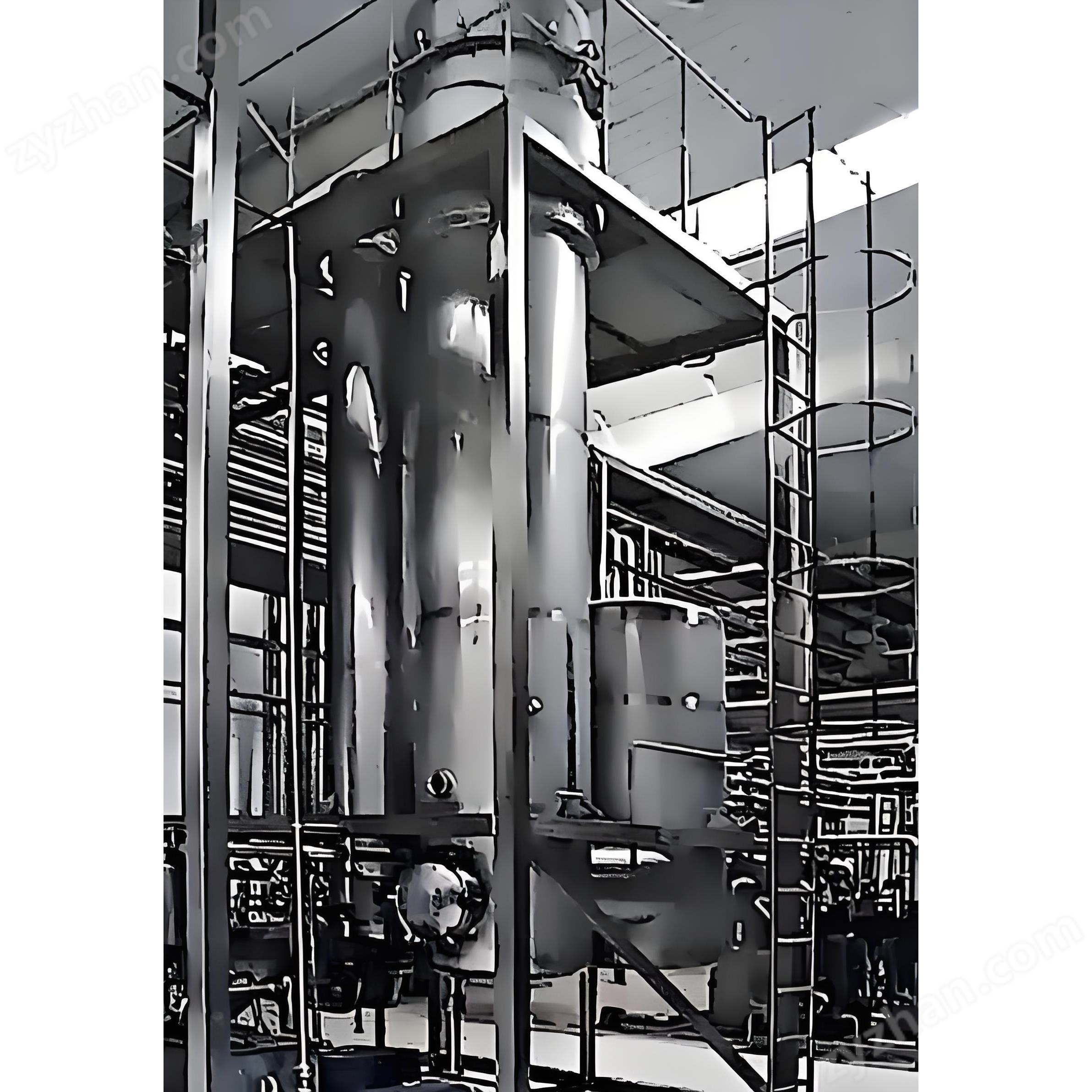
A single effect falling film evaporator is a device that achieves efficient evaporation through liquid film flow. Its core principle is to allow the liquid to form a thin liquid film along the inner wall of the heating tube under the action of gravity, rapidly evaporating the solvent to concentrate the material. With the core advantages of efficient heat transfer, short residence time, and low energy consumption, it is widely used in fields such as food, medicine, and chemical engineering, especially suitable for the concentration of heat sensitive or high viscosity materials.
Product Details
A single effect falling film evaporator is a device that achieves efficient evaporation through liquid film flow. Its core principle is to allow the liquid to form a thin liquid film along the inner wall of the heating tube under the action of gravity, rapidly evaporating the solvent to concentrate the material.
1、 Working principle
Formation of liquid film
The liquid enters from the top of the equipment and is evenly distributed on the inner wall of the heating tube through the distributor, forming a liquid film with a thickness of about 0.1-2mm. The liquid film flows from top to bottom under the action of gravity, while being heated by steam or thermal oil outside the tube.
Evaporation process
After the liquid film is heated, the solvent rapidly vaporizes, and the generated steam mixes with the concentrated liquid at the bottom of the tube and enters the separation chamber. The steam is discharged through the condenser, and the concentrated liquid flows out from the bottom.
Single effect characteristics
By using only one effect evaporation and direct condensation of steam, the energy utilization rate is low, but the equipment structure is simple and suitable for small-scale or heat sensitive material processing.
2、 Core advantages
Efficient heat transfer
The thin liquid film design enables a heat transfer coefficient of up to 1390-5000W/(m ² · K), far exceeding traditional evaporators and increasing evaporation efficiency by more than 30%.
Short dwell time
The material only stays in the tube for a few seconds to tens of seconds to prevent heat sensitive substances (such as drugs and food) from deteriorating due to high temperature.
Low energy consumption operation
Operating in a vacuum environment, the evaporation temperature can be as low as 40 ℃, and combined with MVR technology (mechanical vapor recompression), it can further save energy by more than 50%.
Anti scaling design
Liquid film flows at high speed to flush the pipe wall, reducing crystallization or particle adhesion, suitable for materials containing suspended solids.
3、 Typical application scenarios
food industry
Milk concentration: Concentrate from 12% solids to 45% with a nutrient loss of less than 5%.
Juice purification: removing moisture while retaining flavor compounds.
pharmaceutical field
Antibiotic concentration: Low temperature operation to avoid degradation of active ingredients.
Vitamin extraction: efficient separation of solvents and active ingredients.
chemical production
Aluminum sulfate evaporation crystallization: Continuous discharge design ensures uniform crystal growth and reduces scaling.
Electroplating wastewater treatment: Concentrate heavy metal ions to achieve standard discharge.
Environmental Engineering
Papermaking black liquor treatment: recovering lignin and purifying wastewater.
Wet desulfurization waste liquid: Concentrate sulfate to reduce treatment costs.
4、 Structural composition
Heater: Steam or thermal oil is introduced outside the tube to provide the heat required for evaporation.
Distributor: Precision nozzles or flow channels ensure that the liquid film evenly covers the pipe wall.
Separation chamber: The vapor-liquid mixture is separated here, with steam entering the condenser and concentrated liquid being discharged.
Vacuum system: Maintain negative pressure environment and reduce evaporation temperature.
Automated control: monitoring temperature, pressure, and liquid level to achieve unmanned operation.
5、 Key selection points
Material characteristics: viscosity, thermal sensitivity, and tendency to scale determine whether it is suitable.
Processing capacity: The processing range of a single device is usually 5L/h to 60t/h.
Energy consumption requirement: MVR technology can significantly reduce steam consumption, but the initial investment is relatively high.
Installation conditions: The verticality error of the equipment should be ≤ 6.4mm (taking a 9m pipe length as an example) to ensure the uniformity of the liquid film.
Summary: Single effect falling film evaporators are widely used in fields such as food, medicine, and chemical engineering due to their core advantages of efficient heat transfer, short residence time, and low energy consumption. They are particularly suitable for concentrating heat sensitive or high viscosity materials. When selecting, it is necessary to comprehensively consider material characteristics, processing scale, and energy consumption targets. If necessary, MVR technology can be combined to achieve energy-saving optimization.