- Phone
-
Address
North section of Yong'an Road, Gongyi City, Henan Province
Product Categories
Gongyi Hongtong Machinery Sales Co., Ltd
Steel slag ball mill
NegotiableUpdate on 03/23
- Model
- Nature of the Manufacturer
- Producers
- Product Category
- Place of Origin
Overview
Steel slag is an industrial solid waste. The slag discharged from steelmaking is divided into converter slag, open hearth slag, and electric furnace slag according to the furnace type. The discharge amount is about 15-20% of the crude steel production. The use of steel slag varies depending on its composition. The United States uses 2/3 of the slag discharge as ironmaking flux every year, which is directly added to blast furnaces or sintered ores and recycled within steel plants. Silicon removal is useless in the composition of steel slag ..
Product Details
Introduction to Steel Slag
Steel slag is an industrial solid waste. The slag discharged from steelmaking is divided into converter slag, open hearth slag, and electric furnace slag according to the furnace type. The discharge amount is about 15-20% of the crude steel production. The use of steel slag varies depending on its composition. The United States uses 2/3 of the slag discharge as ironmaking flux every year, which is directly added to blast furnaces or sintered ores and recycled within steel plants. In the composition of steel slag, except for silicon which is useless and phosphorus which is harmful, calcium, iron, magnesium, and manganese (accounting for 80% of the total steel slag) are all utilized. However, using steel slag with high sulfur and phosphorus content as a flux will reduce the utilization coefficient of blast furnace ironmaking and increase the coke ratio. France, the Federal Republic of Germany, Canada and other countries use this type of steel slag as railway ballast and road materials. The method is to store the processed steel slag for 3-6 months and use it after the volume is stable. This type of steel slag is widely used as a cushion layer and structural layer for road subgrades, especially as an aggregate paving surface layer for asphalt mixtures. Steel slag road construction has the advantages of high strength, good wear resistance and slip resistance, good durability, and low maintenance costs. Western European countries have a long history of using high phosphorus steel slag as fertilizer. The calcium, silicon, manganese, and trace elements in steel slag have fertilizing effects and can be applied as slag fertilizer in acidic soils. All types of steel slag can be used as materials for filling pits and land reclamation. At present, China produces a small amount of steel slag cement, mostly using converter steel slag mixed with about 50% blast furnace granulated slag and about 10% gypsum to grind non clinker steel slag cement, or using about 15% cement clinker instead of steel slag to grind low clinker cement. In some parts of China, electric furnace slag is used to produce white steel slag cement. Japan and the Federal Republic of Germany use steel slag as cement raw material to roast ferrite cement, which can save energy. In addition, steel slag can also be used to manufacture bricks, tiles, carbonized building materials, etc.
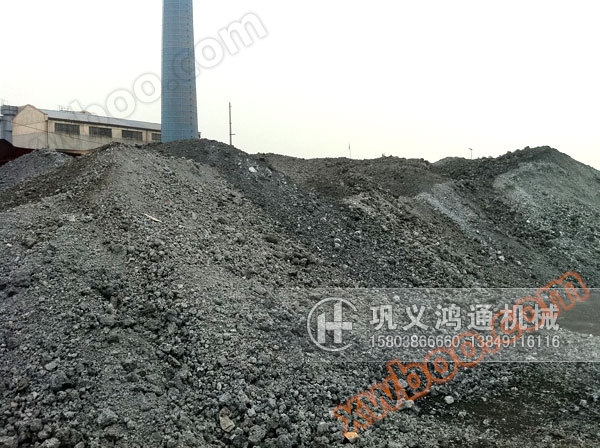
Introduction to Steel Slag Ball Mill
The steel slag ball mill is mainly used for selecting and grinding steel slag. Its appearance meets the requirements of steel manufacturers for processing steel slag powder, enabling the rational utilization of steel slag and avoiding resource waste. The steel slag ball mill has good wear resistance, smooth operation, and high work efficiency due to the fact that both the cylinder and grinding body are made of special steel. The steel slag ball mill produced by our factory is mainly used for grinding materials such as steel slag, waste residue, slag, gypsum, sand and gravel. It can also be used in the production industries of refractory materials, fertilizers, black and non-ferrous metal beneficiation, and glass ceramics. It is an important equipment in the production of aerated concrete.
Picture of steel slag ball mill
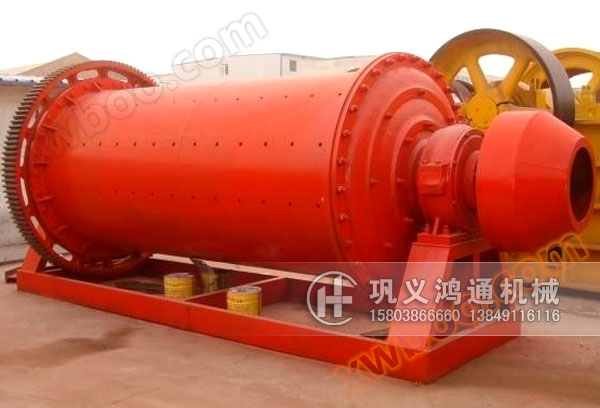
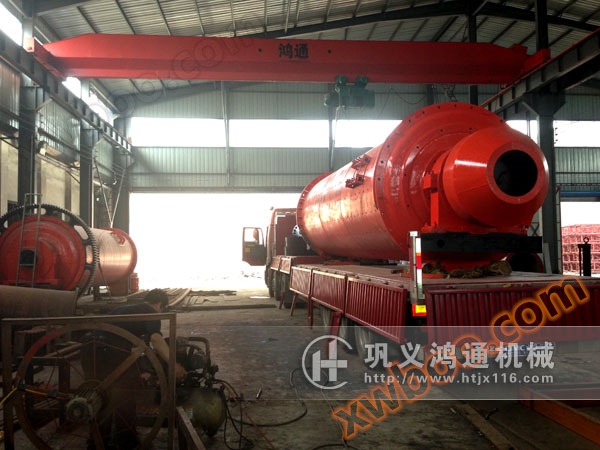
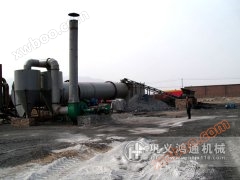
Steel slag ball mill delivery site
Steel slag ball mill structure
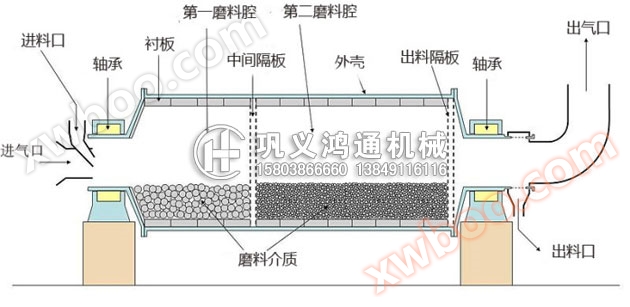
Structural diagram of steel slag ball mill
The steel slag ball mill produced by Hongtong Machinery Factory in Gongyi City has high efficiency, minimal maintenance, uniform crushing, and is suitable for ultrafine crushing of various materials. Our factory's large, medium, and small steel slag ball mills have been selling well for more than 30 years, making them the best choice for you to choose high-quality steel slag ball mills.
The structure of steel slag ball mill is similar to that of ordinary ball mill, both consisting of main parts such as feeding part, discharging part, rotating part, and transmission part (reducer, small transmission gear, motor, electric control). The hollow shaft is made of cast steel and the inner lining can be replaced. The rotating large gear is processed by casting gear hobbing, and the cylinder body is embedded with wear-resistant lining plate, which has good wear resistance. The machine runs smoothly and reliably.
Note: Depending on the material and ore discharge method, dry steel slag ball mill and wet grid type steel slag ball mill can be selected.
Working principle of steel slag ball mill
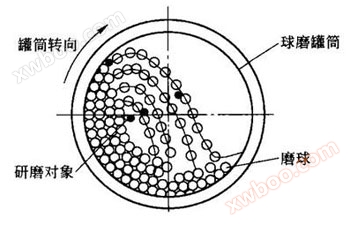

Schematic diagram of the working principle of steel slag ball mill
The most important equipment in the preparation of aerated concrete raw materials using steel slag ball mill is the ball mill, which is used for grinding materials such as lime, gypsum, sand, slag, etc. Materials can only undergo sufficient mixing and interaction after being ground to the required fineness, in order to achieve strength in the product. Grinding is an important process in the production of aerated concrete, and the grinding process consumes a lot of electricity. Ball mills are generally the equipment with the largest motor capacity in aerated concrete factories.
The steel slag ball mill is composed of a horizontal cylinder, a hollow shaft for feeding and discharging, and a grinding head. The simplified form is a long cylinder, which is equipped with a grinding body. The cylinder is made of steel and is fixed with a steel lining plate and a simplified form. The grinding body is generally a steel sphere, which is loaded into the cylinder according to different diameters and a certain proportion. The grinding body can also be made of steel segments and selected according to the particle size of the grinding material. The material is loaded into the cylinder by the hollow shaft at the feeding end of the mill. When the simplified form of the ball mill rotates, the grinding body is carried away by the cylinder due to inertia, centrifugal force, and frictional force. When it is brought to a certain height, it is thrown down by the cylinder due to its own gravity. The grinding body shatters the material inside the cylinder like a projectile. The material is uniformly fed into the first compartment of the mill through the feeding device and the hollow shaft screw. The compartment is equipped with stepped or corrugated lining plates and contains steel balls of different specifications. The rotation of the cylinder generates centrifugal force, which brings the steel balls to a certain height and then drops them, causing heavy impact and grinding on the material. After the material reaches rough grinding in the first warehouse, it enters the second warehouse through a single-layer partition plate. The warehouse is lined with a flat lining plate and contains steel balls for further grinding of the material. The powdered material is discharged through the discharge grate to complete the grinding operation.
During the rotation of the cylinder, there is also a phenomenon of sliding of the grinding body. During the sliding process, the material is given a grinding effect. In order to effectively utilize the grinding effect, when grinding materials with a particle size of generally 20 mesh, the grinding body cylinder is divided into two sections by a partition plate, which becomes a double chamber. When the material enters the first chamber, it is crushed by the steel ball. When the material enters the second chamber, the steel end grinds the material, and the qualified material is discharged from the hollow shaft at the discharge end. When grinding materials with small feed particles, such as sand No. 2 slag and coarse fly ash, the grinding machine cylinder can be made into a single chamber cylinder without a partition plate, and the grinding volume can also be made of steel sections.
Advantages of steel slag ball mill
Our Hongtong Machinery has been producing steel slag ball mills for more than 30 years. During these 30 years, we have never stopped researching and producing steel slag ball mills, especially in terms of structural transformation and performance improvement. We have always kept up with international standards and kept pace with the times, making our steel slag ball mills incomparable to other manufacturers. We are an old brand manufacturer that customers trust and favor.
1. The rotary gear of the steel slag ball mill is processed by casting hobbing, which has a long service life.
2. The cylinder of the steel slag ball mill is embedded with wear-resistant lining plates, which have good wear resistance.
3. The steel slag ball mill operates smoothly and reliably.
4. The equipment adopts a complete rolling friction transmission between metal wheels and wear-resistant polymer material wheels, which reduces noise and wear to a minimum, thereby increasing the service life of the steel slag ball mill.
Technical parameters of steel slag ball mill
Note: The equipment model parameters are constantly being improved. If you cannot find the required model in the parameter table, you can contact us directly. Our technicians will configure the equipment that best suits your production needs and site requirements according to your requirements.
Production process of steel slag ball mill
The production process of steel slag ball mill enables all steel slag from steel mills to be effectively utilized without any waste, solving the problem of steel slag occupying a large amount of farmland and land, causing great environmental pollution, and bringing great social and economic benefits to society.
First, roughly crush and separate the large slag steel; Afterwards, the slag is finely divided and processed to separate the large slag steel. The steel slag is crushed to below 10mm to separate the majority of the slag iron. The first purpose is to recover as much slag iron as possible from steel slag, and the second is to prepare for energy conservation, consumption reduction, and production cost reduction in subsequent steel slag powder processing, because the smaller the slag particles and lower the iron content entering the mill, the lower the energy consumption of the mill. The finely ground slag enters the dry mill for processing, and according to the needs of the back-end users, one or two stages of technology are used to finally obtain steel slag powder or steel slag micro powder.
Steel slag ball mill vulnerable parts (accessories)

Wear resistant steel balls and steel sections for vulnerable parts of steel slag ball mill(Click to view more information about steel balls)

High manganese steel lining plate and rubber lining plate for vulnerable parts of steel slag ball mill(Click to view more lining information)
Precautions for operating steel slag ball mill
Proper operation of the steel slag ball mill is a prerequisite for maintaining its high efficiency, but operators often overlook some small details during the operation process, which are precisely the reasons for the failure and safety accidents of the steel slag ball mill. In order to prevent such phenomena from happening, Hongtong Machinery Factory in Gongyi City will share our years of experience with everyone. We have summarized the following operating precautions for steel slag ball mills for everyone, and hope that everyone will study them seriously.
1、 Precautions for the operation of steel slag ball mill
2、 Emergency shutdown and handling of steel slag ball mill
3、 Inspection during operation of steel slag ball mill
To learn more about the precautions for operating steel slag ball mills, please clickPrecautions for operating steel slag ball mill
Operation method of steel slag ball mill
The correct operation method of steel slag ball mill is something that every operator must master proficiently. It is related to the work efficiency of the steel slag ball mill and the economic benefits of the boss, and more importantly, it is related to the safety of every operator's life, which cannot be ignored. We require every operator to come to work happily and go home safely, so we hope that every operator can learn to operate the steel slag ball mill correctly.
1、 The continuous operation time of air freight should not be less than 12-24 hours, and any problems found during operation should be promptly resolved.
2、 The air transport test machine can proceed with load test operation once it is normal. The load test run should be carried out in stages. During load operation, feeding should be carried out according to the discharge situation to avoid unnecessary wear and damage of steel balls and cylinder liners.
3、 The increase in the above-mentioned load and the length of the trial operation time are determined based on the running in conditions (temperature rise, noise, tooth surface contact, etc.) of the large and small gears and the gearbox gears. Before the contact accuracy of the tooth surface meets the design requirements, it is not allowed to operate at full load.
4、 The cooling and lubrication systems should work properly during the trial operation. The temperature of the main bearing, transmission bearing, and gearbox should be normal.
5、 After loading 2/3 of the steel balls and running for 24-48 hours, all bolts should be checked and tightened again.
6、 The trial operation work should be carefully recorded.
To learn more about the operation method of steel slag ball mill, please clickCorrect operation method of steel slag ball mill
Maintenance and upkeep of steel slag ball mill
The maintenance and upkeep of the steel slag ball mill must be highly valued by every operator. Only by regularly carrying out daily maintenance and upkeep of the steel slag ball mill can faults be detected and resolved in a timely manner. This not only saves the boss a lot of maintenance costs, but also extends the service life of the steel slag ball mill, creating greater economic benefits for the boss. It can be seen that the importance of daily maintenance and upkeep of steel slag ball mills. To learn more about the maintenance and upkeep of steel slag ball mills, please clickDaily maintenance and upkeep of steel slag ball mill
Steel slag is an industrial solid waste. The slag discharged from steelmaking is divided into converter slag, open hearth slag, and electric furnace slag according to the furnace type. The discharge amount is about 15-20% of the crude steel production. The use of steel slag varies depending on its composition. The United States uses 2/3 of the slag discharge as ironmaking flux every year, which is directly added to blast furnaces or sintered ores and recycled within steel plants. In the composition of steel slag, except for silicon which is useless and phosphorus which is harmful, calcium, iron, magnesium, and manganese (accounting for 80% of the total steel slag) are all utilized. However, using steel slag with high sulfur and phosphorus content as a flux will reduce the utilization coefficient of blast furnace ironmaking and increase the coke ratio. France, the Federal Republic of Germany, Canada and other countries use this type of steel slag as railway ballast and road materials. The method is to store the processed steel slag for 3-6 months and use it after the volume is stable. This type of steel slag is widely used as a cushion layer and structural layer for road subgrades, especially as an aggregate paving surface layer for asphalt mixtures. Steel slag road construction has the advantages of high strength, good wear resistance and slip resistance, good durability, and low maintenance costs. Western European countries have a long history of using high phosphorus steel slag as fertilizer. The calcium, silicon, manganese, and trace elements in steel slag have fertilizing effects and can be applied as slag fertilizer in acidic soils. All types of steel slag can be used as materials for filling pits and land reclamation. At present, China produces a small amount of steel slag cement, mostly using converter steel slag mixed with about 50% blast furnace granulated slag and about 10% gypsum to grind non clinker steel slag cement, or using about 15% cement clinker instead of steel slag to grind low clinker cement. In some parts of China, electric furnace slag is used to produce white steel slag cement. Japan and the Federal Republic of Germany use steel slag as cement raw material to roast ferrite cement, which can save energy. In addition, steel slag can also be used to manufacture bricks, tiles, carbonized building materials, etc.
Introduction to Steel Slag Ball Mill
The steel slag ball mill is mainly used for selecting and grinding steel slag. Its appearance meets the requirements of steel manufacturers for processing steel slag powder, enabling the rational utilization of steel slag and avoiding resource waste. The steel slag ball mill has good wear resistance, smooth operation, and high work efficiency due to the fact that both the cylinder and grinding body are made of special steel. The steel slag ball mill produced by our factory is mainly used for grinding materials such as steel slag, waste residue, slag, gypsum, sand and gravel. It can also be used in the production industries of refractory materials, fertilizers, black and non-ferrous metal beneficiation, and glass ceramics. It is an important equipment in the production of aerated concrete.
Picture of steel slag ball mill
Steel slag ball mill delivery site
Steel slag ball mill structure
Structural diagram of steel slag ball mill
The structure of steel slag ball mill is similar to that of ordinary ball mill, both consisting of main parts such as feeding part, discharging part, rotating part, and transmission part (reducer, small transmission gear, motor, electric control). The hollow shaft is made of cast steel and the inner lining can be replaced. The rotating large gear is processed by casting gear hobbing, and the cylinder body is embedded with wear-resistant lining plate, which has good wear resistance. The machine runs smoothly and reliably.
Note: Depending on the material and ore discharge method, dry steel slag ball mill and wet grid type steel slag ball mill can be selected.
Working principle of steel slag ball mill
Schematic diagram of the working principle of steel slag ball mill
The steel slag ball mill is composed of a horizontal cylinder, a hollow shaft for feeding and discharging, and a grinding head. The simplified form is a long cylinder, which is equipped with a grinding body. The cylinder is made of steel and is fixed with a steel lining plate and a simplified form. The grinding body is generally a steel sphere, which is loaded into the cylinder according to different diameters and a certain proportion. The grinding body can also be made of steel segments and selected according to the particle size of the grinding material. The material is loaded into the cylinder by the hollow shaft at the feeding end of the mill. When the simplified form of the ball mill rotates, the grinding body is carried away by the cylinder due to inertia, centrifugal force, and frictional force. When it is brought to a certain height, it is thrown down by the cylinder due to its own gravity. The grinding body shatters the material inside the cylinder like a projectile. The material is uniformly fed into the first compartment of the mill through the feeding device and the hollow shaft screw. The compartment is equipped with stepped or corrugated lining plates and contains steel balls of different specifications. The rotation of the cylinder generates centrifugal force, which brings the steel balls to a certain height and then drops them, causing heavy impact and grinding on the material. After the material reaches rough grinding in the first warehouse, it enters the second warehouse through a single-layer partition plate. The warehouse is lined with a flat lining plate and contains steel balls for further grinding of the material. The powdered material is discharged through the discharge grate to complete the grinding operation.
During the rotation of the cylinder, there is also a phenomenon of sliding of the grinding body. During the sliding process, the material is given a grinding effect. In order to effectively utilize the grinding effect, when grinding materials with a particle size of generally 20 mesh, the grinding body cylinder is divided into two sections by a partition plate, which becomes a double chamber. When the material enters the first chamber, it is crushed by the steel ball. When the material enters the second chamber, the steel end grinds the material, and the qualified material is discharged from the hollow shaft at the discharge end. When grinding materials with small feed particles, such as sand No. 2 slag and coarse fly ash, the grinding machine cylinder can be made into a single chamber cylinder without a partition plate, and the grinding volume can also be made of steel sections.
Advantages of steel slag ball mill
Our Hongtong Machinery has been producing steel slag ball mills for more than 30 years. During these 30 years, we have never stopped researching and producing steel slag ball mills, especially in terms of structural transformation and performance improvement. We have always kept up with international standards and kept pace with the times, making our steel slag ball mills incomparable to other manufacturers. We are an old brand manufacturer that customers trust and favor.
1. The rotary gear of the steel slag ball mill is processed by casting hobbing, which has a long service life.
2. The cylinder of the steel slag ball mill is embedded with wear-resistant lining plates, which have good wear resistance.
3. The steel slag ball mill operates smoothly and reliably.
4. The equipment adopts a complete rolling friction transmission between metal wheels and wear-resistant polymer material wheels, which reduces noise and wear to a minimum, thereby increasing the service life of the steel slag ball mill.
Technical parameters of steel slag ball mill
|
Specification Model |
Cylinder rotation speed |
ball load |
Feed particle size |
discharge particle size |
output |
Motor power |
weight |
|
Ф900×1800 |
36~38 |
1.5 |
≤20 |
0.075-0.89 |
0.65-2 |
18.5 |
4.6 |
|
Ф900×3000 |
36 |
2.7 |
≤20 |
0.075-0.89 |
1.1-3.5 |
22 |
5.6 |
|
Ф1200×2400 |
36 |
3 |
≤25 |
0.075-0.6 |
1.5-4.8 |
30 |
12 |
|
Ф1200×3000 |
36 |
3.5 |
≤25 |
0.074-0.4 |
1.6-5 |
37 |
12.8 |
|
Ф1200×4500 |
32.4 |
5 |
≤25 |
0.074-0.4 |
1.6-5.8 |
55 |
13.8 |
|
Ф1500×3000 |
29.7 |
7.5 |
≤25 |
0.074-0.4 |
2-5 |
75 |
15.6 |
|
Ф1500×4500 |
27 |
11 |
≤25 |
0.074-0.4 |
3-6 |
110 |
21 |
|
Ф1500×5700 |
28 |
12 |
≤25 |
0.074-0.4 |
3.5-6 |
130 |
24.7 |
|
Ф1830×3000 |
25.4 |
11 |
≤25 |
0.074-0.4 |
4-10 |
130 |
28 |
|
Ф1830×4500 |
25.4 |
15 |
≤25 |
0.074-0.4 |
4.5-12 |
155 |
32 |
|
Ф1830×6400 |
24.1 |
21 |
≤25 |
0.074-0.4 |
6.5-15 |
210 |
34 |
|
Ф1830×7000 |
24.1 |
23 |
≤25 |
0.074-0.4 |
7.5-17 |
245 |
36 |
|
Ф2100×3000 |
23.7 |
15 |
≤25 |
0.074-0.4 |
6.5-36 |
155 |
34 |
|
Ф2100×4500 |
23.7 |
24 |
≤25 |
0.074-0.4 |
8-43 |
245 |
42 |
|
Ф2100×7000 |
23.7 |
26 |
≤25 |
0.074-0.4 |
8-48 |
280 |
50 |
|
Ф2200×4500 |
21.5 |
27 |
≤25 |
0.074-0.4 |
9-45 |
280 |
48.5 |
|
Ф2200×6500 |
21.7 |
35 |
≤25 |
0.074-0.4 |
14-26 |
380 |
52.8 |
|
Ф2200×7000 |
21.7 |
35 |
≤25 |
0.074-0.4 |
15-28 |
380 |
54 |
|
Ф2200×7500 |
21.7 |
35 |
≤25 |
0.074-0.4 |
15-30 |
380 |
56 |
|
Ф2400×3000 |
21 |
23 |
≤25 |
0.074-0.4 |
7-50 |
245 |
54 |
|
Ф2400×4500 |
21 |
30 |
≤25 |
0.074-0.4 |
8.5-60 |
320 |
65 |
|
Ф2700×4000 |
20.7 |
40 |
≤25 |
0.074-0.4 |
12-80 |
400 |
94 |
|
Ф2700×4500 |
20.7 |
48 |
≤25 |
0.074-0.4 |
12-90 |
430 |
102 |
|
Ф3200×4500 |
18 |
65 |
≤25 |
0.074-0.4 |
According to the process conditions |
800 |
137 |
Production process of steel slag ball mill
The production process of steel slag ball mill enables all steel slag from steel mills to be effectively utilized without any waste, solving the problem of steel slag occupying a large amount of farmland and land, causing great environmental pollution, and bringing great social and economic benefits to society.
First, roughly crush and separate the large slag steel; Afterwards, the slag is finely divided and processed to separate the large slag steel. The steel slag is crushed to below 10mm to separate the majority of the slag iron. The first purpose is to recover as much slag iron as possible from steel slag, and the second is to prepare for energy conservation, consumption reduction, and production cost reduction in subsequent steel slag powder processing, because the smaller the slag particles and lower the iron content entering the mill, the lower the energy consumption of the mill. The finely ground slag enters the dry mill for processing, and according to the needs of the back-end users, one or two stages of technology are used to finally obtain steel slag powder or steel slag micro powder.
Steel slag ball mill vulnerable parts (accessories)
Wear resistant steel balls and steel sections for vulnerable parts of steel slag ball mill(Click to view more information about steel balls)
High manganese steel lining plate and rubber lining plate for vulnerable parts of steel slag ball mill(Click to view more lining information)
Precautions for operating steel slag ball mill
Proper operation of the steel slag ball mill is a prerequisite for maintaining its high efficiency, but operators often overlook some small details during the operation process, which are precisely the reasons for the failure and safety accidents of the steel slag ball mill. In order to prevent such phenomena from happening, Hongtong Machinery Factory in Gongyi City will share our years of experience with everyone. We have summarized the following operating precautions for steel slag ball mills for everyone, and hope that everyone will study them seriously.
1、 Precautions for the operation of steel slag ball mill
2、 Emergency shutdown and handling of steel slag ball mill
3、 Inspection during operation of steel slag ball mill
To learn more about the precautions for operating steel slag ball mills, please clickPrecautions for operating steel slag ball mill
Operation method of steel slag ball mill
The correct operation method of steel slag ball mill is something that every operator must master proficiently. It is related to the work efficiency of the steel slag ball mill and the economic benefits of the boss, and more importantly, it is related to the safety of every operator's life, which cannot be ignored. We require every operator to come to work happily and go home safely, so we hope that every operator can learn to operate the steel slag ball mill correctly.
1、 The continuous operation time of air freight should not be less than 12-24 hours, and any problems found during operation should be promptly resolved.
2、 The air transport test machine can proceed with load test operation once it is normal. The load test run should be carried out in stages. During load operation, feeding should be carried out according to the discharge situation to avoid unnecessary wear and damage of steel balls and cylinder liners.
3、 The increase in the above-mentioned load and the length of the trial operation time are determined based on the running in conditions (temperature rise, noise, tooth surface contact, etc.) of the large and small gears and the gearbox gears. Before the contact accuracy of the tooth surface meets the design requirements, it is not allowed to operate at full load.
4、 The cooling and lubrication systems should work properly during the trial operation. The temperature of the main bearing, transmission bearing, and gearbox should be normal.
5、 After loading 2/3 of the steel balls and running for 24-48 hours, all bolts should be checked and tightened again.
6、 The trial operation work should be carefully recorded.
To learn more about the operation method of steel slag ball mill, please clickCorrect operation method of steel slag ball mill
Maintenance and upkeep of steel slag ball mill
The maintenance and upkeep of the steel slag ball mill must be highly valued by every operator. Only by regularly carrying out daily maintenance and upkeep of the steel slag ball mill can faults be detected and resolved in a timely manner. This not only saves the boss a lot of maintenance costs, but also extends the service life of the steel slag ball mill, creating greater economic benefits for the boss. It can be seen that the importance of daily maintenance and upkeep of steel slag ball mills. To learn more about the maintenance and upkeep of steel slag ball mills, please clickDaily maintenance and upkeep of steel slag ball mill
Previous: Aluminum slag ball mill equipment, aluminum slag ball mill manufacturers, aluminum slag ball mill prices/quotations, models/principles/structural diagrams
Next article: Slag ball mill manufacturers, slag ball mill prices, large and small slag ball mills, principle structure, model parameters
Next article: Slag ball mill manufacturers, slag ball mill prices, large and small slag ball mills, principle structure, model parameters
latest articles
- Structure diagram of dry ball mill - Introduction to the working principle of dry ball mill
- Hongtong introduces several major selection options for conventional ball mills
- The maintenance work of cement ball mill should be done well!
- How can energy-saving ball mills smoothly pass the running in period?
- How can we do a good job in the installation and commissioning of energy-saving ball mills?
- Common problems and solutions of wet ball mill
- Maintenance Regulations for Dry Ball Mill
- Safety operating procedures for energy-saving ball mills
- 2016 Latest Cement Ball Mill Quotations _ Cement Ball Mill Manufacturer Prices
- Correct operation method of aluminum slag ball mill
View all related articles>>
expert consultation
-

-
100% high-quality raw materials for the product
Quality is guaranteed.
-

-
Fast delivery
Production is guaranteed
-

-
Track installation and debugging throughout the process
After sales guarantee
Kind reminder: If you are interested in our products, you can call us immediately!
Sales Service Hotline: