-
E-mail
3299794364@qq.com
-
Phone
13393260209
-
Address
Dacheng County Industrial Park
Product Categories
Hebei De'en Thermal Insulation Materials Co., Ltd
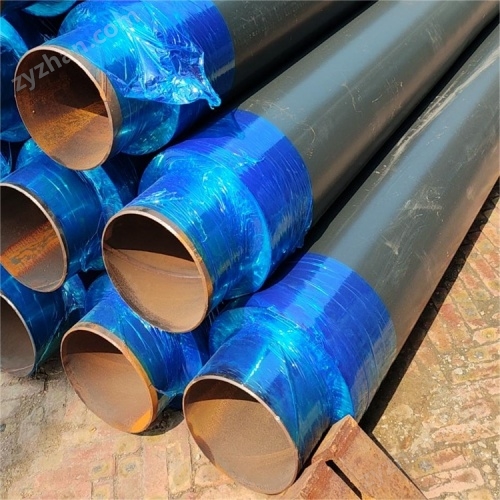

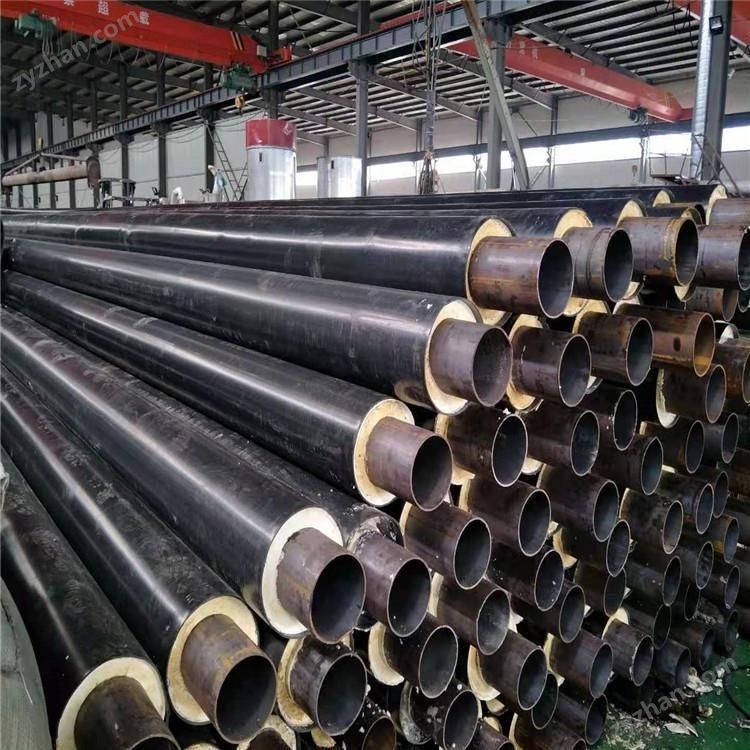


Supply of outdoor refrigeration polyurethane water supply and insulation pipes in Changshu City
NegotiableUpdate on 01/05
- Model
- Nature of the Manufacturer
- Producers
- Product Category
- Place of Origin
Overview
The thermal conductivity of prefabricated polyurethane direct buried insulation pipes for outdoor refrigeration polyurethane water supply and insulation in Changshu City is λ=0.013-0.03ka/m, which is much lower than other commonly used pipeline insulation materials in the past, and the insulation effect is improved by 4-9 times. Moreover, its water absorption rate is very low, about 0.2kg/m2. The reason for low water absorption is that the closed cell rate of polyurethane foam is up to 92%. Low thermal conductivity and low water absorption, combined with insulation layer and high-density polyethylene or fiberglass protective shell with good waterproof performance, have changed the traditional situation of "wet cotton jacket" for laying heating pipelines in underground trenches.
Product Details
Supply of outdoor refrigeration polyurethane water supply and insulation pipes in Changshu City
Working principle of polyurethane prefabricated buried insulation pipe:
1. Anti corrosion coating: protects the outer steel pipe from corrosive substances, prolongs the service life of the steel pipe.
2. Outer protective steel pipe: protects the insulation layer from groundwater erosion, supports the working pipe and can withstand certain external loads, ensuring the normal operation of the working pipe.
3. Polyurethane foam layer: ensure the medium temperature, and ensure that the surface of the external protection pipe is kept at normal temperature.
4. The barrier and reflective layer shall ensure that the organic foam material does not enter the inorganic hard high temperature resistant layer; Reflect some heat from the high-temperature resistant layer.
5. Inorganic hard thermal insulation layer: resistant to high temperature, ensuring the interface temperature between organic thermal insulation layer and foam not to be carbonized.
6. Drag reduction layer: Ensure the free movement of the working steel pipe during thermal expansion and contraction.
7. Working steel pipe: Ensure the normal flow of the conveying medium.
Application of polyurethane insulation pipe products: (used for heating insulation pipes, hot spring insulation pipes, heating insulation pipes, heating insulation pipes, air conditioning insulation pipes, steam insulation pipes, and cold insulation pipes). The product is composed of steel pipe for conveying medium (as working pipe), polyurethane rigid foam plastic (as insulation layer), high-density polyethylene outer sleeve or wrapped glass fiber reinforced plastic (as protective layer), which are closely combined.
Polyurethane insulation pipes can be divided into: direct buried polyurethane insulation pipes and overhead polyurethane insulation pipes according to different laying methods; According to the temperature of the medium being transported, it can be divided into normal temperature polyurethane insulation pipes, high temperature polyurethane insulation pipes, and deep cold polyurethane insulation pipes; According to the different outer protective layers, it can be divided into fiberglass outer protective layer polyurethane insulation pipe, high-density polyethylene outer protective layer polyurethane insulation pipe, steel outer protective layer polyurethane insulation pipe, etc; It is divided into buried rigid polyurethane foam anti-corrosion insulation pipe, directly buried steam polyurethane composite prefabricated insulation pipe and high temperature resistant polyurethane insulation pipe according to different transmission media.
Precautions for thickness requirements of polyurethane insulation pipes
1. The polyurethane insulation pipe layer is eccentric, which means that the polyurethane insulation layer is not concentric with the steel pipe, resulting in uneven insulation thickness. In severe cases, it can cause the outer plastic layer to soften and be damaged.
2. Due to improper use, it is susceptible to damage during transportation and installation. If buried underground, it may not be deep enough from the ground or the upper soil and road may be soft, causing damage after being crushed by heavy vehicles.
3. Improper interface handling, inadequate welding of two connecting pipes during pipeline laying and installation, resulting in water seepage, or careless operation during "joint patching", causing external sewage to infiltrate into the insulation layer.
4. The use of plastic and polyurethane materials is unreasonable, such as the frequent use of sorted and disorderly recycled plastics, and the inability of extruded plastic tubes to fully plasticize, resulting in the deterioration of the outer tube. The low density of polyurethane insulation pipes results in low strength and damage during transportation. In addition, the system contains too much free acid, causing corrosion to the outer wall of the steel pipe.
Directly buried prefabricated insulation pipes have outstanding advantages over traditional insulation pipes:
1. Good insulation performance, with heat loss only 25% of traditional pipes, can save a lot of energy during operation and significantly reduce energy costs.
2. It has strong waterproof and corrosion-resistant capabilities, does not require a pipe trench, can be directly buried underground or in water, is easy and fast to construct, and has a low overall cost.
3. It also has good corrosion resistance and impact resistance under low temperature conditions, and can be directly buried in frozen soil underground.
4. The service life can reach 30-50 years, and correct installation and use can greatly reduce the cost of pipeline maintenance.
5. An alarm system can be set up to automatically detect pipeline leakage faults, accurately indicate the fault location, and automatically sound an alarm.
Polyurethane insulation pipe
1、 Internal and external fixation
When the insulation pipe is heated, there will definitely be changes. Displacement is also possible, and both the insulation structure layer and the outer casing are integral structures. External fixation is best achieved by fixing the working pipe and the outer protective pipe together. Two large reinforced concrete supports should be installed at both ends of each section of the pipeline and compensator. This is beneficial for the fixation of the pipeline, as external fixation requires the installation of reinforced concrete supports, resulting in large construction costs, high investment, and sometimes longer construction periods. So it's better to pay attention to the comparison before. Depending on the type of outer protective tube you want to use, it can be divided into plastic sleeve steel structure, fiberglass sleeve steel structure, and steel sleeve steel structure. Through practice, it has been proven that manufacturers of prefabricated buried steel sleeve steam insulation pipes and plastic sleeve steel structures can no longer adapt to the development trend of steam insulation pipelines.
2、 Internal fixation
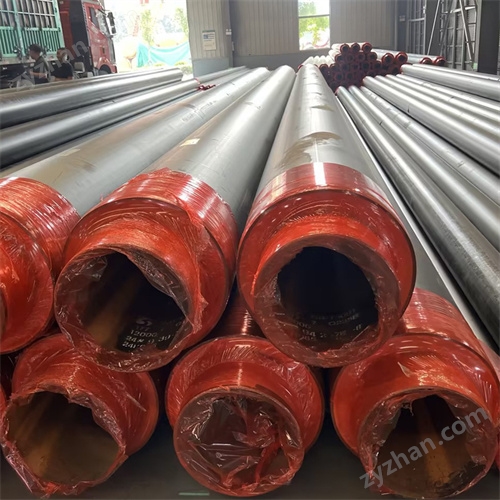
Supply of outdoor refrigeration polyurethane water supply and insulation pipes in Changshu City
Fix the work pipe onto the outer steel pipe in a certain form, fully utilizing the strength of the outer protective pipe and the force between the outer protective pipe and the soil to further secure the inner pipe. Without the need for reinforced concrete fixation, the use of reinforced concrete fixed piers can be saved. Steel insulated pipes with steel sleeves are cheaper in price, and only steel pipes can be used as external protective pipes for internal fixation. The fixed end has insulation facilities to achieve thermal bridge effect. At the same time, the external protective pipe must have a certain strength to meet the requirements of pipeline horizontal thrust.
3、 Cleverly utilizing the form of external and internal fixation
With the continuous improvement of production technology and equipment for polyurethane insulated steel pipes. At present, polyurethane insulated steel pipes are not only used as thermal pipelines. Now, the polyurethane insulated steel pipes produced by our company have different applications depending on the insulation materials used. We have buried heating polyurethane insulated steel pipes that can transport media at around 120 degrees Celsius. After upgrading the insulation material, composite polyurethane insulation steel pipes have been produced, which can withstand high temperatures of up to 300 degrees Celsius, greatly expanding the range of use of polyurethane insulation steel pipes. At present, not only heating pipelines use polyurethane insulated steel pipes, but air conditioners also use polyurethane insulated steel pipes. They can effectively reduce the temperature of the medium in the pipeline, reduce temperature loss, and improve pipeline utilization and effectiveness
The development and application of polyurethane insulation pipes With the continuous development of the social economy, the application of polyurethane insulation pipes in our production and life is becoming increasingly widespread and favored by users. Below is a brief introduction to the development and application of polyurethane insulation pipes. Polyurethane insulation pipe is not only used for transporting fluids and powdery solids, exchanging heat energy, manufacturing mechanical parts and containers, but it is also an economical steel material. Using polyurethane insulation pipes to manufacture building structural grids, pillars, and mechanical supports can reduce weight, simplify construction, and save costs.
The process analysis and construction plan of polyurethane insulated steel pipes fully fill the gap between the steel pipe and the sleeve, and have a certain bonding strength, which saves power for steel pipe and polyurethane directly buried seamless insulated steel pipe manufacturers, and promotes the economy and safety of the system operation. The effect of insulation layer is to reduce energy loss, save power, and achieve economic benefits. Polyurethane spiral steel pipe insulation ensures the working parameters of the medium and meets the production requirements of users.
Directly buried polyurethane insulation pipe refers to the insulation and anti-corrosion measures taken by insulation steel pipes to ensure the temperature inside and on the surface of the working steel pipe in different working environments, in order to slow down or prevent erosion and deterioration under the chemical and electrochemical effects of external media or metabolic activities of microorganisms. Application of polyurethane foam insulated steel pipe: Suitable for insulation and cooling engineering of various media transported within the range of -50 ℃ to 150 ℃.
Advantages and characteristics of polyurethane direct buried insulation pipeline insulation:
1: Reduce engineering costs and flatten polyurethane insulation pipes for thermal heating renovation
2: The continuous and dense skin of polyurethane rigid foam and nearly 100% high-strength interconnected wall closed pores have ideal impermeability. The spraying method is used for construction to achieve a continuous and seamless waterproof insulation layer, forming a seamless roof and overall external wall insulation shell, with excellent waterproof and anti-seepage performance.
3: Self adhesive performance (without the need for any intermediate bonding materials), firmly bonded to the roof and exterior walls, with good wind resistance and resistance to negative wind pressure; Overall spraying construction, hot section and cold bridge; Flexible gradient technology can effectively prevent cracking of the waterproof layer; Mechanized operation, automatic batching, uniform quality, fast construction, and short cycle.
Polyurethane direct buried insulation pipes have good insulation and sealing effects when used in heating (cooling) projects. When buried underground, they not only save energy and reduce waste, but also beautify the environment without occupying land. When used in oil and gas transportation, it can meet long-distance transportation requirements, eliminate operation and maintenance, maximize insulation and antifreeze requirements, reduce heating equipment, lower project costs, and is particularly easy to install, shortening the construction period. When used for geothermal and hot spring transportation, it meets the cooling requirements and achieves long-distance transportation. Used in water conservancy and mining to meet their requirements for cold and anti freezing, insulation and anti-corrosion. In addition, there is also a vast space for use in the pipeline transportation of chemical materials.
From the perspective of thermal pipelines, there may be six types of damage to pipelines. Of course, the actual damage modes that occur for different operating parameters and pipeline specifications may also vary. When valves are installed in pipelines, they may have different damage modes from the pipeline. From the angle of thermal pipelines, there may be six types of damage to pipelines. Of course, the actual damage modes that occur for different operating parameters and pipeline specifications may also vary. When valves are installed in pipelines, they may have different damage modes from polyurethane insulation pipes
1. Unrestricted plastic flow. The circumferential stress generated by internal pressure in the pipe wall belongs to primary stress. If the circumferential stress is too high, it will cause infinite plastic flow in the steam buried steel insulated pipeline wall, leading to pipeline rupture. For plastic flow, the ultimate analysis of primary stress should be carried out. Since the internal pressure circumferential stress is a thin film stress, the internal pressure circumferential stress should be controlled not to exceed the basic allowable stress. However, for urban heating pipelines, this type of failure generally does not occur because the internal pressure circumferential stress is much smaller than its limit value
The cyclic plastic deformation in pipelines is caused by both displacement and force, but for directly buried thermal pipelines, temperature plays a decisive role. When there is a large temperature change and thermal expansion deformation cannot be released, axial compression plastic deformation occurs on the pipe wall due to axial compressive stress during heating, and axial tensile plastic deformation occurs on the pipe wall due to axial tensile stress during cooling, resulting in axial cyclic plastic damage. For cyclic plastic damage, stability analysis should be conducted on primary and secondary stresses to control the composite stress change range of primary and secondary stresses to no more than three times the basic allowable stress. This can ensure that the pipeline is in a stable state. For large cyclic temperature differences, high operating pressure, and large pipe diameters, stability analysis should be carried out. When the thermal expansion deformation of the pipeline cannot be released, cyclic plastic deformation is prone to occur in directly buried pipelines Preventing cyclic plastic deformation of pipelines in design
3. Low cycle fatigue failure stress concentration usually occurs in the bends, tees, and corners of pipelines during temperature changes. The peak stress generated by stress concentration at discontinuous parts of the pipeline structure can cause fatigue failure of the pipeline. Due to the low frequency of temperature changes, it is also known as low cycle fatigue failure. For fatigue analysis, the basic allowable stress range should not exceed six times the peak range. Fatigue failure at the bends, tees, and corners is the main way of directly buried heat network failure
4. High cycle fatigue failure: Vehicle mass can act on the pipeline under the roadway through the wheels and soil, causing elliptical deformation of the local section of the pipeline and corresponding stress concentration. Due to the high frequency of vehicle load, it is also known as high cycle fatigue failure. Fatigue analysis should also be carried out for high cycle fatigue failure, but it is usually controlled by the depth of the covering soil. For the specified covering soil depth of 0.8 and 1.2m, high cycle fatigue failure generally does not occur. When the covering soil depth cannot be guaranteed, protective structures such as pedestrian sleeves or concrete protection plates can be set under the roadway to avoid two cycle fatigue failure. Since high cycle fatigue failure only occurs on individual sections of the pipeline and measures can be taken to solve it, high cycle fatigue failure is generally not considered in pipeline design. Destruction
Under operating conditions, the axial pressure of a vertically buried pipeline is high due to the pressure rod effect, which may cause overall instability of the pipeline. When the temperature rise is high and the thermal expansion deformation cannot be released, the temperature rise effect is completely converted into high axial pressure, which is prone to overall instability and failure. When the burial depth is shallow, overall longitudinal instability is prone to occur. When parallel grooves are opened near the pipeline, overall horizontal instability is prone to occur. For overall instability, stability analysis should be carried out according to the rod compression instability model. The pressure comes from the inability to release the temperature deformation, and the soil force of the pipeline's self weight is the factor that prevents pipeline instability. In the design of directly buried pipelines, overall instability of the pipeline should be prevented.
Polyurethane insulation pipes have a long service life due to the plastic coated steel pipes inside and outside, and do not require frequent replacement, which is part of environmental protection. The specific details will be introduced in the following text. Coated steel pipe materials can achieve V-0 flame retardancy and comply with RoHS requirements. The flame retardant system allows users to easily replace most PBT and coated composite steel pipes with similar performance on the market without changing the design and mold. Not only that, we can provide both filled and unfilled materials with flowability and toughness comparable to our brominated flame retardant series products. The increasingly strict regulations have also made environmentally friendly and green plastic materials more competitive in the market.
Therefore, the advantages of the internal sliding design for polyurethane buried insulation pipes naturally make the insulation performance of this dual steel material more affirmed in the Chinese market. At the same time, it is expected to meet the specific advantages and characteristics, and the excellent significance it has in the development process of the Chinese market is more worthy of recognition. At the same time, it also gives people a higher understanding of the corresponding market development trend. The Chinese market obviously has a stronger driving force in the reasonable development process. At the same time, the application of sliding insulation pipes is also a major factor in the continuous development of science and technology in China. Choosing different styles for different fields to make reasonable use of them is the main significance of promoting and developing each other. For most people, it is obvious that this market development trend, naturally... Highly recognized, It is also the main significance of everyone's active choice.
Classification of types of polyurethane foam insulation pipes;
1、 Polyethylene jacket outer sleeve
The polyethylene jacket is made of high-density polyethylene material, which has high mechanical strength and excellent corrosion resistance. It can protect the pipe from damage caused by external factors during transportation, installation, and use.
2、 Polyurethane prefabricated insulation pipe
Laying heat tracing cables in pipes can avoid affecting the operation of the pipeline network due to pipe freezing. The pipe material for laying heat tracing cables has the same specifications, dimensions, and structure as ordinary insulation pipes. A specially designed heat tracing cable is tightly wrapped around the outer wall of the steel pipe and laid parallel to it in the pipe material, using point heat to heat the medium through the steel pipe. At the moment of power on, the heating power of the cable is high. As the temperature increases, the resistance of the PTC memory material in the cable gradually increases, resulting in a decrease in the working current and electric heating power until the heating power compensates for the system's heat loss and stabilizes the system temperature. When the ambient temperature decreases and shows a decreasing trend, the cable power automatically increases, compensates for losses automatically, and puts the system in equilibrium at the new temperature. This compensation heating method is highly efficient and energy-saving.
3、 High temperature resistant insulation pipe
Suitable for direct buried prefabricated insulation pipes for conveying media below 180 ℃. Cogeneration, high-temperature water heating, and steam heating all require buried insulation pipes with higher temperature resistance requirements. The advantages of using high-temperature water for centralized heating are increasingly recognized by peers in the heating industry. In order to meet the needs of users for transporting high-temperature heat transfer media, we have developed high-temperature resistant insulation pipes. High temperature resistant pipes are divided into two types according to the insulation material: using modified urea ester as the insulation layer. This type of hard foam is similar to polyurethane hard foam, with uniform closed pores and a foaming agent with extremely low thermal conductivity to form the insulation performance of this hard foam. The thermal conductivity is less than 0.023W/m · k, the tensile strength is greater than 200Kpa, the closed cell rate is greater than 97%, the thermal weight loss is less than 2% at a temperature of 150 ℃, and the thermal deformation is less than 1%. It meets ASTM standards and is suitable for transporting heat media up to 150 ℃. This type of insulation pipe is also divided into two series of specifications according to the thickness of the insulation layer, which are the same as ordinary insulation pipes and can meet the requirements of different users.
4、 Composite insulation pipe with inner insulation coating
The second kind of high temperature resistant insulation pipe adopts composite insulation material, which is composed of the insulation layer close to the steel pipe and the polyurethane foam insulation layer between the insulation layer and the polyethylene outer sleeve. The polyurethane foam can generate enough pressure on the hot layer and the outer sleeve during molding, thus ensuring the integrity of the composite pipe, so that this composite insulation pipe can be used for direct burial laying. This composite direct burial insulation pipe is temperature resistant+300 ℃.
5、 Full plastic insulation pipe
Full plastic insulation pipes made of PVC, polyethylene and other plastic fittings can be widely used as inner pipes for conveying media in petroleum, chemical, municipal engineering, heating network engineering, centralized heating and cooling engineering, and other fields. Its characteristics are non scaling, strong corrosion resistance, and convenient and timely medium replacement. It can replace various metal pipelines such as stainless steel and copper when transporting low-temperature media. Its properties are better utilized in anti-corrosion processes in industries such as chemical, pharmaceutical, daily chemical, and food. It overcomes the damage of process management caused by chemical and electrochemical corrosion, and extends the service life of management more effectively.
6、 Wrapped fiberglass direct buried insulation pipe
The wrapped fiberglass outer protective layer is made of fiberglass reinforced resin, which has high mechanical strength and excellent corrosion resistance It can protect the pipes from damage caused by external factors during transportation, installation, and use.
Processing method of hot water polyurethane insulation pipe
1. Extrusion method: Place the steel in a closed extrusion cylinder, apply pressure, and extrude the metal from the mold hole to obtain a processing method with the same shape and size
2. Rolling method: a pressure processing method that uses the impact force of a forging hammer or the pressure of a press to modify the shape and size of the billet to meet our needs
3. Pulling steel: It is a processing method that involves pulling and pulling previously rolled metal billets (shapes, tubes, products, etc.) through process holes to reduce cross-section and increase length. It is mostly used for cold processing.
The above is the processing method for polyurethane insulation pipes. In addition to the above processing techniques, secondary processing and disposal should be stopped based on the purpose of the polyurethane insulation pipe.
Similar Product Recommend


