-
E-mail
961939931@qq.com
-
Phone
17714525909
-
Address
Longtan Street, Qixia District, Nanjing City
Product Categories
- Efficient and intelligent non porous coating machine
- Spiral belt mixer
- 3D mixer
- Double Screw Cone Mixer
- 2D mixer
- VHJ series mixer
- CH type trough mixer
- Integrated high-efficiency coating machine
- Gravity free mixer
- Vacuum pressure holding box
- Efficient and intelligent perforated coating machine
- Swing pellet machine
Nanjing Tonghao Drying Equipment Co., Ltd
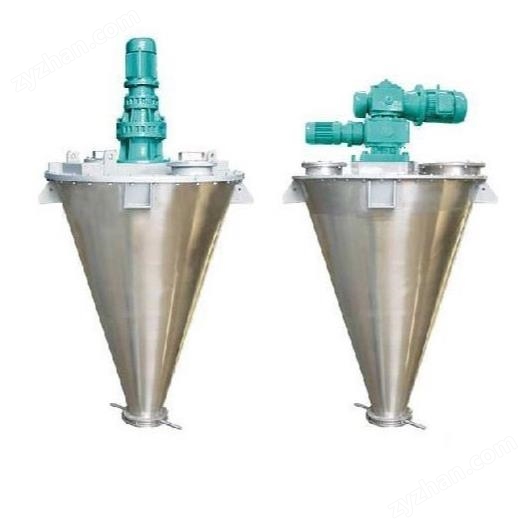
DSH-B type cantilever double helix conical mixer
NegotiableUpdate on 01/04
- Model
- Nature of the Manufacturer
- Producers
- Product Category
- Place of Origin
Overview
The DSH-B cantilever double helix cone mixer has the characteristics of short mixing time, high production capacity, uniform mixing, low operating cost, high efficiency, and convenient and fast unloading. This machine has a wide adaptability to mixtures and does not produce delamination or segregation in mixtures composed of thermosensitive materials
Product Details
DSH-B type cantilever double helix conical mixer
Product Usage
The double helix cone mixer is widely used in industries such as chemical, fertilizer, oilfield, oil refining, pesticide, veterinary medicine, coating, pigment, dye and auxiliary, metallurgy, smelting, refractory, mining, building materials, electronic plastics, feed, animal husbandry, pharmaceuticals, biotechnology, food, health products, ceramics, glass, as well as new materials and nuclear materials for solid solid (i.e. powder to powder) mixing, solid-liquid (i.e. powder to liquid) mixing, and liquid-liquid (i.e. liquid to liquid) mixing. The product has the characteristics of short mixing time, high production capacity, uniform mixing, low usage cost, high efficiency, and convenient and fast unloading. This machine has a wide adaptability to mixtures, and does not produce delamination or segregation in the mixing of thermosensitive materials. It does not crush or grind granular materials, and has good adaptability to the mixing of various particles, fibers, or sheet-like materials such as coarse, fine, and ultrafine particles.
Features of the equipment
The double helix conical mixer is equipped with a set of motors and cycloidal pinwheel reducers for self rotation. It uses two screws for asymmetric mixing, which allows for a wide range of material mixing, fast mixing speed, and significant weight difference. It is more suitable for mixing materials with larger mixing ratios. The material contact parts of this machine are all made of stainless steel.
Mixing principle:
The mixer is composed of two asymmetric spirals that rapidly rotate and lift the material upwards, forming two asymmetric spiral material flows along the cylinder wall from bottom to top (see Figures A and B). The spiral revolution driven by the rotating arm causes the material outside the spiral to enter the envelope of the screw to varying degrees. Some of the material is displaced and lifted, while others are thrown out of the screw, achieving continuous updating and diffusion of the material in all circumferential directions. The two streams of material lifted to the upper part then converge towards the central cavity, forming a downward material flow that supplements the bottom cavity, thus forming a convective cycle. Due to the repetition of the aforementioned movements (see Figures C and D), the material was uniformly mixed in a relatively short period of time, resulting in a high degree of mixing.
Equipment installation and use
1. This machine should be installed vertically.
2. The material is added through the inlet hole of the cylinder cover, and the discharge valve is opened to release the material. When discharging, it is necessary to prevent the occurrence of vacuum and pressure difference.
3. When starting up, the rotation should be started first, followed by the revolution. When stopping, the revolution should be stopped first, followed by the rotation, and it should not be done in reverse.
4. During the operation of the equipment, human body and hands are not allowed to enter the cylinder; The machine must be stopped before sampling. If hard debris larger than 8mm is found to enter the cylinder, it should be stopped and removed in a timely manner, and then restarted.
5. When solid-liquid mixing, the liquid should be sprayed after the material is added and the equipment is running.
6. This machine allows full load start and discharge without stopping.
7. The usage conditions of the equipment, where the loading factor of 0.6 is obtained under the condition of material specific gravity 1-1.2. When the specific gravity is greater than 1.2, the loading capacity should be reduced proportionally.
8. The mixing operation time of this machine is generally 8-10 minutes, with different requirements for uniformity. The special mixing of materials can be determined by the user themselves.
repair
1. Disassembly: Remove the discharge valve, fold open the cylinder cover, hang it down, and flip it over; Remove the two spiral shafts; Disassemble the transmission head, rotating arm, distribution box, cylinder cover, revolving worm gear box, and self rotating worm gear box; Then disassemble the internal components of each part.
2. Assembly: Clean all components and parts, and assemble them in reverse order; Pre coat all bearings and gears with oil; Install lubricating oil; Test run.
3. Vulnerable parts: non-standard vulnerable parts, our factory can process them on behalf of you, and we do not provide any explanation here.
4. If the discharge valve is difficult to rotate, the clearance can be adjusted appropriately to prevent powder leakage.
Technical Specifications:
| Model and specification (m ³) | load factor | Batch yield (kg) | Mixing time (min) | Motor power (kw) | Maximum diameter (mm) | Total height (mm) | Equipment weight (kg) |
| SLH-0.1 | 0.4~0.6 | 40~60 | 5~10 | 1.5 | 708 | 1498 | 210 |
| SLH-0.15 | 60~90 | 1.5 | 782 | 1620 | 250 | ||
| SLH -0.3 | 120~180 | 3 | 990 | 2095 | 550 | ||
| SLH -0.5 | 200~300 | 3 | 1156 | 2338 | 600 | ||
| SLH -1 | 400~600 | 4 | 1600 | 2775 | 1200 | ||
| SLH-1.5 | 600~900 | 5.5 | 1780 | 3146 | 1350 | ||
| SLH-2 | 800~1200 | 5.5 | 1948 | 3424 | 1500 | ||
| SLH-2.5 | 1000~1500 | 7.5 | 2062 | 3576 | 1800 | ||
| SLH-3 | 1200~1800 | 7.5 | 2175 | 3758 | 2100 | ||
| SLH -4 | 1600~2400 | 11 | 2435 | 4446 | 2500 | ||
| SLH -5 | 2000~3000 | 15 | 2578 | 4690 | 3000 | ||
| SLH-6 | 2400~3600 | 15 | 2715 | 4960 | 3500 | ||
| SLH -8 | 3200~4800 | 18.5 | 2816 | 5378 | 4000 | ||
| SLH-10 | 4000~6000 | 18.5 | 3000 | 5678 | 4300 | ||
| SLH -12 | 4800~7200 | 22 | 3165 | 6015 | 4500 | ||
| SLH -15 | 6000~9000 | 30 | 3450 | 6650 | 5000 | ||
| SLH -20 | 8000~12000 | 37 | 3760 | 7176 | 6000 |
DSH-B type cantilever double helix conical mixer