-
E-mail
shouwang6368@126.com
-
Phone
18051034886
-
Address
No. 19, Tuanshan East Road, Lishui Economic Development Zone, Nanjing City
Product Categories
Nanjing Shouwang Machinery Equipment Co., Ltd


Automatic batching system
NegotiableUpdate on 01/05
- Model
- Nature of the Manufacturer
- Producers
- Product Category
- Place of Origin
Overview
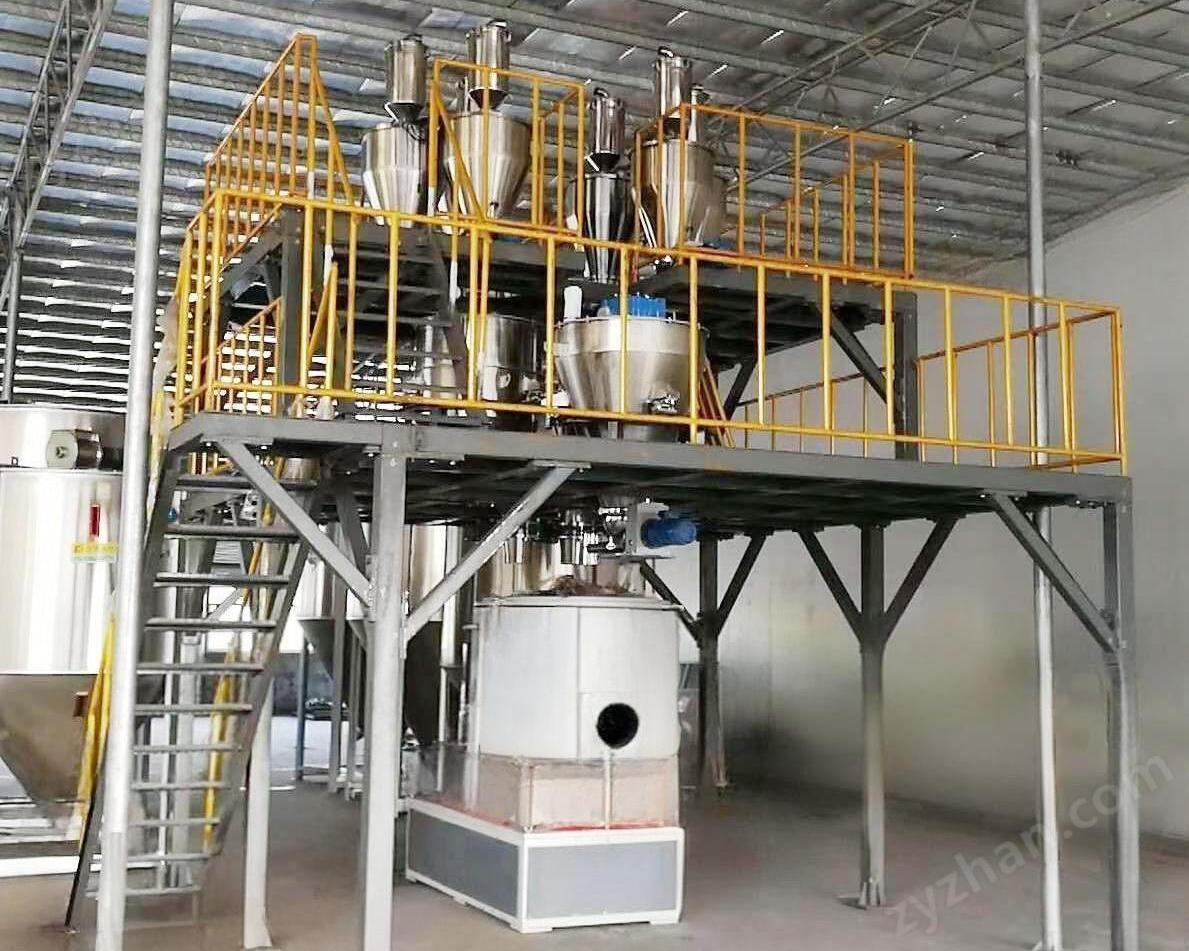
The automatic batching system achieves precise weighing, mixing, and conveying of materials through automation technology, and is widely used in industries such as chemical, food, pharmaceutical, and building materials. Improve production efficiency: Automated operations replace manual weighing and mixing, shorten production cycles, and increase unit time output.
Product Details
Automatic batching systemAccurate weighing, mixing, and conveying of materials are achieved through automation technology, which is widely used in industries such as chemical, food, pharmaceutical, and building materials. Its core functions include:
Improve production efficiency
Automated operations replace manual weighing and mixing, shorten production cycles, and increase unit time output.
Continuous operation mode reduces downtime and adapts to large-scale production needs.
Ensure product quality
Accurately control the material ratio (usually with an error of ≤ 0.5%) to ensure consistency in product composition.
To avoid ratio deviation caused by manual operation and improve product qualification rate.
Reduce production costs
Reduce raw material waste (through precise weighing) and lower the cost of raw materials for individual products.
Automated processes reduce the need for manual labor and lower labor costs.
Enhance security
Sealed conveying and weighing reduce dust leakage and protect the health of operators.
Avoid manual contact with toxic and harmful materials to reduce occupational exposure risks.
Data traceability and management
Real time recording of ingredient data (such as time, weight, batch), supporting quality traceability.
Integrate production management systems (such as ERP, MES) to optimize production plans.
Adapt to complex processes
Support simultaneous batching of multiple materials and batches to meet customized production needs.
Programmable control logic adapts to different formulations and process flows.
Automatic batching systemThe operation process can be divided into preparation stage, operation stage, and maintenance stage, with the specific steps as follows:
1. Preparation stage
(1) System check
Equipment inspection: Confirm that sensors (weighing modules, pressure sensors), actuators (valves, motors), conveyors (screw conveyors, belt conveyors), control cabinets (PLC, touch screens) and other hardware are functioning properly.
Material inspection: Check the material name, specifications, and batch to ensure that there are no lumps, moisture, or impurities.
Parameter settings:
Enter the formula (name of each material, target weight, ratio) in the control system.
Set process parameters (such as feeding sequence, mixing time, conveying speed).
Set safety thresholds (such as overweight alarm, shortage alarm).
(2) Calibration and Testing
Weighing calibration: Use standard weights to calibrate the weighing module to ensure accuracy meets the requirements.
Empty load test: Start the system to run without load and check whether the conveying, mixing, unloading and other actions are smooth.
Simulated batching: Conduct small-scale material simulation batching to verify system stability.
2. Operation phase
(1) Start the system
Press the 'Start' button, and the system will automatically perform the following steps:
Feed control: According to the formula sequence, open the corresponding material feed valves (such as pneumatic valves, electric valves) one by one, and transport the materials to the weighing hopper through a screw conveyor or vibrating feeder.
Dynamic weighing: The weighing module monitors the weight of the material in real time. When it approaches the target value, the system automatically adjusts the feeding speed (such as reducing the screw speed with a frequency converter), achieving a "coarse weighing+fine weighing" mode to ensure that the final weight error is ≤ the set value.
Mixing control: After all materials are weighed, the system starts the mixing device (such as dual axis blade mixer, vertical mixer) and mixes evenly according to the set time.
Unloading control: After mixing is completed, open the unloading valve and transport the finished product to the next process (such as packaging machine, reaction kettle).
(2) Process monitoring
Real time data: Monitor the weight, mixing progress, and equipment status of each material through touch screen or upper computer.
Exception handling:
If a certain material is in short supply, the system triggers an alarm and suspends the batching process, prompting for replenishment.
If the weighing exceeds the tolerance, the system will automatically re weigh or mark the batch as unqualified.
If the equipment malfunctions (such as motor overload or valve jamming), the system will shut down urgently and display a fault code.
(3)批次管理
The system automatically records each batch of ingredient data (such as time, material batch, actual weight, operator) and generates electronic reports.
Support querying historical data by batch number and time range for quality traceability.
3. Maintenance phase
(1) Daily cleaning
Clean up residual materials in the weighing hopper and mixer to prevent cross contamination.
Clean the dust on the surface of the sensor to ensure weighing accuracy.
Check if the conveying pipeline is blocked and promptly clear it.
(2) Regular maintenance
Lubrication maintenance: Regularly add lubricating oil to moving parts such as bearings and chains.
Replacement of vulnerable parts: Regularly replace vulnerable parts such as sealing rings, filter cartridges, belts, etc.
Electrical inspection: Check if the wiring terminals are loose and if the grounding is good.
(3) Calibration and Verification
Perform monthly calibration of the weighing module to ensure long-term accuracy.
Conduct system performance validation (such as simulated ingredient testing) once a quarter to confirm normal functionality.