-
E-mail
shouwang6368@126.com
-
Phone
18051034886
-
Address
No. 19, Tuanshan East Road, Lishui Economic Development Zone, Nanjing City
Product Categories
Nanjing Shouwang Machinery Equipment Co., Ltd
Chemical powder solid feeding machine
NegotiableUpdate on 01/05
- Model
- Nature of the Manufacturer
- Producers
- Product Category
- Place of Origin
Overview
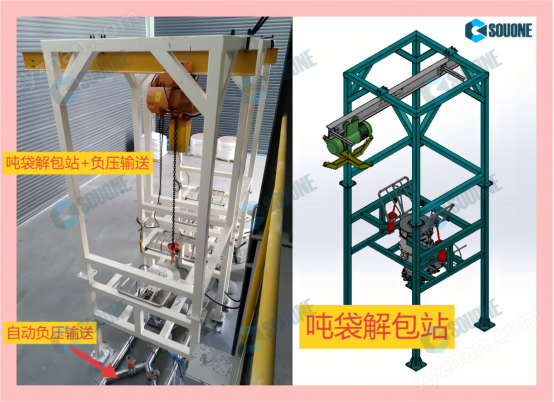
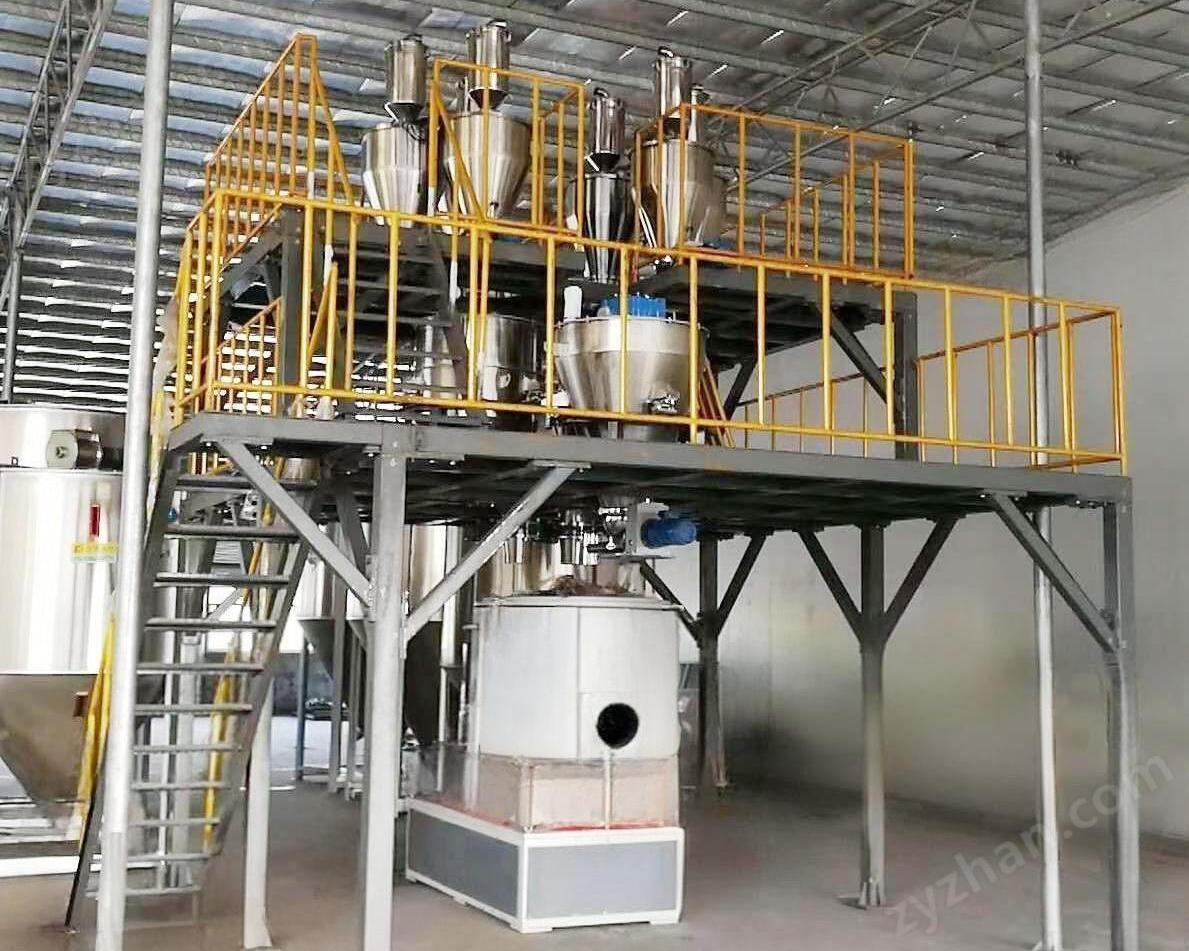
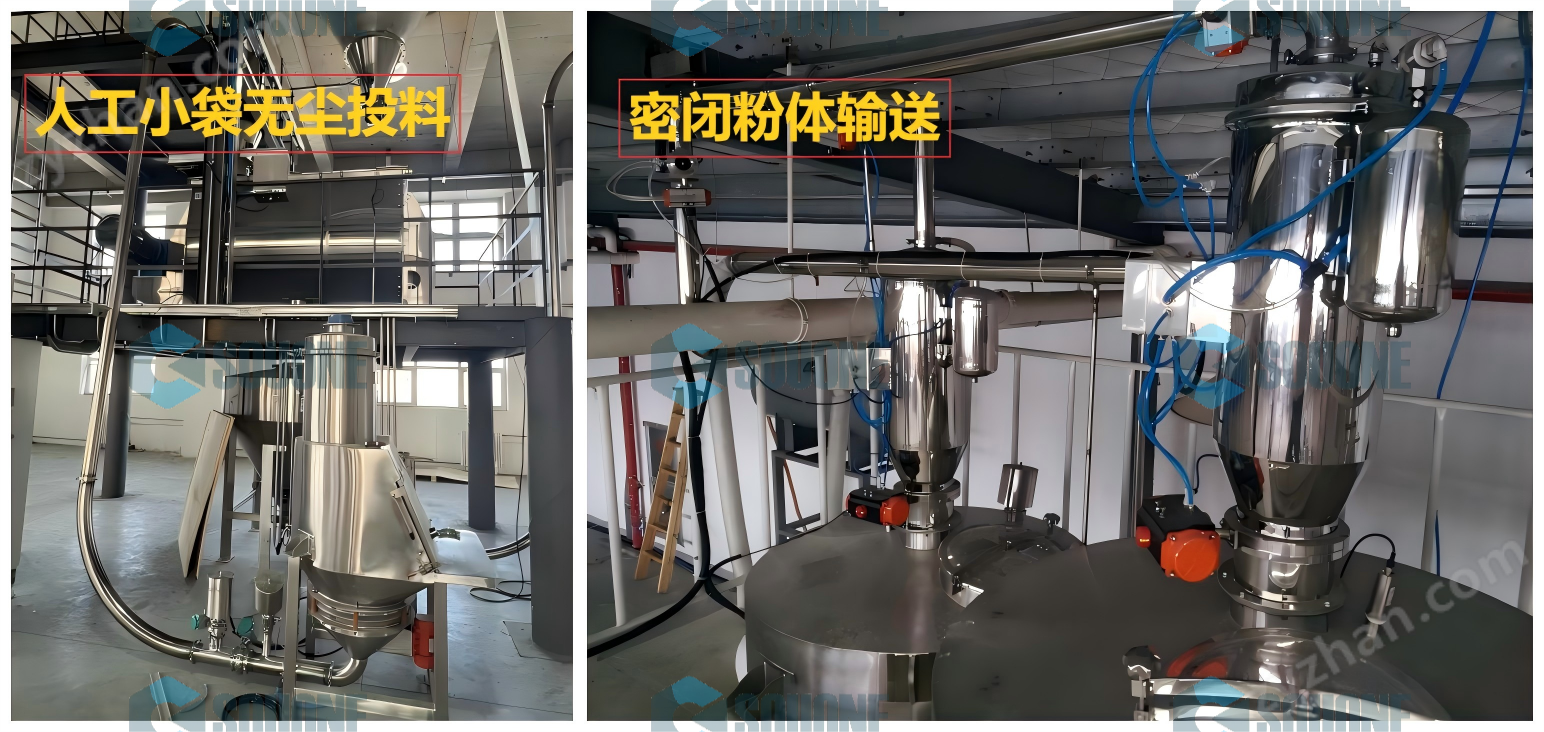
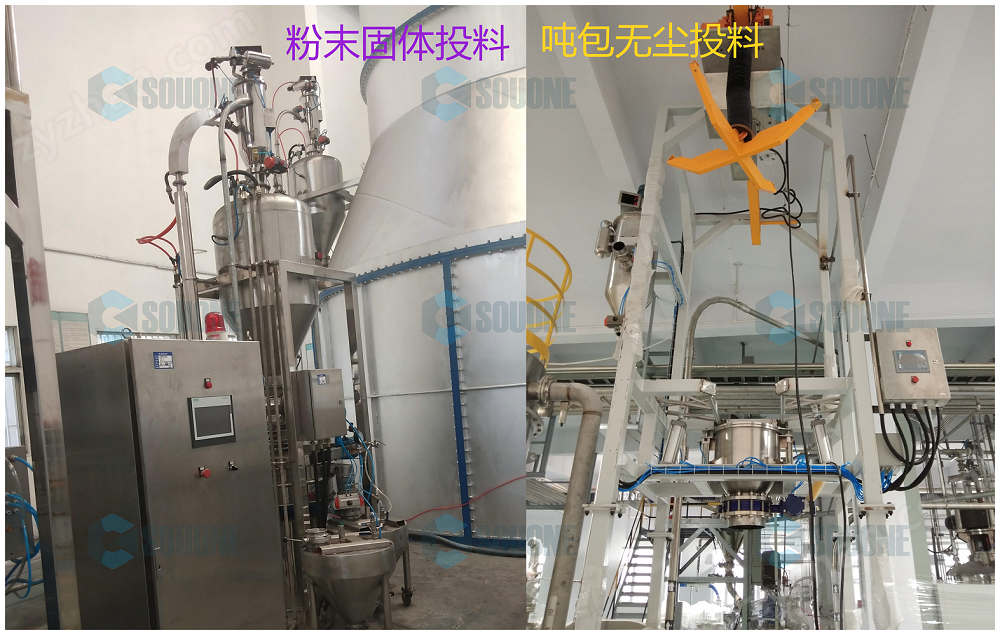
The chemical powder solid feeding machine system is an automated feeding and reaction production line for modern chemical plants. It mainly consists of three parts: a ton bag closed feeding device (or small bag manual feeding equipment), a vacuum conveying closed feeding device, and a reaction tank. It is suitable for efficient feeding and reaction of powder and granular materials in industries such as chemical, pharmaceutical, and food.
Product Details
Chemical powder solid feeding machineSystem Description:
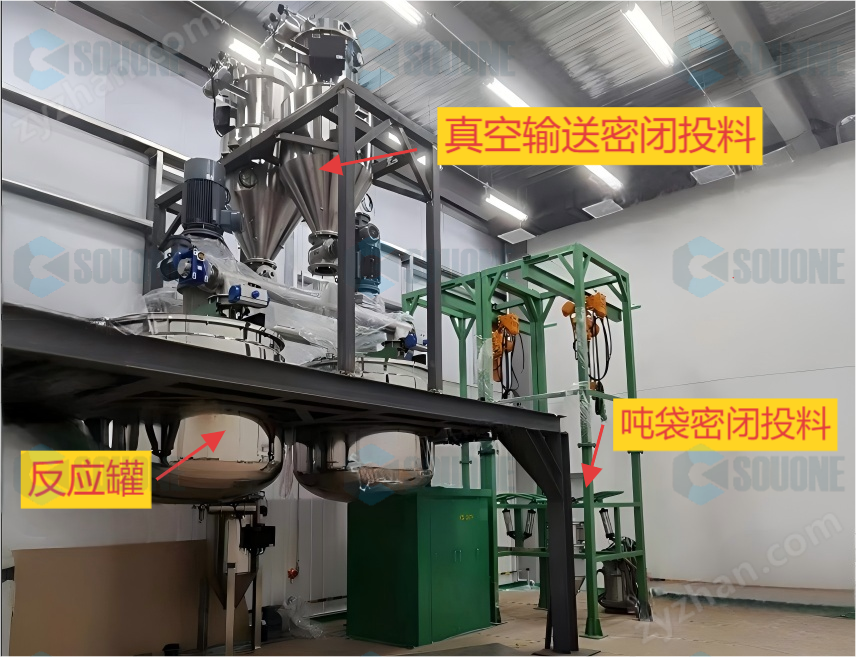
Chemical powder solid feeding machineThe system is an automated feeding and reaction production line for modern chemical plants, mainly composed of three parts: ton bag closed feeding device (or small bag manual feeding equipment), vacuum conveying closed feeding device, and reaction tank. It is suitable for efficient feeding and reaction of powder and particulate materials in industries such as chemical, pharmaceutical, and food. (Magnetic separation, screening, batching, packaging and other processes can be added as needed)
The workflow is as follows:
1. Sealed feeding of ton bags: The sealed feeding device on the right side of the ton bag releases the material in the ton bag into the conveying process through a sealed bag release system;
2. Vacuum conveying feeding: The vacuum conveying closed feeding device above transports the material in a closed manner to the reaction stage through negative pressure airflow;
3. Reaction processing: The materials enter the reaction tank below the middle for mixing, reaction, or storage, completing the entire process of automated production. (For processes that require high temperatures or gas locking, they can be designed separately)
System features:
1. Fully enclosed design
-The entire process of feeding and vacuum conveying in ton bags is sealed, effectively preventing dust leakage and complying with strict standards such as GMP and ATEX, ensuring a clean and safe production environment.
2. Efficient automation
-From the unpacking of ton bags to vacuum conveying and then to the feeding of reaction tanks, the entire process is automatically controlled, reducing manual intervention and improving production efficiency.
3. Modular layout
-The equipment is distributed in a staggered manner (feeding on the right side → conveying from above → reaction in the middle), with a clear structure that is easy to maintain and optimize the process.
4. Industrial grade durability
-The main body adopts industrial wind design such as metal gray and green, and the equipment material is corrosion-resistant and wear-resistant. Key parts are equipped with prominent markings (yellow background and red text) to ensure stable operation.
5. Flexible adaptability
-It can handle various material characteristics (such as easy dust and high viscosity), and the capacity and function of the reaction tank can be customized according to needs to meet different production needs.
Application Scenario:
Suitable for industrial fields with high requirements for airtightness and automation, such as pharmaceutical raw material feeding, chemical powder reaction, and food additive mixing.
(Note: The specific parameters of the chemical powder solid feeding machine need to be adjusted according to the actual equipment model and process requirements.)

Chemical powder solid feeding machineUsage process and precautions:
1、 Preparation before use
Equipment inspection
Check whether the main body, conveying pipeline, valves, motors, sensors and other components of the feeding machine are intact, without looseness or damage.
Confirm that the power and air sources (such as compressed air) are connected properly, and that the voltage and air pressure meet the equipment requirements.
Check whether the dust removal system (such as bag filter, cyclone separator) is clean and free of blockages.
Material preparation
Confirm that the physical properties (particle size, humidity, flowability, etc.) of the powder to be added are compatible with the equipment, avoiding clumping or bridging.
Clean the material bin or storage tank to avoid residual materials contaminating the new batch.
According to the process requirements, pre-set parameters such as feeding amount and speed (such as through PLC or touch screen).
Security protection
Wear personal protective equipment such as protective clothing, masks, goggles, etc.
Ensure that there are no flammable or explosive materials around the equipment and good ventilation.
Check whether the emergency stop button and safety interlock device are sensitive and reliable.
2、 Operation process
Start the device
Turn on the power and activate the dust removal system (to avoid dust leakage).
Start the conveying device (such as screw conveyor, vacuum conveyor, or pneumatic conveying system) and check if the direction of operation is correct.
Confirm that the silo or storage tank is sealed to prevent material spillage.
Feeding operation
Manual mode: Gradually open the feeding valve and conveying valve through the control panel or button, and observe whether the material flow is smooth.
Automatic mode: Set the feeding amount or time, and the equipment will automatically complete the feeding, conveying, and feeding actions according to the preset program.
Key control points:
Monitor the feeding speed to avoid pipeline blockage or material stratification caused by excessive speed.
Regularly inspect weighing modules (such as weightlessness scales) or flow meters to ensure feeding accuracy.
Observe the operating status of the equipment, such as motor temperature, vibration, noise, etc., and immediately stop the machine in case of abnormalities.
Material feeding completed
Close the feeding valve and conveying valve, and stop the conveying device.
Clean up residual materials (such as through blowback or vibration devices) to prevent blockage or cross contamination.
Turn off the dust removal system, disconnect the power and gas sources.
3、 Key precautions
Anti blocking measures
Regularly clean the silo and conveying pipeline to avoid material clumping or bridging.
Install flow aids in pipelines or use fluidized bed technology to improve fluidity.
Control the humidity of the material and perform drying treatment if necessary.
Leak prevention and explosion prevention
Ensure the sealing of the equipment and regularly inspect the connections such as flanges and valves.
For flammable and explosive materials, safety measures such as explosion-proof motors and electrostatic grounding should be taken.
Firefighting equipment and emergency flushing devices are equipped at the operation site.
Maintenance and upkeep
Regularly lubricate transmission components (such as bearings and chains) and replace worn parts.
Clean sensors and instruments, calibrate weighing modules or flow meters.
Establish equipment maintenance files to record operational data and fault conditions.
Personnel training
Operators need to be familiar with the equipment structure, principles, and emergency response procedures.
Regularly conduct safety drills to enhance the ability to respond to unexpected situations.