-
E-mail
shouwang6368@126.com
-
Phone
18051034886
-
Address
No. 19, Tuanshan East Road, Lishui Economic Development Zone, Nanjing City
Product Categories
Nanjing Shouwang Machinery Equipment Co., Ltd


Unpacking and feeding equipment
NegotiableUpdate on 01/05
- Model
- Nature of the Manufacturer
- Producers
- Product Category
- Place of Origin
Overview
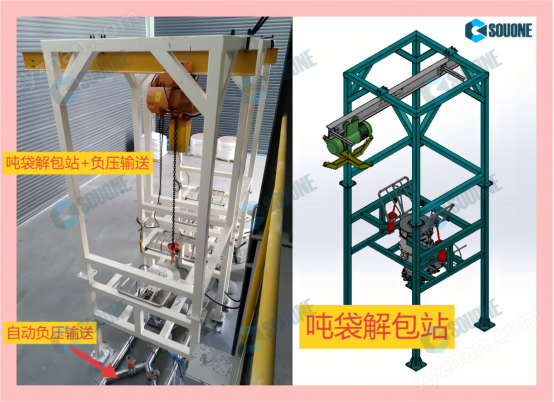
The unpacking and feeding equipment is an automated closed conveying production line, consisting of three parts: ton bag unpacking equipment (or manual small bag feeding equipment), vacuum conveying equipment, and storage bin. It is suitable for industrial unpacking and conveying of materials such as powders and particles.
Product Details
Unpacking and feeding equipmentSystem Description and Characteristics
System Description:
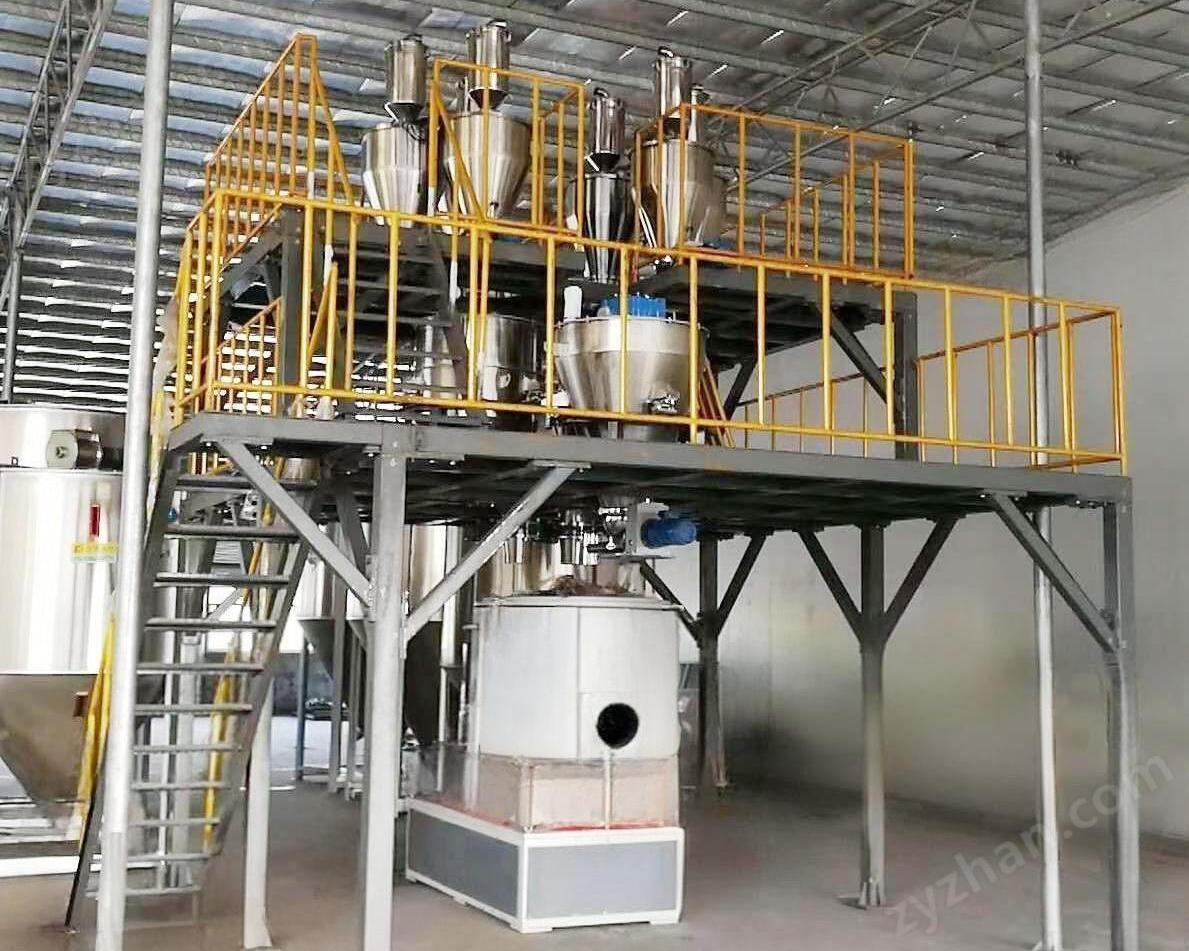
The unpacking and feeding equipment is an automated closed conveying production line, consisting of three parts: ton bag unpacking equipment (or manual small bag feeding equipment), vacuum conveying equipment, and storage bin. It is suitable for industrial unpacking and conveying of materials such as powders and particles.
The workflow is as follows:
1. Unpacking of ton bags: The ton bags are unpacked by unpacking equipment, and the materials fall into the hopper below;
2. Vacuum conveying: The feeding machine automatically sucks the material into the vacuum conveying pipeline and transmits it in a closed manner with negative pressure airflow (which can achieve continuous feeding);
3. Storage bin: The material ultimately enters the storage bin on the right side, completing the entire automated process.
System features:
1. Efficient and sealed
-The entire process is transported through pipelines to prevent dust leakage and meet environmental and occupational health requirements (such as GMP and ATEX standards).
2. Automated operation
-Reduce manual intervention, ensure the continuous completion of ton bag unpacking, transportation, and storage, and improve production efficiency.
3. Modular design
-The equipment layout is clear (left unpacking → middle conveying → right storage), which facilitates maintenance and process optimization.
4. Safety and stability
-The metal structure (silver gray main body) is corrosion-resistant, and key parts are marked with red warning signs to ensure operational reliability.
5. Flexible adaptation
-Compatible with various material characteristics (such as volatility and high viscosity), the bin capacity can be customized according to needs.
Application scenarios:
The processing of powdered materials in industries such as chemical, food, and pharmaceutical is particularly suitable for production environments that require high cleanliness and automation.
(Note: Actual parameters need to be adjusted according to specific equipment models and material characteristics.)

Unpacking and feeding equipmentAs the core equipment for powder processing in industries such as chemical, food, and building materials, its maintenance work needs to revolve around cleaning, lubrication, fastening, and calibration processes. By developing targeted plans based on equipment characteristics, it can significantly improve operational stability and extend service life.
1、 Daily cleaning: prevent residue and blockage
Equipment surface cleaning
Use a clean cloth or compressed air to remove dust and stains from the surface of the equipment, avoiding corrosive material residue that can cause metal parts to rust.
Focus on cleaning up areas prone to material accumulation such as feed ports, discharge ports, and seals to prevent blockages in pipelines after material hardening.
Internal space cleaning
After daily shutdown, open the equipment maintenance door and use specialized tools to clean residual materials inside the drum screen, material collector, screw conveyor, etc.
Backblow the bag filter to ensure its permeability and prevent poor ventilation or dust leakage caused by blockage.
Key component protection
Avoid direct contact between water or damp cloth and electrical components such as motors and sensors during cleaning to prevent short circuits or signal interference.
For carbon steel material bodies, even if they are idle for a long time, they need to be regularly wiped with oil to prevent oxidation and rust.
2、 Lubrication and Maintenance: Reduce Wear and Malfunctions
Lubrication of transmission components
According to the equipment manual, regularly add lubricating oil (such as 3 # lithium grease) to transmission components such as bearings, gears, and chains to reduce friction and wear.
Lubrication cycle recommendation: bearings should be lubricated every 500 hours, chains every 200 hours, and the cycle should be shortened under high temperature or high load conditions.
Lubrication method selection
Use manual application or automatic lubrication system (such as centralized lubrication pump) to ensure even distribution of lubricating oil.
Avoid excessive lubrication causing oil contamination of materials, or insufficient lubrication causing overheating of components.
Lubrication record management
Establish a lubrication ledger to record lubrication time, location, oil type, and operators for easy traceability and optimization of maintenance plans.
3、 Tightening inspection: prevent vibration and displacement
Tightening of connectors
Before starting up daily, check whether the screws, nuts, flanges and other connecting parts are loose, and use a torque wrench to tighten them to the standard torque (such as the recommended torque for M12 bolts is 50-60N · m).
Focus on inspecting vibration sensitive parts such as motor bases, conveyor pipe supports, and dust collector fixing bolts.
Vibration source investigation
If there is abnormal vibration during the operation of the equipment, immediately stop the machine for inspection:
Is the balance block of the drum screen detached;
Whether the blades of the screw conveyor are deformed;
Is the motor belt loose or worn.
Application of anti loosening measures
For high-frequency vibration components (such as vibration motors), use anti loosening washers or thread glue reinforcement to reduce the risk of loosening.
4、 Calibration and debugging: ensuring accuracy and efficiency
Sensor calibration
Calibrate the weighing module with standard weights every month to ensure that the feeding error is ≤ ± 1%;
Clean the photoelectric sensor lens to prevent dust coverage from causing misjudgment (such as mistakenly believing that the material bag has been emptied).
Conveyor belt adjustment
Regularly check the tension of the conveyor belt and measure it with a tension gauge (if the belt tension is recommended to be 50-80N/cm) to avoid slipping or accelerated wear caused by excessive looseness.
Adjust the position of the roller group to ensure that the conveyor belt runs in the center and prevent material jamming caused by deviation.
Maintenance of bag breaking device
Check the wear of the cutting blade and replace it promptly when the blade thickness is ≤ 2mm;
Adjust the distance between the cutting blade and the material bag (recommended 3-5mm) to ensure that the bag is broken without damaging the drum screen.