-
E-mail
sales-sci.cn@horiba.com
-
Phone
13681872955
-
Address
Unit D, 1st Floor, Building A, Lianqiang International Plaza, 1068 Tianshan West Road, Shanghai
Product Categories
HORIBA (China)

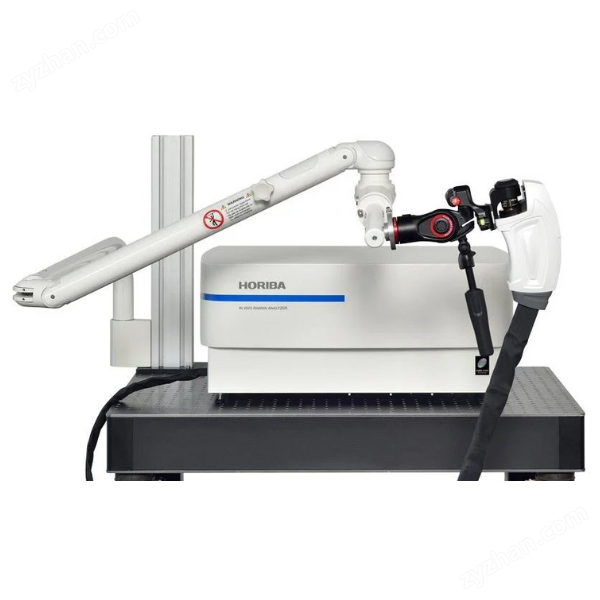
Optical nanoparticle zeta potential analyzer
NegotiableUpdate on 01/04
- Model
- Nature of the Manufacturer
- Producers
- Product Category
- Place of Origin
Overview
The nano particle zeta potential analyzer works based on the principles of laser scattering and electrophoresis technology Laser scattering technology measures the scattering angle and intensity of laser in nanoparticles to obtain the size distribution of nanoparticles
Product Details
1、 Basic principles
The nano particle zeta potential analyzer works based on the principles of laser scattering and electrophoresis technology. Laser scattering technology measures the scattering angle and intensity of laser in nanoparticles to obtain the size distribution of nanoparticles. Electrophoretic technology measures the migration speed of nanoparticles under the action of an electric field, and then calculates the surface charge of the particles, namely Zeta potential. Zeta potential is an important parameter for characterizing the surface charge of particles, which reflects the forces of mutual repulsion or attraction between particles, thereby affecting the stability and dispersion of particles in suspension.
2、 Main functions
1. Particle size analysis: The nanoparticle zeta potential analyzer can measure the size distribution of particles, helping users understand the average size and particle size distribution of particles in suspension. This is of great significance for studying the formation, growth, and aggregation processes of particles.
2. Zeta potential measurement: By measuring the Zeta potential of particles, the surface charge properties of particles can be evaluated, thereby determining the stability of particles in suspension. The higher the Zeta potential, the greater the repulsive force between particles, and the more stable the suspension.
3. Surface charge determination: In addition to Zeta potential, the size and properties of the surface charge of particles can also be determined, which is crucial for understanding the interaction between particles and their surrounding environment.

3、 Application Fields
1. Materials Science: In the synthesis, surface modification, and functionalization research of nanomaterials, it can be used to monitor changes in particle size and surface charge, optimize synthesis conditions, and improve material properties.
2. Biomedical: In the design and evaluation of drug delivery systems, it can be used to measure the particle size and Zeta potential of drug carriers, ensuring their stability and biocompatibility. In addition, it can also be used to study the structure and functional relationships of biomolecules.
3. Environmental Science: In the field of water treatment and wastewater treatment, it can be used to monitor the particle size and surface charge of suspended particles and pollutants, providing scientific basis for the optimization of water treatment processes.
4. Food Science: In the research and testing of food additives, it can be used to measure the particle size and Zeta potential of food additives to ensure their safety and stability.
4、 Technical features and advantages
1. High precision and sensitivity: With high-precision measurement capability, it can accurately measure the particle size and Zeta potential of nanoscale particles. Meanwhile, its high sensitivity enables reliable measurements even at low concentrations.
2. Easy to operate and fast response: This instrument is easy to operate, and users only need to follow the manual for simple settings to start measuring. The measurement process is fast, and the entire testing process usually takes only a few minutes to complete, greatly improving work efficiency.
3. High stability and reliability: Reliable measurements can be taken under different environmental conditions, ensuring the accuracy and repeatability of data.
5、 Development Trends and Prospects
With the rapid development of nanotechnology, the application fields of nanoscale zeta potential meters will continue to expand. In the future, this instrument will become more intelligent and automated, providing more convenient and efficient measurement solutions for scientific research and industrial production. Meanwhile, with the continuous advancement of measurement technology, its measurement accuracy and performance will continue to improve, providing stronger support for scientific research and technological innovation.